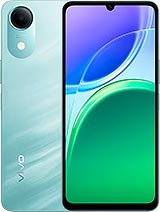
Oukitel C26 Mini review
This phone is for someone who has held a modern flagship, hated the weight and the bulk, and decided the trade-off for a smaller device is worth living with battery that needs charging by mid-afternoon and a chip that struggles with switching between apps. If you don't fit that exact profile, look elsewhere.
This review is written with AI assistance from Oukitel’s published specifications and public benchmark data for the Oukitel C26 Mini, and the rating is spec-based. GoSolo does not physically test devices; where we estimate real-world behaviour such as battery life or charge time, we say so. How we rate phones.
Overview
The Oukitel C26 Mini is a pocketable 4-inch phone aimed at users who want a break from supersized screens, but the 2300 mAh battery and entry-level Unisoc T610 chip mean it's a bare-minimum device that trades capability for portability. At €130, it's positioned as a throwback to simpler phones, though without the durability or software maturity that would justify the trade-offs.
Design & build
The C26 Mini hits its primary goal: it is small. At 99.2 mm and 108g, this is a phone that actually fits in a shirt pocket and feels natural in one hand, a rarity in 2026 when anything under 6 inches has become a niche item. The plastic back and frame keep weight down, though Panda Glass on the front at least means the screen won't scratch with every bump. The choice of form factor is the statement here; most buyers choosing this over a typical 6.5-inch flagship are explicitly rejecting size, not hunting for a bargain on build quality. As a pocket device, it lands the job it was designed for.
Display
The 4-inch TFT screen is a contradiction: 323 ppi sounds dense, but on such a small panel it creates a readability problem rather than solving one. Text and icons sit at the edge of comfortable viewing distance, and while the resolution climbs to 1172 pixels vertically, that's mostly useful for stretching apps across a 19.5:9 aspect ratio rather than delivering clarity. TFT panels in 2026 are color-weak by standard, delivering dull blacks and narrow viewing angles compared to even mid-range AMOLED competitors. The 83.6% screen-to-body ratio is respectable for a device this size, but that narrow glass real estate is more a constraint than a feature.
Performance
The Unisoc T610 is an entry-level chip, and the 3GB or 4GB of RAM means this phone is built to handle basic tasks without breaking stride. Scrolling through social feeds, texting, and light navigation work, but multitasking is sluggish, and switching between apps or opening heavy ones carries a delay. Gaming, photo editing, or running multiple apps at once exposes the processor's limits quickly. For someone who genuinely uses a phone only for calls, messaging, and casual web browsing, this won't feel dramatically slow, but by 2026 standards, it is behind what rivals at the same price are doing with more modern budget chips.
Software
Android 16 at launch is a clean point in the C26 Mini's favor, meaning it arrives with current security patches and the latest OS refinements out of the box. Oukitel's take on Android appears light, without obvious bloat, which helps the modest hardware breathe a little. Long-term support is unknown, but a company backing a sub-€150 device with current software at least sends the right signal. Updates will likely taper after a year, which is standard for this tier.
Camera
The 13 MP main sensor and 5 MP front camera are functional but unremarkable. The 1/3.06" sensor is tight, and in low light the photos will be noticeably soft and noisy. Daytime shots fare better, especially outdoors, but color accuracy and dynamic range don't compare to even mid-range phones. Video tops out at 1080p at 30fps, which is fine for clips but not for anything demanding. There's no ultrawide, macro, or depth sensor; this is a camera designed to prove a photo was taken, not to be any good at it.
Battery & charging
The 2300 mAh battery is the phone's most glaring limitation. For context, even budget phones in 2026 ship with 5000+ mAh; this is undersized by years. Real-world battery life sits somewhere between 6 and 8 hours with moderate use, dropping to 4 hours if you're streaming or gaming. There is no fast charging mentioned; the spec sheet lists a 10W charger, which means even a full recharge takes hours. The small size at least means you can justify carrying a power bank, but the frequent top-ups will become a frustration very quickly.
Value & verdict-context
At €130, the C26 Mini is not a budget-phone bargain so much as a lifestyle choice for people who genuinely want a small device. That niche is real but narrow. If you're in it—you actively hate large phones, you miss the era of compact handsets, you want a second device that doesn't eat your pocket—then the C26 Mini delivers what it promises. But it does so at the cost of a battery that won't get you through a workday, performance that feels dated, and a display that pushes your eyesight. Rivals at this price give you 5x the battery life and 2x the processing power in a slightly larger body, and most people comparing specs would choose them without hesitation. The C26 Mini is betting you'll choose size first, and almost everything else second.
Verdict
This phone is for someone who has held a modern flagship, hated the weight and the bulk, and decided the trade-off for a smaller device is worth living with battery that needs charging by mid-afternoon and a chip that struggles with switching between apps. If you don't fit that exact profile, look elsewhere.
- Genuinely small and light (108g, 99.2mm): fits one hand comfortably and slips into any pocket, which has become rare in 2026
- Dual SIM and FM radio keep it practical for users who still rely on terrestrial broadcasts or use multiple carriers
- Android 16 on launch with Panda Glass front, so at least the software baseline and screen durability are current
- 2300 mAh battery is inadequate for even a full day of moderate use; expect 6-8 hours at best
- Unisoc T610 is entry-level even for budget phones, making multitasking sluggish and app load times noticeable
- 4-inch 540p display is so dense (323 ppi) it pushes readability to the edge, and the TFT panel won't offer anything close to modern color accuracy
Oukitel C26 Mini Key Specifications
The essentials at a glance. See the full spec sheet.
| Released | 2026, September 11 |
|---|---|
| Display | 4.0 inches, 39.2 cm2 (~83.6% screen-to-body ratio), TFT |
| Resolution | 540 x 1172 pixels, 19.5:9 ratio (~323 ppi density) |
| Chipset | Unisoc T610 (12 nm) |
| RAM & storage | 32GB 3GB RAM, 64GB 4GB RAM |
| Main camera | 13 MP, (wide), 1/3.06", AF |
| Selfie camera | 5 MP, (wide), 1/5.0" |
| Battery | 2300 mAh |
| Software | Android 16 |
| Dimensions | 99.2 x 47.3 x 12.9 mm (3.91 x 1.86 x 0.51 in) |
| Weight | 108 g (3.81 oz) |
| Build | Glass front (Panda Glass), plastic back, plastic frame |
| Network | GSM / HSPA / LTE |
| NFC | No |
| USB | USB Type-C, OTG |
Oukitel C26 Mini FAQ
Common questions, answered from the spec sheet.
Does the C26 Mini support 5G?
No. The C26 Mini tops out at GSM / HSPA / LTE, without 5G.
What chipset does the C26 Mini use?
The C26 Mini runs on the Unisoc T610 (12 nm).
What display does the C26 Mini have?
A 4.0 inches, 39.2 cm2 (~83.6% screen-to-body ratio) TFT, 540 x 1172 pixels, 19.5:9 ratio (~323 ppi density).
How big is the C26 Mini battery?
The C26 Mini has a 2300 mAh battery.
Does the C26 Mini have NFC?
No, the C26 Mini does not list NFC support.
Does the C26 Mini support a microSD card?
Yes, the C26 Mini supports expandable storage (Unspecified).
Alternatives to consider
If the C26 Mini isn’t quite right, these are the closest calls.
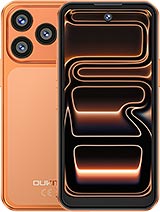
C17 Mini
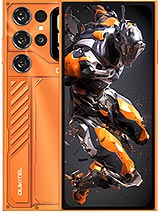
C62 GT
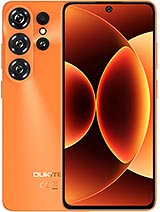
C26
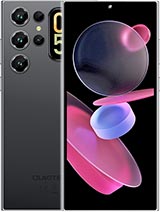
C62 Pro
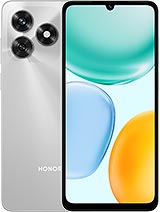
Play 70C