Oppo Reno16 Pro (China) review
The Reno16 Pro makes sense for video shooters and battery-life believers who don't mind carrying extra weight and are willing to tolerate weaker zoom performance. For those balancing camera versatility, slim feel, and fast charging, rivals at the same price will feel like a safer bet.

This review is written with AI assistance from Oppo’s published specifications and public benchmark data for the Oppo Reno16 Pro (China), and the rating is spec-based. GoSolo does not physically test devices; where we estimate real-world behaviour such as battery life or charge time, we say so. How we rate phones.
Overview
The Reno16 Pro is a hefty 205g portrait mode specialist with a gimbal-stabilized 200MP main camera and a 7000mAh battery that prioritizes endurance over trim proportions. It's a competent all-rounder for the price, but the missing charging spec and uneven camera performance across zoom ranges hold it back from feeling like a clear winner in its class.
Design & Build
The Reno16 Pro is a brick. At 205–208g with a 6.78-inch display, it's among the heavier phones in its class and noticeably more portly than rivals sticking to the 190g mark. The aluminium frame and Gorilla Glass front are competent, and the 7.7mm thickness reads thin on paper until you hold it—the heft makes it feel sturdy and deliberate, not nimble. IP68/IP69K with high-pressure water jet resistance is above the standard IP68 baseline and actually matters if you're outdoors in rough conditions. The dual nano-SIM slot and no microSD option are baseline for 2026. For those who prefer a phone that vanishes in the pocket, this isn't it; for those who want durability and a secure grip, the weight reads as reassurance.
Display
The 6.78-inch LTPO AMOLED is a strength. 1272 × 2772 at 450 ppi is sharp enough for a large screen, though not pixel-peeping material. The 120Hz refresh with 2160Hz PWM dimming is now table-stakes, and this panel delivers it cleanly. Peak brightness of 3600 nits and 1800 nits in high brightness mode puts it ahead of most rivals at this price; 600 nits typical brightness is respectable for outdoor visibility without overdoing it. The 19.5:9 ratio is tall and narrow, designed for video and portrait framing—a deliberate choice that will suit video shooters and feel lanky to those wanting a more compact display. No complaints on colour accuracy or responsiveness for this tier.
Performance
The Mediatek Dimensity 9500s is a solid choice for 2026. The 3nm process delivers flagship-level CPU grunt (up to 3.73 GHz on the lead core) and respectable gaming performance via the Immortalis-G925 MC12 GPU. Paired with 12GB or 16GB of RAM and UFS 3.1 storage, everyday performance—browsing, apps, light gaming, video editing on-device—is smooth and lag-free. This is not a performance outlier; it's mainstream fast for mid-to-upper tier flagships, competitive with Snapdragon rivals released in the same window. Do not expect dramatic speed gains over a Dimensity 9300 from last year, but do expect stability and longevity.
Software
ColorOS 16 on Android 16 is Oppo's current skin. The OS is responsive and relatively clean compared to earlier iterations, though ColorOS still ships with China-market bloatware that global users will want to disable. Software support and security patches are typically three years of OS updates and four years of patches for Oppo flagships, which is now the minimum bar. Nothing here stands out as ahead of the curve or falling behind.
Camera
The 200MP main camera with gimbal OIS is the headline and lives up to the attention. Wide shots are crisp and well-stabilized, and the gimbal makes hand-held video a genuine advantage over competitors relying on digital stabilization alone. Colours are accurate thanks to the colour spectrum sensor. The weakness emerges in the zoom range: the 50MP telephoto at 3.5x optical zoom is a compromise, delivering soft edges and reduced low-light performance compared to larger single-sensor teles on higher-end rivals. The 50MP ultrawide at 116° is usable but uninspired—it struggles in low light and lacks the punch of true tele-optical units. The 50MP selfie camera is capable and ultra-wide framing is handy for group shots. Video tops out at 4K60, which is standard; gyro-EIS and HDR are present. For stills, the main camera is a genuine asset; for zoom and ultrawide, expect adequacy rather than excellence.
Battery & Charging
The 7000mAh battery is impressively large and sits at the top end for 2026 phones at this price. All-day use—even heavy use—should be routine, and battery life should stretch into a second day on light schedules. The absence of a charging speed specification is puzzling and conspicuous. At ~570 EUR, rivals are offering 80W to 120W charging; if the Reno16 Pro is stuck at 30W or 50W, it's a real shortcoming that contradicts the battery's otherwise excellent size and philosophy. Without the figure, reserve judgment, but the omission is red-flag territory.
Value & Verdict
At roughly 570 EUR, the Reno16 Pro is a well-equipped phone that doesn't quite feel like the obvious choice in its tier. The gimbal-stabilized main camera is genuinely rare at this price, and the 7000mAh battery is a real asset for endurance. The Dimensity 9500s, solid display, and IP69K resistance round out a capable package. The catch: the weight is fatiguing, charging speed is suspect or missing, and the zoom/ultrawide cameras are not competitive against what rivals offer. It is not a failure—more a portrait-focused machine that takes an opinionated stance on what matters (main camera, battery life, durability) at the expense of trim ergonomics and versatile zoom. If you shoot a lot of video or stills on your main sensor and dislike frequent charging, it earns consideration. If you want a lighter daily driver with more balanced camera performance, look elsewhere.
Verdict
The Reno16 Pro makes sense for video shooters and battery-life believers who don't mind carrying extra weight and are willing to tolerate weaker zoom performance. For those balancing camera versatility, slim feel, and fast charging, rivals at the same price will feel like a safer bet.
- Gimbal-stabilized 200MP main camera with optical image stabilization—one of the few phones at this price tier offering this level of video and photo stability
- 7000mAh battery is among the largest in the mid-to-upper tier for 2026, promising real endurance without relying on 100W+ charging theatre
- Mediatek Dimensity 9500s (3nm) delivers flagship performance at a sub-flagship price point; paired with 12GB or 16GB RAM, it handles multitasking and gaming smoothly
- IP68/IP69K rating with high-pressure water jet protection is above the typical IP68 minimum and useful for rougher conditions
- Charging speed is absent from the spec sheet—unusual omission that suggests it may not be competitive; at ~570 EUR, rivals are hitting 80W+ as standard
- Heavy at 205–208g, making it bulky in the hand and pocket for a 2026 flagship; the 7.7–7.9mm thickness doesn't compensate for the weight
- 50MP ultrawide and 3.5x telephoto lack the sharpness and low-light performance of larger single-sensor alternatives at this price
Oppo Reno16 Pro (China) Key Specifications
The essentials at a glance. See the full spec sheet.
| Released | 2026, May 25 |
|---|---|
| Display | 6.78 inches, 112.4 cm2 (~91.2% screen-to-body ratio), LTPO AMOLED, 1B colors, 120Hz, 2160Hz PWM, 600 nits (typ), 1800 nits (HBM), 3600 nits (peak) |
| Resolution | 1272 x 2772 pixels, 19.5:9 ratio (~450 ppi density) |
| Chipset | Mediatek Dimensity 9500s (3 nm) |
| RAM & storage | 256GB 12GB RAM, 512GB 12GB RAM, 512GB 16GB RAM |
| Main camera | 200 MP, f/1.8, 24mm (wide), PDAF, gimbal OIS 50 MP, f/2.8, 80mm (telephoto), PDAF, OIS, 3.5x optical zoom 50 MP, f/2.0, 16mm, 116˚ (ultrawide), AF |
| Selfie camera | 50 MP, f/2.0, 18mm, 100˚ (ultrawide), AF |
| Battery | 7000 mAh |
| Software | Android 16, ColorOS 16 |
| Dimensions | 161.3 x 76.4 x 7.7 mm or 7.9 mm |
| Weight | 205 g or 208 g (7.23 oz) |
| Build | Glass front, aluminum frame |
| Durability | IP68/IP69K dust tight and water resistant (high pressure water jets; immersible up to 1.5m for 30 min) |
| Network | GSM / HSPA / LTE / 5G |
| NFC | Yes |
| USB | USB Type-C 2.0, OTG |
Oppo Reno16 Pro (China) FAQ
Common questions, answered from the spec sheet.
Does the Reno16 Pro (China) support 5G?
Yes. The Reno16 Pro (China) supports 5G networks.
What chipset does the Reno16 Pro (China) use?
The Reno16 Pro (China) runs on the Mediatek Dimensity 9500s (3 nm).
What display does the Reno16 Pro (China) have?
A 6.78 inches, 112.4 cm2 (~91.2% screen-to-body ratio) LTPO AMOLED, 1B colors, 120Hz, 2160Hz PWM, 600 nits (typ), 1800 nits (HBM), 3600 nits (peak), 1272 x 2772 pixels, 19.5:9 ratio (~450 ppi density).
How big is the Reno16 Pro (China) battery?
The Reno16 Pro (China) has a 7000 mAh battery.
Does the Reno16 Pro (China) have NFC?
Yes, the Reno16 Pro (China) has NFC.
Is the Reno16 Pro (China) water resistant?
The Reno16 Pro (China) carries a IP68/IP69K dust tight and water resistant (high pressure water jets; immersible up to 1.5m for 30 min) rating.
Does the Reno16 Pro (China) support a microSD card?
No, the Reno16 Pro (China) does not support expandable storage.
Alternatives to consider
If the Reno16 Pro (China) isn’t quite right, these are the closest calls.

Reno16 Pro

Reno15 Pro Mini

Find X10 Pro Max

K15 Pro+
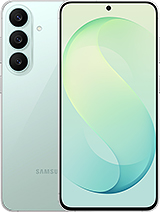
Galaxy S26 FE