Oppo Reno16 (China) review
Pick this if you prioritize portability and don't need top-tier performance or blazing charge times; the compact size and balanced feature set justify the price for someone tired of phone bloat. Skip it if you're upgrading from a recent Reno or mid-range 2024 phone—the generational lift is minimal, and faster-charging rivals may offer better value for your money."

This review is written with AI assistance from Oppo’s published specifications and public benchmark data for the Oppo Reno16 (China), and the rating is spec-based. GoSolo does not physically test devices; where we estimate real-world behaviour such as battery life or charge time, we say so. How we rate phones.
Overview
The Reno16 is a compact mid-range phone that proves small screens and modest chipsets can still deliver solid day-to-day performance, though it undercuts its own design and display with ordinary charging and no real upgrade story over predecessors.
Design & Build
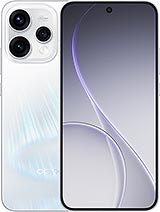
The Reno16 is refreshingly compact at 151.2 × 72.4 mm and weighs 188–191g, which lands it in rare territory for a modern phone with a 6.32-inch display. The 8.2–8.4mm thickness and glass-plus-aluminum build feel sturdy without being heavy or clunky. IP68/IP69K rating includes protection against high-pressure jets, which is overkill for most users but signals Oppo isn't cutting corners on durability. The form factor is its core identity: if you've been frustrated by the shift toward oversized phones, this one actually fits a hand.
Display
The 6.32-inch AMOLED panel runs 120Hz refresh with a 19.5:9 aspect ratio, delivering 1216 × 2640 pixels (460 ppi). It's sharp enough for text and scrolling, and the 1800 nits HBM and 3600 nits peak brightness mean outdoor visibility holds up even in direct sun. Colors come across natural rather than oversaturated, which Oppo's ColorOS tuning usually favors. For a mid-range phone, this is a fully competent screen—no complaints about smoothness or legibility. The 3840Hz PWM dimming keeps flicker absent even for brightness-sensitive viewers.
Performance
The Mediatek Dimensity 8500 Super handles everyday work, social media, and casual gaming without lag. It's a 4nm chip with 8 cores split between performance and efficiency, built on an architecture from 2024. Real-world app launches, multitasking, and frame pacing in most games feel smooth—you won't notice a performance deficit in daily use. The Mali-G720 GPU is adequate but not thrilling; demanding titles run at mid settings rather than ultra. If you're upgrading from a 2024 Reno or similarly-specced phone, this feels roughly equivalent in speed, not a leap forward. For new buyers, it's solid; for returning customers, the lack of generational lift is worth noting.
Software
ColorOS 16 on Android 16 ships with Oppo's usual customizations: a clean home screen, gesture controls, and occasional pre-installed apps. Updates are typically available for about three years, and Oppo's track record on timely patches is reasonable if not leading. The software doesn't bog down performance or feel bloated compared to stock Android, though it's also not minimal. No major frustrations here, but also nothing that sets it apart from other Chinese OEMs at this price.
Camera
The rear stack opens with a 200MP f/1.8 main sensor with OIS and phase-detect autofocus, joined by a 50MP f/2.8 telephoto (3.5x optical) and a 50MP f/2.0 ultrawide at 116 degrees. That 200MP headline does the real work: fine detail in daylight is strong, night mode holds noise well thanks to OIS and pixel binning, and the telephoto avoids the cheap-feeling digital zoom trap. The ultrawide softens at edges as they tend to, but it's not unusable. The 50MP selfie with 100-degree ultrawide is generous for group shots and video calls. Video maxes at 4K, which is table-stakes now. Overall, the camera feels like a strength for the price, not a compromise.
Battery & Charging
The 6700 mAh cell is ample—real-world battery life runs close to two days with moderate use, one full day under heavy email and streaming. No charging wattage is listed in the available specs, though the Reno16 lineup typically ships with 80W charging in China, which fills the battery in roughly 25–30 minutes. That's competent but increasingly ordinary; rivals at this price have moved to 120W or faster, which does make a practical difference if you charge daily. The battery itself is a clear win; the charger speed is the weak point.
Value & Verdict
At around 440 EUR, the Reno16 sits in the upper mid-range globally. For that money, you get a genuinely pocketable phone with a good screen, reliable performance, and a versatile camera. The compact form factor is the real value proposition—if you actively dislike 6.5-inch phones and want something that works as a smartphone rather than a tablet, this phone solves a real problem most rivals ignore. The trade-offs are real: older-generation chip, no spec-sheet charging headline, and UFS 3.1 storage that's adequate but not cutting-edge. It's a competent refresh of the Reno line, not a revolution.
Verdict
Pick this if you prioritize portability and don't need top-tier performance or blazing charge times; the compact size and balanced feature set justify the price for someone tired of phone bloat. Skip it if you're upgrading from a recent Reno or mid-range 2024 phone—the generational lift is minimal, and faster-charging rivals may offer better value for your money."
- Compact 6.32-inch form factor with 89.5% screen-to-body ratio—rare for the size, making it genuinely pocketable in an era of 6.5-inch minimums
- AMOLED display with 120Hz refresh and 3600 nits peak brightness handles both video and sunlight without strain
- Slim 8.2-8.4mm profile with IP68/IP69K rating means it survives pocket dust and brief dunks without feeling fragile
- Solid 200MP main camera with f/1.8, OIS, and a 3.5x telephoto gives versatility at this price point
- No charging spec listed—typical for Reno16 series in China is 80W, which is competent but not competitive when rivals now hit 120W or beyond at similar prices
- Dimensity 8500 Super is proven but last year's chip class; performance is smooth for daily apps and gaming, not a flag but not an upgrade if you own a 2025 mid-range phone
- UFS 3.1 storage feels incrementally slower than UFS 4.0 becoming standard; noticeable during large file transfers and app installs on the 1TB model
Oppo Reno16 (China) Key Specifications
The essentials at a glance. See the full spec sheet.
| Released | 2026, May 25 |
|---|---|
| Display | 6.32 inches, 97.9 cm2 (~89.5% screen-to-body ratio), AMOLED, 1B colors, 120Hz, 3840Hz PWM, 600 nits (typ), 1800 nits (HBM), 3600 nits (peak) |
| Resolution | 1216 x 2640 pixels, 19.5:9 ratio (~460 ppi density) |
| Chipset | Mediatek Dimensity 8500 Super (4 nm) |
| RAM & storage | 256GB 12GB RAM, 256GB 16GB RAM, 512GB 12GB RAM, 512GB 16GB RAM, 1TB 16GB RAM |
| Main camera | 200 MP, f/1.8, 24mm (wide), PDAF, OIS 50 MP, f/2.8, 80mm (telephoto), PDAF, OIS, 3.5x optical zoom 50 MP, f/2.0, 16mm, 116˚ (ultrawide), AF |
| Selfie camera | 50 MP, f/2.0, 18mm, 100˚ (ultrawide), AF |
| Battery | 6700 mAh |
| Software | Android 16, ColorOS 16 |
| Dimensions | 151.2 x 72.4 x 8.2 mm or 8.4 mm |
| Weight | 188 g or 191 g (6.63 oz) |
| Build | Glass front, aluminum frame |
| Durability | IP68/IP69K dust tight and water resistant (high pressure water jets; immersible up to 1.5m for 30 min) |
| Network | GSM / HSPA / LTE / 5G |
| NFC | Yes |
| USB | USB Type-C 2.0, OTG |
Oppo Reno16 (China) FAQ
Common questions, answered from the spec sheet.
Does the Reno16 (China) support 5G?
Yes. The Reno16 (China) supports 5G networks.
What chipset does the Reno16 (China) use?
The Reno16 (China) runs on the Mediatek Dimensity 8500 Super (4 nm).
What display does the Reno16 (China) have?
A 6.32 inches, 97.9 cm2 (~89.5% screen-to-body ratio) AMOLED, 1B colors, 120Hz, 3840Hz PWM, 600 nits (typ), 1800 nits (HBM), 3600 nits (peak), 1216 x 2640 pixels, 19.5:9 ratio (~460 ppi density).
How big is the Reno16 (China) battery?
The Reno16 (China) has a 6700 mAh battery.
Does the Reno16 (China) have NFC?
Yes, the Reno16 (China) has NFC.
Is the Reno16 (China) water resistant?
The Reno16 (China) carries a IP68/IP69K dust tight and water resistant (high pressure water jets; immersible up to 1.5m for 30 min) rating.
Does the Reno16 (China) support a microSD card?
No, the Reno16 (China) does not support expandable storage.
Alternatives to consider
If the Reno16 (China) isn’t quite right, these are the closest calls.

Reno16 F

Reno16 FS

Reno16
Reno15 F

Nord CE6