Oppo Reno15c (India) review
This phone suits people who prioritize battery endurance, bright display quality, and practical durability over cutting-edge performance or flagship features. Anyone expecting fast gaming performance or a razor-sharp screen should cross-shop rivals with Snapdragon 7-series chips and 1440p panels in the same band.

This review is written with AI assistance from Oppo’s published specifications and public benchmark data for the Oppo Reno15c (India), and the rating is spec-based. GoSolo does not physically test devices; where we estimate real-world behaviour such as battery life or charge time, we say so. How we rate phones.
Overview
The Reno15c brings a large, bright AMOLED display and a capable 50MP camera setup to a mid-range frame with solid build quality and 5G connectivity. It is a sensible option for everyday use, though the Snapdragon 6 Gen 1 and flat 1080p resolution mean it lacks the performance headroom or visual sharpness of more ambitious rivals at this price.
Design & Build
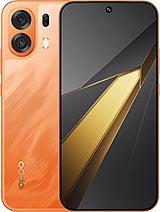
The Reno15c keeps things simple: glass front and back with a frame thin enough to slip into a pocket and light enough to forget you're carrying it. At 8.1mm thick and 195g, it sits comfortably between pocket-friendly and durable. The IP68/IP69 rating means you can dunked it for 30 minutes at 1.5 meters and it shrugs off high-pressure water jets, which beats the rain-only certificates many rivals settle for at this price. Gorilla Glass+ and AGC Dragontrail on the back are solid choices; neither is exotic, but both have proven track records. The dual nano-SIM slot is straightforward, though the lack of NFC is a notable omission for buyers in markets where contactless payment has become routine.
Display
The 6.57-inch AMOLED panel is one of the Reno15c's real strengths. It runs at 120Hz, renders 1 billion colors, and peaks at 1400 nits in high brightness mode, which means you can actually read it in direct sunlight without squinting and scrolling feels fluid rather than stuttery. The 88.6 percent screen-to-body ratio is respectable for 2026. The main drawback is resolution: 1080 x 2372 pixels lands at 397 ppi, and on a display this size, text and fine detail lack the crispness of 1440p panels you will find on competing devices at the same price. It is not eye-watering, but it is noticeable in reading apps and photo galleries where sharpness counts. If you spend hours scrolling or working on-screen, the 1080p ceiling here will likely frustrate.
Performance
The Snapdragon 6 Gen 1 is a capable chip for everyday tasks: email, messaging, social media, and light browsing run without lag or stuttering. However, it is the entry-level end of mid-range performance, and that shows in gaming and content creation workflows. Demanding titles or apps that lean on GPU acceleration will see occasional frame drops and thermal throttling under load. Multitasking between heavy apps (streaming video, photo editing, navigating while on a call) introduces noticeable delays. For the price, rivals with Snapdragon 7 Gen 3 or competing MediaTek chips deliver noticeably snappier performance in the same test scenarios. The 8GB or 12GB RAM options help smooth things over, and UFS 3.1 storage is fast enough, but the CPU is the limiting factor here. If you plan to keep this phone for three or four years and expect performance to age gracefully, this chipset is a fair bet. If you want headroom today, you are leaving performance on the table.
Software
ColorOS 16 on top of Android 16 is Oppo's latest skin, and it strikes a reasonable balance between customization and bloat. Updates have historically been reliable, though Oppo's track record on long-term support outside flagship lines is mixed. The interface is responsive and generally stays out of your way once you set it up. One-handed navigation and gesture controls are mature by now. ColorOS integrates Oppo's own services (Cloud, AppMarket, themes), which some users find helpful and others find redundant. The bottom line is that ColorOS is neither a standout nor a burden; it is a competent Android distro that does the job without drama.
Camera
The rear camera setup is sensible without being flashy. The 50MP main sensor has an f/1.8 aperture, OIS, and PDAF, which translates to solid photos in daylight and better-than-average low-light performance for a mid-range phone. Images are detailed and color-accurate when conditions are favorable, though the processing leans toward punchy saturation rather than natural tones. The 8MP ultrawide (112 degrees, f/2.2) is the standard compromise: it captures scenes wider than the main lens but lacks detail and suffers from noticeable barrel distortion at edges. The 2MP macro is little more than a spec-sheet checkbox; real macro work demands a dedicated sensor, and this one will disappoint. The 50MP selfie camera with autofocus is pleasant for video calls and casual self-portraits, and the 100-degree field handles group shots without needing to stretch your arm. Video maxes out at 4K 30fps, which is serviceable but behind phones with 4K 60fps or 8K options. Overall, the camera feels competent for social media and daily use but lacks the zoom range and video finesse of more expensive competitors.
Battery & Charging
The 7000 mAh battery is generously sized and translates to real-world endurance. Heavy users should comfortably clear a full day, and moderate use often stretches beyond 36 hours before a recharge is necessary. The 80W wired charging is respectable, though it is becoming table-stakes in this class; rivals offer the same or faster. There is no wireless charging, which is standard for this price point, so do not expect that convenience. The IP68/IP69 rating means the charging port can handle spills and dust without complaint, a practical touch often overlooked in budget and mid-range phones. Battery degradation over time will depend on your charging habits, but the Si/C chemistry suggests reasonable longevity for a 2026 mid-ranger.
Value & Verdict
At approximately 330 EUR, the Reno15c sits in the crowded mid-range. For that money, you get a well-balanced package: solid build, punchy display, dependable battery, and a camera that handles most shots without fussing. The main trade-offs are the 1080p screen (which should be 1440p at this price by now) and the Snapdragon 6 Gen 1's performance ceiling, which feels slightly behind peers. There is also no NFC, which is an odd omission in 2026 for a device of this standing. If your priorities are a large, bright screen, all-day battery, and a camera that works rather than wows, the Reno15c is a straightforward choice. If you use your phone for gaming, video production, or apps that demand raw performance, or if you live in a market where contactless payments are essential, you will find more value in competitors powered by faster chips or offering more display sharpness.
Verdict
This phone suits people who prioritize battery endurance, bright display quality, and practical durability over cutting-edge performance or flagship features. Anyone expecting fast gaming performance or a razor-sharp screen should cross-shop rivals with Snapdragon 7-series chips and 1440p panels in the same band.
- 7000 mAh battery with IP68/IP69 rating and 80W charging give practical durability and all-day staying power without fuss
- 6.57-inch AMOLED display runs 120Hz and reaches 1400 nits peak brightness, making outdoor viewing and scrolling smooth and clear
- 50MP main camera with f/1.8 aperture, OIS, and PDAF delivers usable shots in most light without the churn of processing photos for minutes
- Thin, light build (8.1mm, 195g) with Gorilla Glass+ front and Dragontrail back feels solid without being a brick
- 1080p display on a 6.57-inch screen means 397 ppi, a step below 1440p rivals that cost the same or less elsewhere
- Snapdragon 6 Gen 1 handles apps and social media fine but lags noticeably in demanding games and heavy multitasking versus Snapdragon 7 series phones in a similar price band
- No NFC, microSD card slot support notwithstanding, limits payment options and future-proofing for buyers who rely on contactless
Oppo Reno15c (India) Key Specifications
The essentials at a glance. See the full spec sheet.
| Released | 2026, February 04 |
|---|---|
| Display | 6.57 inches, 105.0 cm2 (~88.6% screen-to-body ratio), AMOLED, 1B colors, 120Hz, 600 nits (typ), 1400 nits (HBM) |
| Resolution | 1080 x 2372 pixels (~397 ppi density) |
| Chipset | Qualcomm SM6450 Snapdragon 6 Gen 1 (4 nm) |
| RAM & storage | 256GB 8GB RAM, 256GB 12GB RAM |
| Main camera | 50 MP, f/1.8, 26mm (wide), 1/1.95", 0.8µm, PDAF, OIS 8 MP, f/2.2, 16mm, 112˚ (ultrawide), 1/4.0", 1.12µm 2 MP (macro) |
| Selfie camera | 50 MP, f/2.0, 100˚, 18mm (ultrawide), AF |
| Battery | 7000 mAh |
| Software | Android 16, ColorOS 16 |
| Dimensions | 158.2 x 74.9 x 8.1 mm (6.23 x 2.95 x 0.32 in) |
| Weight | 195 g (6.88 oz) |
| Build | Glass front (Gorilla Glass+), glass back (AGC Dragontrail DT-Star D+) |
| Durability | IP68/IP69 dust tight and water resistant (high pressure water jets; immersible up to 1.5m for 30 min) |
| Network | GSM / HSPA / LTE / 5G |
| NFC | No |
| USB | USB Type-C 2.0, OTG |
Oppo Reno15c (India) FAQ
Common questions, answered from the spec sheet.
Does the Reno15c (India) support 5G?
Yes. The Reno15c (India) supports 5G networks.
What chipset does the Reno15c (India) use?
The Reno15c (India) runs on the Qualcomm SM6450 Snapdragon 6 Gen 1 (4 nm).
What display does the Reno15c (India) have?
A 6.57 inches, 105.0 cm2 (~88.6% screen-to-body ratio) AMOLED, 1B colors, 120Hz, 600 nits (typ), 1400 nits (HBM), 1080 x 2372 pixels (~397 ppi density).
How big is the Reno15c (India) battery?
The Reno15c (India) has a 7000 mAh battery.
Does the Reno15c (India) have NFC?
No, the Reno15c (India) does not list NFC support.
Is the Reno15c (India) water resistant?
The Reno15c (India) carries a IP68/IP69 dust tight and water resistant (high pressure water jets; immersible up to 1.5m for 30 min) rating.
Does the Reno15c (India) support a microSD card?
Yes, the Reno15c (India) supports expandable storage (microSDXC).
Alternatives to consider
If the Reno15c (India) isn’t quite right, these are the closest calls.

Reno15c 5G

Reno16c
K14 Plus

Reno15 FS

Galaxy F70 Pro