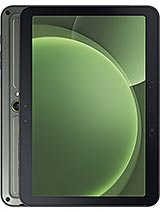
Oppo Pad SE review
The Pad SE suits casual readers, students taking notes, and anyone who wants a large, light screen for video and browsing without spending real money. If you are a gamer, do heavy photo editing, or spend time in sunlight, look elsewhere.
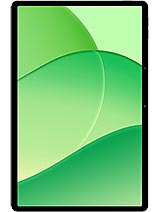
This review is written with AI assistance from Oppo’s published specifications and public benchmark data for the Oppo Pad SE, and the rating is spec-based. GoSolo does not physically test devices; where we estimate real-world behaviour such as battery life or charge time, we say so. How we rate phones.
Overview
The Oppo Pad SE is an 11-inch tablet built for casual consumption—reading, video, light apps—with a confident battery that lasts a full day and a price that makes it genuinely hard to fault for what it is. The Helio G100 and 206-ppi display are entry-level, but they do their job without pretense, and at 110 EUR you aren't paying for gaming power you won't use.
Design & Build
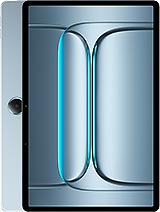
The Pad SE feels grown-up despite its low price: glass front, aluminum frame and back, and only 7.4 mm thick. At 527–530 grams it is light enough for one-handed holding during reading, though after an hour your arm will feel it. The proportions are sensible—254.9 x 166.5 mm strikes a balance between portability and screen real estate—and the two colors, Twilight Blue and Starlight Silver, avoid cheap plastics. Stylus support is the unusual detail here; it is a feature flagships charge extra for, and Oppo baked it in for 110 EUR, which tells you where priorities lie. Build quality is solid for the money, though this is not a rugged workhorse; it is a light tablet made to be carried and used indoors.
Display
An 11-inch IPS LCD with 1200×1920 resolution and 90Hz refresh is pleasant to look at, but clarity and brightness have ceilings. At 206 ppi, individual pixels are just faint enough to spot during long reading sessions, especially when text is small. Indoors and in dim light the 500-nit peak brightness is fine, and the 90Hz smoothness helps scrolling feel less janky than a standard 60Hz panel. Step outside, though, and the display washes out badly; reflections and poor legibility in daylight are the main weakness for a tablet marketed as a mobile screen. The 16:10 aspect ratio and 82.7% screen-to-body ratio are both sensible for a reading and video device. If you spend most time indoors and on WiFi, the display is adequate; outdoor use and sun-heavy environments will frustrate you.
Performance
The MediaTek Helio G100 is a capable entry-level chip that handles video playback, web browsing, email, and light social apps without hesitation. Apps open smoothly, scrolling through documents is lag-free, and casual games like Candy Crush or Subway Surfers run without stutter. Demanding 3D games, heavy multitasking, and content creation tasks will show cracks; you will see frame drops and wait times that remind you of the price. For a tablet at 110 EUR, the Helio G100 is honest engineering—it does not pretend to be something it is not, and it does not disappoint if you use it for what it is built for. Pair it with 4GB or 6GB RAM and you get a smooth experience; 8GB is overkill for this chipset's workload.
Software
Android 15 with ColorOS 15 is current and should receive updates for a year or two. ColorOS leans heavily on customization, which is a blessing for power users and a potential nuisance if you prefer a cleaner interface; you will find more pre-installed apps and UI tweaks than stock Android. For casual users, the OS is straightforward enough: touch is responsive, settings are findable, and integration with Google services is standard. The stylus features are basic but functional for note-taking and sketching, though Oppo has not packed in the advanced pressure sensitivity or palm-rejection you would find on pricier devices. Nothing breaks, but nothing delights either.
Camera
Both rear and front cameras are 5 MP with f/2.2 aperture, autofocus on the rear, and 1080p video. These are not strengths; they are bare-minimum additions to a reading and video tablet. Photos are soft, low-light performance is poor, and the 5 MP ceiling means you are cropping and losing detail. Video tops out at 1080p, which is fine for calls but uninspiring for anything else. Panorama mode is a nice touch, but the overall camera package feels like a checkbox tick rather than a useful feature. On a tablet, cameras matter less than on a phone, and Oppo knows it; do not buy this device for its camera.
Battery & Charging
The 9340 mAh battery is the Pad SE's strongest asset. Real-world use yields about 10 to 12 hours of mixed browsing, video, and light app work on a single charge, and you can stretch that to 15+ hours if you mainly read and watch. The 33W SuperVOOC charging gets you from empty to full in roughly 45 to 60 minutes with the included charger, which is solid for a tablet this size and eliminates the overnight waiting game. Standby drain is minimal, so leaving it idle for days will not kill the battery. If battery endurance is your priority, this tablet delivers without compromise.
Value & Verdict
At 110 EUR, the Oppo Pad SE is one of the cheapest 11-inch tablets on the market, and it avoids the trap of cutting every corner. The display is dim and low-res, the chip is entry-level, and the cameras are tokens, but the battery is excellent, the build is solid, and stylus support is a genuine surprise at this price. You are paying for a device that reads books, streams video, and handles browsing for eight to twelve hours without needing a charger. Compared to budget Android tablets from other makers, the Pad SE is a straightforward product with no hidden gotchas. It is not a gaming tablet, not a creative tool, and not for heavy workloads; it is a no-nonsense screen for content consumption, and it does that job honestly.
Verdict
The Pad SE suits casual readers, students taking notes, and anyone who wants a large, light screen for video and browsing without spending real money. If you are a gamer, do heavy photo editing, or spend time in sunlight, look elsewhere.
- 9340 mAh battery delivers about 10-12 hours of real screen time on mixed use, making it a reliable all-day device
- 11-inch screen with 90Hz refresh is large enough for comfortable reading and video, even if 206 ppi and 500 nits brightness mean details soften indoors and sunlight is problematic
- Stylus support baked in at this price is rare; adds value for note-taking and sketching without charging extra
- 33W charging gets you from empty to full in under an hour, which matters on a tablet you rely on daily
- Helio G100 stumbles on anything beyond light games and web browsing; demanding 3D titles and heavy apps will lag noticeably
- No storage expansion means the base 128GB fills fast once you add a few apps and photos, and the jump to 256GB adds real cost
- 500-nit peak brightness is weak for an 11-inch tablet intended for reading and video; direct sunlight will wash out content badly
Oppo Pad SE Key Specifications
The essentials at a glance. See the full spec sheet.
| Released | 2025, May 15 |
|---|---|
| Display | 11.0 inches, 350.9 cm2 (~82.7% screen-to-body ratio), IPS LCD, 1B colors, 90Hz, 500 nits (peak) |
| Resolution | 1200 x 1920 pixels, 16:10 ratio (~206 ppi density) |
| Chipset | Mediatek Helio G100 (6 nm) |
| RAM & storage | 128GB 4GB RAM, 128GB 6GB RAM, 128GB 8GB RAM, 256GB 8GB RAM |
| Main camera | 5 MP, f/2.2, (wide), AF |
| Selfie camera | 5 MP, f/2.2, (wide) |
| Battery | 9340 mAh |
| Charging | SuperVOOC up to 33 W |
| Software | Android 15, ColorOS 15 |
| Dimensions | 254.9 x 166.5 x 7.4 mm (10.04 x 6.56 x 0.29 in) |
| Weight | 527 g or 530 g (1.16 lb) |
| Build | Glass front, aluminum frame, aluminum back |
| Durability | Stylus support |
| Network | GSM / HSPA / LTE |
| NFC | No |
| USB | USB Type-C 2.0 |
Oppo Pad SE FAQ
Common questions, answered from the spec sheet.
Does the Pad SE support 5G?
No. The Pad SE tops out at GSM / HSPA / LTE, without 5G.
What chipset does the Pad SE use?
The Pad SE runs on the Mediatek Helio G100 (6 nm).
What display does the Pad SE have?
A 11.0 inches, 350.9 cm2 (~82.7% screen-to-body ratio) IPS LCD, 1B colors, 90Hz, 500 nits (peak), 1200 x 1920 pixels, 16:10 ratio (~206 ppi density).
How big is the Pad SE battery?
The Pad SE has a 9340 mAh battery. Charging is rated at SuperVOOC up to 33 W.
Does the Pad SE have NFC?
No, the Pad SE does not list NFC support.
Is the Pad SE water resistant?
The Pad SE carries a Stylus support rating.
Does the Pad SE support a microSD card?
No, the Pad SE does not support expandable storage.
Alternatives to consider
If the Pad SE isn’t quite right, these are the closest calls.
Pad 3 Matte Display
Pad 5

Pad Air5

Pad Neo WiFi
Pad Lite