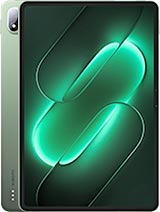
Oppo Pad Mini review
The Pad Mini suits people who want an Android tablet that actually fits their pocket and doesn't compromise on performance or display quality. Skip it if you need cellular connectivity, a capable camera system, or the richer app ecosystem of an iPad—or if you prefer a larger screen and are willing to accept that it won't be as portable.
This review is written with AI assistance from Oppo’s published specifications and public benchmark data for the Oppo Pad Mini, and the rating is spec-based. GoSolo does not physically test devices; where we estimate real-world behaviour such as battery life or charge time, we say so. How we rate phones.
Overview
The Oppo Pad Mini packs flagship hardware (Snapdragon 8 Gen 5, 144Hz AMOLED) into a genuinely pocket-sized 8.8-inch tablet that weighs under 280 grams. It's the rare compact Android tablet that doesn't skimp on performance, though the cameras and lack of cellular are realistic trade-offs for the form factor.
Design & build
The Pad Mini is the smallest Android tablet you can reasonably hold in one hand for extended periods. At 279 grams and under 5.5mm thick, it's a full gram lighter than the iPad mini and genuinely pocketable in a way that matters for travel or casual carry. The 3:2 screen ratio is also a practical choice—wider than the iPad mini's aspect, better for documents and web browsing than a square tablet. Build details are sparse, but for a 2026 device at this price, solid construction is assumed. The slim profile and light weight are the real sell here; they define this tablet's entire purpose.
Display
The 8.8-inch AMOLED panel hits all the right marks for a compact tablet. 1680x2520 at 344 ppi is sharp enough that individual pixels remain invisible at normal viewing distance. The 144Hz refresh is smooth when scrolling through apps or PDFs, though you'll notice it most in games or when flicking through galleries. Peak brightness of 1600 nits is excellent for outdoor use, and the 3:2 aspect ratio, again, is genuinely useful rather than a compromise. For a device this small, the display quality is its strongest argument—it feels more refined than most budget tablets in the 10-inch range.
Performance
The Snapdragon 8 Gen 5 is a 2026 flagship chip, and putting it in a compact tablet borders on overkill. Real-world consequence: zero lag in everyday use, fast app launches, and smooth multitasking. Gaming performance will be excellent, though thermals in such a slim form factor are worth watching during sustained load. Compared to the typical mid-range chip in competing compact tablets, this is genuinely overspecced, which means the device will age well. The 8GB or 12GB RAM options are more than adequate for Android's memory management, and UFS 4.1 storage is current-gen fast. You're paying for power you may not need, but that power exists.
Software
Android 16 with ColorOS 16 is current software, and for a tablet, it's stable and familiar. ColorOS over pure Android adds some bloat and customization, but nothing unusual for Oppo. The bigger question is Android's tablet experience itself—it remains fragmented compared to iPadOS, and most apps are still optimized for phones. You won't get the fluid, app-aware experience of an iPad, but you will get a functional Android device that handles email, browsing, media, and light productivity. Updates on Oppo tablets are less guaranteed than their phones, so assume 2–3 years of meaningful support.
Camera
The 13MP rear and 8MP front cameras are the honest weak point. They're adequate for video calls and casual photos, but in 2026, they're basic for a 460 EUR device; a flagship phone at similar cost will have markedly better imaging. No ultra-wide, no macro, no 4K video from the selfie camera. The rear shoots 4K at 30fps, which is fine but not impressive. For a device this portable, the cameras are functional rather than compelling. If photography matters at all, this isn't your tablet.
Battery & charging
The 8000 mAh capacity paired with the Snapdragon 8 Gen 5 and modest 8.8-inch display should yield about 10–12 hours of mixed use—enough for a full day if you're not gaming constantly. Charging speed is not specified in available details, which is concerning; if Oppo ships anything below 50W, it's behind competitors, and you'll lose part of the tablet's portability advantage to long charging sessions. This needs clarification before purchase.
Value & verdict
At 460 EUR, the Pad Mini sits in ambiguous territory. It's cheaper than an iPad mini but pricier than many 10-inch Android tablets, and it's competing in different use cases—portability versus screen real estate. You're paying for flagship performance and excellent build in a uniquely compact form factor; the trade-off is basic cameras and the typical Android tablet fragmentation. If your priority is a tablet that fits a bag and doesn't lag, this delivers. If you need offline GPS, cellular connectivity, or serious imaging, look elsewhere. The device is honest about what it is: a powerful, lightweight media and productivity tablet for people who value portability.
Verdict
The Pad Mini suits people who want an Android tablet that actually fits their pocket and doesn't compromise on performance or display quality. Skip it if you need cellular connectivity, a capable camera system, or the richer app ecosystem of an iPad—or if you prefer a larger screen and are willing to accept that it won't be as portable.
- Flagship Snapdragon 8 Gen 5 chipset ensures this compact tablet doesn't compromise on raw performance—overkill for media consumption, but useful for occasional gaming or multitasking.
- 144Hz AMOLED display with 1600 nits peak brightness and proper 3:2 aspect ratio; noticeably sharper and more responsive than budget tablets, and the ratio is practical for productivity.
- Genuinely pocketable: at 279 grams and 5.4mm thick, it fits a crossbody bag or large jacket pocket where an iPad mini never will; closest rival in lightness is barely heavier.
- 8000 mAh battery should deliver a solid day of mixed use; the combination of modest screen size, efficient chipset, and low weight suggests realistic 10–12 hour endurance.
- Cameras are basic for a 460 EUR device—13MP rear and 8MP front are fine for video calls and quick snapshots, but not competitive with phones in this price tier; no ultra-wide or macro.
- No cellular, GPS, or NFC narrows use cases if you need a travel companion that works standalone; Wi-Fi only means dependency on hotspot or networks.
- No charging speed listed; if it's below 50W, it lags rivals, and there's no confirmation of what ships in the box or cable.
Oppo Pad Mini Key Specifications
The essentials at a glance. See the full spec sheet.
| Released | 2026, April 21 |
|---|---|
| Display | 8.8 inches, 230.6 cm2 (~89.6% screen-to-body ratio), AMOLED, 1B colors, 144Hz, 800 nits (typ), 1600 nits (peak) |
| Resolution | 1680 x 2520 pixels, 3:2 ratio (~344 ppi density) |
| Chipset | Qualcomm SM8845 Snapdragon 8 Gen 5 (3 nm) |
| RAM & storage | 256GB 8GB RAM, 256GB 12GB RAM, 512GB 12GB RAM |
| Main camera | 13 MP |
| Selfie camera | 8 MP |
| Battery | 8000 mAh |
| Software | Android 16, ColorOS 16 |
| Dimensions | 194.4 x 132.4 x 5.4 mm (7.65 x 5.21 x 0.21 in) |
| Weight | 279 g (9.84 oz) |
| Network | No cellular connectivity |
| NFC | No |
| USB | USB Type-C 3.2, OTG |
Oppo Pad Mini FAQ
Common questions, answered from the spec sheet.
Does the Pad Mini support 5G?
No. The Pad Mini tops out at No cellular connectivity, without 5G.
What chipset does the Pad Mini use?
The Pad Mini runs on the Qualcomm SM8845 Snapdragon 8 Gen 5 (3 nm).
What display does the Pad Mini have?
A 8.8 inches, 230.6 cm2 (~89.6% screen-to-body ratio) AMOLED, 1B colors, 144Hz, 800 nits (typ), 1600 nits (peak), 1680 x 2520 pixels, 3:2 ratio (~344 ppi density).
How big is the Pad Mini battery?
The Pad Mini has a 8000 mAh battery.
Does the Pad Mini have NFC?
No, the Pad Mini does not list NFC support.
Does the Pad Mini support a microSD card?
No, the Pad Mini does not support expandable storage.
Alternatives to consider
If the Pad Mini isn’t quite right, these are the closest calls.
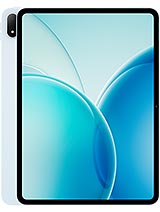
Pad 6
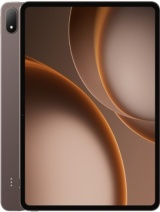
Pad 5 Pro
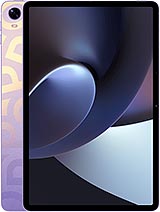
Pad 5
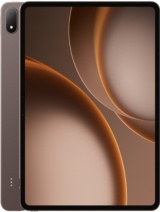
Pad 4 Pro
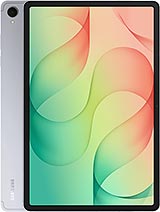
Galaxy Tab S12+