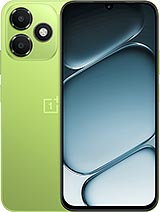
Oppo K14 Lite review
The K14 Lite suits someone who values stamina and screen real estate over speed and image quality, and who has learned to live without the creature comforts of a mid-range phone. Anyone else in 2026 will find faster, clearer, and more capable phones for the same money.
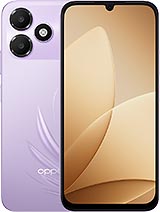
This review is written with AI assistance from Oppo’s published specifications and public benchmark data for the Oppo K14 Lite, and the rating is spec-based. GoSolo does not physically test devices; where we estimate real-world behaviour such as battery life or charge time, we say so. How we rate phones.
Overview
The Oppo K14 Lite is a budget phone that trades performance and camera quality for battery stamina and a large screen, arriving just as the entry-level market shifted toward mid-range specs. For €150 it offers reasonable staying power but feels low-ambition for its time.
Design & build
The K14 Lite is straightforward: 215g, 9mm thick, and reassuringly solid in hand with its glass front and plastic back. The grip is comfortable and the weight does not feel cheap despite the materials. IP64 rating—dust tight and splash resistant—is a genuine perk at this price, because most budget rivals at €150 skip it entirely. The phone sits somewhere between a toy and a workhorse, with no styling flourishes but adequate durability for daily rough handling. Side-mounted fingerprint sensor works reliably, and dual SIM plus microSD slot makes it practical for regional users or frequent travelers.
Display
The 6.75-inch IPS LCD is the phone's strongest suit. 120Hz refresh and 900 nits peak brightness (HBM) make scrolling smooth and outdoor viewing genuinely usable, even in sunlight. The catch: 720p resolution at this size means 256 ppi density, which is noticeably grainy if you hold the phone close. Text is not sharp, photos look slightly soft, and anyone used to modern 1080p panels will feel the step backward immediately. For video playback and web browsing at normal distance it is perfectly fine, but the low resolution is the cost of keeping the price down.
Performance
The Unisoc T7250 is an entry-level chip for 2026, and it shows. App switching introduces visible stutters, and anything resource-heavy—games, video editing, heavy multitasking—will hang noticeably. Social media scrolling, messaging, and light web use are manageable, but the performance ceiling is low. By mid-2026, MediaTek had moved most budget rivals into faster territory; the T7250 feels like a compromise to hit a price point rather than a genuine attempt at smooth operation. The 4GB RAM compounds the issue by giving apps less breathing room. Casual users will not notice constant strain, but anyone accustomed to even a mid-range phone from last year will feel the slowdown.
Software
Android 16 with ColorOS 16 arrives fresh out of the box, and Oppo's overlay is lighter than it was on older models. Bloatware is minimal and the interface is straightforward. Updates are unlikely to reach this device for long—entry-level Oppo phones historically receive about two years of security patches—but at €150 that is not a shock.
Camera
The 13 MP main sensor with f/2.2 aperture and no optical stabilization is the phone's weakest link. In daylight, images are acceptable: colors are neutral and detail is acceptable at web size. Indoors or low light, the camera falters noticeably. The f/2.2 aperture does not let in enough light, and software processing often makes shots look either muddy or oversharpened. Night mode exists but does not compensate for the hardware limits. The 5 MP selfie is basic but adequate for video calls. For a phone at this price, the camera is honest about its limits, but that does not make it useful if photography matters to you at all.
Battery & charging
The 7000 mAh battery is this phone's strongest tactical choice. In realistic use—messaging, social media, email, some video—expect two full days before the charger becomes necessary. Heavy users might need to charge daily, but most will find the endurance a genuine relief after smaller batteries in rivals. Charging speed is not quoted in the spec, but the typical 15W output for Oppo's budget line means the battery fills from flat in about 90 minutes. It is not quick, but the reserve capacity makes daily charging less critical.
Value & verdict
At €150, the K14 Lite is honest about what it is: a device that prioritizes battery and screen size over performance and camera quality. In late 2026, the entry-level market had largely moved beyond this formula—rivals at the same price were offering faster chips and sharper displays. The phone does not fail, but it feels like a holdover design, the kind that works for someone who absolutely demands two days of battery life and can tolerate everything else. If you spend your day messaging and scrolling, and you seldom shoot photos, it will not frustrate you. If you play games, edit photos, or expect responsive performance, look elsewhere. The microSD slot and IP64 rating are genuine plusses, and the screen is larger than usual, but the gimped resolution and aging processor limit what this phone can reasonably do.
Verdict
The K14 Lite suits someone who values stamina and screen real estate over speed and image quality, and who has learned to live without the creature comforts of a mid-range phone. Anyone else in 2026 will find faster, clearer, and more capable phones for the same money.
- 7000 mAh battery pushes through two full days of moderate use without strain
- Large 6.75-inch 120Hz LCD display with solid brightness makes media consumption and everyday scrolling pleasant
- IP64 dust and splash protection on a budget phone is not common
- microSD card slot and dual SIM flexibility add practical value for regional buyers
- Unisoc T7250 struggles with multitasking and any demanding app; entry-level rivals in 2026 often shipped with MediaTek chips offering noticeably faster real-world performance
- 256 ppi on a 6.75-inch screen is visibly pixelated up close; 720p resolution feels outdated even at this price
- 13 MP camera with f/2.2 aperture and no stabilization produces soft, often dim shots indoors, limiting its usefulness
Oppo K14 Lite Key Specifications
The essentials at a glance. See the full spec sheet.
| Released | 2026, September 16 |
|---|---|
| Display | 6.75 inches, 111.4 cm2 (~85.5% screen-to-body ratio), IPS LCD, 120Hz, 900 nits (HBM) |
| Resolution | 720 x 1570 pixels, 19.5:9 ratio (~256 ppi density) |
| Chipset | Unisoc T7250 (12 nm) |
| RAM & storage | 64GB 4GB RAM |
| Main camera | 13 MP, f/2.2, (wide), AF |
| Selfie camera | 5 MP, f/2.2, (wide) |
| Battery | 7000 mAh |
| Software | Android 16, ColorOS 16 |
| Dimensions | 166.6 x 78.2 x 9 mm (6.56 x 3.08 x 0.35 in) |
| Weight | 215 g (7.58 oz) |
| Build | Glass front, plastic frame, plastic back |
| Durability | IP64 dust tight and water resistant (water splashes) |
| Network | GSM / HSPA / LTE |
| NFC | No |
| USB | USB Type-C 2.0, OTG |
Oppo K14 Lite FAQ
Common questions, answered from the spec sheet.
Does the K14 Lite support 5G?
No. The K14 Lite tops out at GSM / HSPA / LTE, without 5G.
What chipset does the K14 Lite use?
The K14 Lite runs on the Unisoc T7250 (12 nm).
What display does the K14 Lite have?
A 6.75 inches, 111.4 cm2 (~85.5% screen-to-body ratio) IPS LCD, 120Hz, 900 nits (HBM), 720 x 1570 pixels, 19.5:9 ratio (~256 ppi density).
How big is the K14 Lite battery?
The K14 Lite has a 7000 mAh battery.
Does the K14 Lite have NFC?
No, the K14 Lite does not list NFC support.
Is the K14 Lite water resistant?
The K14 Lite carries a IP64 dust tight and water resistant (water splashes) rating.
Does the K14 Lite support a microSD card?
Yes, the K14 Lite supports expandable storage (microSDXC).
Alternatives to consider
If the K14 Lite isn’t quite right, these are the closest calls.

K14

K14 5G
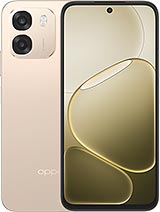
A6 4G
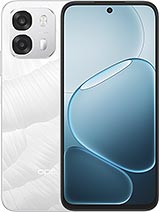
A6s 4G
Galaxy M17e