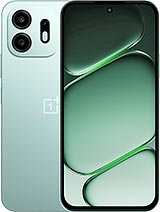
Oppo K13x 5G review
The K13x suits someone who spends most of the day streaming, scrolling, and messaging and prioritizes a phone that won't die by dinner. Anyone expecting sharp visuals or smooth gaming should look elsewhere—even budget competitors offer 1080p displays now, and the thickness is genuinely awkward for 2025.
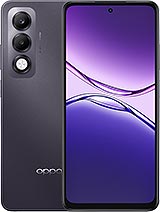
This review is written with AI assistance from Oppo’s published specifications and public benchmark data for the Oppo K13x 5G, and the rating is spec-based. GoSolo does not physically test devices; where we estimate real-world behaviour such as battery life or charge time, we say so. How we rate phones.
Overview
The Oppo K13x is a thick-bodied, budget-friendly 5G phone that prioritizes battery endurance and screen smoothness over raw performance. For its price in India, the 6000mAh cell and 120Hz IPS display are the main draws, though the 720p resolution and entry-level chipset limit it to casual use.
Design & build
The K13x is a brick. At 194g and 7.9mm thick, it feels heavier and more solid than most rivals at this price, but not in an elegant way—more like you're carrying an older flagship from three years ago. The IP65 rating and Gorilla Glass 7i are genuine durability perks; it shrugs off dust, splashes, and pocket scratches. The flat sides and plastic-and-glass body scream budget, and there's no standout design language here. For a 2025 release, the thickness is a step backward; phones this size are usually 1–2mm slimmer. Colors (Sunset Peach, Midnight Violet, Breeze Blue) are fine, nothing more.
Display
The 6.67-inch IPS LCD is bright and smooth. 120Hz scrolling feels responsive, and the 1000-nit peak brightness (HBM) holds its own in sunlight—enough to read outdoors without squinting. The problem is the resolution: 720p on this diagonal is 264 ppi, which means text looks grainy and edges lack sharpness. Most rivals at ₹20,399 have moved to 1080p or higher by now, so this feels like a deliberate cost-cut. Color accuracy on IPS is decent but unremarkable. For streaming and casual browsing, it works. For reading or detailed web work, you'll notice the softness.
Performance
The Dimensity 6300 is an entry-level chipset designed to keep costs low, and it shows. Everyday apps open without lag, messaging and social media run smoothly, and light gaming (PUBG Mobile at medium, Genshin Impact at low) is playable but not smooth. Sustained heavy gaming will thermal throttle within 20–30 minutes. Multitasking is adequate with 6GB or 8GB RAM (the base 4GB variant will feel cramped), but this is not a phone for power users. The Mali-G57 GPU is serviceable for casual tasks; it's a phone for video streaming, calling, and casual apps—the audience Oppo is targeting.
Software
ColorOS 15 on Android 15 is Oppo's overlay, known for bloat and aggressive app-closing in the background. Out of the box, you'll encounter promotional apps and clutter that take time to remove. Update support is typically 3 major OS versions and 4 years of security patches for Oppo, which is solid for the budget tier. The interface is responsive and customization is plentiful, but the software story here is bog-standard for the price—nothing to write home about.
Camera
A 50MP sensor with f/1.8 aperture sounds good on paper, but the 0.61µm pixel size and 1/2.88" sensor size mean each pixel captures less light than larger alternatives. Real-world photos in daylight are acceptable—good detail, decent color—but shadows lack information and low-light shots are noisy without computational help. The 2MP depth sensor is a gimmick. Video is limited to 1080p@30/60fps, which rivals typically match here, but stabilization specs are absent (likely EIS only). The 8MP selfie camera is mediocre. This is a camera that gets the job done for social media and casual snaps, not a strength.
Battery & charging
The 6000mAh cell is the K13x's strongest asset. With light use—WiFi, messaging, some video—you'll easily stretch this past a day. Heavy use (gaming, video, constant browsing) cuts that to about 14–16 hours. Screen-on time runs roughly 6–7 hours, which is typical for a phone this size and price. The 45W SuperVOOC charger is solid; you'll go from empty to 100% in about 45–60 minutes, which beats rivals limited to 30W or less. No wireless charging, as expected in this tier.
Value & verdict
At ₹20,399, the K13x prices into the mid-budget segment where you're choosing between battery life, screen quality, durability, and performance. Oppo has weighted this toward endurance and smoothness at the expense of resolution and chipset power. For someone who streams video, browses for hours, and plays casual games, this trade-off makes sense. The 6000mAh battery and 120Hz screen are genuine perks; the IP65 rating is a rare durability bonus. But the 720p display feels outdated, the chunky build is awkward, and the Dimensity 6300 limits ambitious gaming or heavy multitasking. If you prioritize screen-on time and don't mind lag-free casual use, it's reasonable. If you want a sharper display or snappier gaming, rivals with 1080p panels and slightly better chips exist at or near this price.
Verdict
The K13x suits someone who spends most of the day streaming, scrolling, and messaging and prioritizes a phone that won't die by dinner. Anyone expecting sharp visuals or smooth gaming should look elsewhere—even budget competitors offer 1080p displays now, and the thickness is genuinely awkward for 2025.
- 6000mAh battery delivers genuine all-day endurance with light use, and about 6–7 hours of continuous screen time
- 120Hz IPS LCD with 1000-nit peak brightness is smooth and bright enough outdoors for the price tier
- 45W SuperVOOC charging reaches a full charge in under an hour, practical for quick top-ups
- IP65 rating and Gorilla Glass 7i offer real durability against water splashes and everyday knocks
- 720p resolution on a 6.67-inch screen means text is noticeably pixelated; scaling up to modern 1080p would have been standard by now
- Dimensity 6300 is entry-level—handles everyday apps and casual gaming (PUBG Mobile on medium), but not sustained 3D titles or heavy multitasking
- 7.9mm thickness and 194g weight make it feel chunky compared to most phones in 2025, especially rivals with similar specs
Oppo K13x 5G Key Specifications
The essentials at a glance. See the full spec sheet.
| Released | 2025, June 23 |
|---|---|
| Display | 6.67 inches, 107.2 cm2 (~84.9% screen-to-body ratio), IPS LCD, 120Hz, 850 nits (typ), 1000 nits (HBM) |
| Resolution | 720 x 1604 pixels, 20:9 ratio (~264 ppi density) |
| Chipset | Mediatek Dimensity 6300 (6 nm) |
| RAM & storage | 128GB 4GB RAM, 128GB 6GB RAM, 128GB 8GB RAM, 256GB 8GB RAM |
| Main camera | 50 MP, f/1.8, 27mm (wide), 1/2.88", 0.61µm, PDAF 2 MP, f/2.4, (wide) |
| Selfie camera | 8 MP, f/2.0, 25mm (wide), 1/4.0", 1.12µm |
| Battery | 6000 mAh |
| Charging | SuperVOOC up to 45 W |
| Software | Android 15, ColorOS 15 |
| Dimensions | 165.7 x 76.2 x 7.9 mm (6.52 x 3.00 x 0.31 in) |
| Weight | 194 g (6.84 oz) |
| Durability | IP65 dust tight and water resistant (low pressure water jets) MIL-STD-810H compliant* * does not guarantee ruggedness or use in extreme conditions |
| Network | GSM / HSPA / LTE / 5G |
| NFC | Yes (only A5i Pro) |
| USB | USB Type-C 2.0, OTG |
Oppo K13x 5G FAQ
Common questions, answered from the spec sheet.
Does the K13x 5G support 5G?
Yes. The K13x 5G supports 5G networks.
What chipset does the K13x 5G use?
The K13x 5G runs on the Mediatek Dimensity 6300 (6 nm).
What display does the K13x 5G have?
A 6.67 inches, 107.2 cm2 (~84.9% screen-to-body ratio) IPS LCD, 120Hz, 850 nits (typ), 1000 nits (HBM), 720 x 1604 pixels, 20:9 ratio (~264 ppi density).
How big is the K13x 5G battery?
The K13x 5G has a 6000 mAh battery. Charging is rated at SuperVOOC up to 45 W.
Does the K13x 5G have NFC?
Yes, the K13x 5G has NFC.
Is the K13x 5G water resistant?
The K13x 5G carries a IP65 dust tight and water resistant (low pressure water jets) MIL-STD-810H compliant* * does not guarantee ruggedness or use in extreme conditions rating.
Does the K13x 5G support a microSD card?
Yes, the K13x 5G supports expandable storage (microSDXC).
Alternatives to consider
If the K13x 5G isn’t quite right, these are the closest calls.

K14x 5G

A5 5G
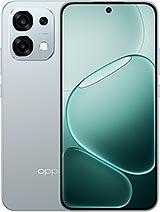
A6 Pro 5G

A6x 5G
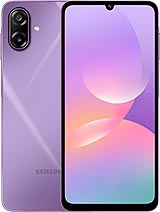
Galaxy M17e