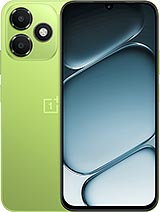
Oppo A6t Pro 4G review
The A6t Pro makes sense for buyers who prioritize durability (IP68/IP69), all-day battery life, and reliability over display sharpness or video features. If you live in a dusty climate, work on a construction site, or simply hate charging your phone, the trade-offs are worth it. Anyone else shopping the 2026 midrange should look at competitors with 1080p displays and 4K video—the savings are marginal, but the usability gap is real.

This review is written with AI assistance from Oppo’s published specifications and public benchmark data for the Oppo A6t Pro 4G, and the rating is spec-based. GoSolo does not physically test devices; where we estimate real-world behaviour such as battery life or charge time, we say so. How we rate phones.
Overview
The Oppo A6t Pro 4G delivers solid everyday endurance with a 7000mAh battery, sturdy build, and reasonable value for a 2026 midrange phone. But the 256ppi display, Snapdragon 685 chip, and 1080p video max put it squarely in the budget tier—fine for basic tasks and media, not a genuine upgrade if you've owned a phone in the past two years.
Design & Build
The Oppo A6t Pro is chunky and straightforward: 215g with plastic frame and back wrapped around a glass front. At 8.6mm thick and 166.6mm tall, it sits in that awkward middle ground—neither compact nor sleek, just practical. The weight is noticeable after a few hours of use. What saves it is the IP68/IP69 rating, which means genuine dust-tight sealing and water resistance to 1.5m for half an hour. For buyers in regions where phones end up in construction sites, kitchens, or dusty environments, that durability carries real value. The build quality is fine, not memorable—it feels like a phone that will survive routine drops better than most midrange competitors.
Display
The 6.75-inch screen is a mixed story. The 120Hz refresh rate keeps scrolling and games feeling smooth, and peak brightness at 1125 nits is genuinely useful in sunlight or glare. The 85.2% screen-to-body ratio is reasonable for 2026. But the 720p resolution across a 6.75-inch expanse yields only 256 pixels per inch, which is where the illusion breaks. Text is noticeably grainy, UI icons lack definition, and photos don't pop the way they do on competitors that have jumped to 1080p or higher at similar prices. An IPS panel at this density is adequate for watching video or casual browsing, but it's not competitive against the bar in early 2026. Oppo's decision to prioritize screen size over sharpness will bother anyone who has used a modern phone in the past year.
Performance
The Snapdragon 685 is a mainstream midrange chip that handles everyday work without strain: messaging, calls, social media, light photography editing, and moderate gaming all run without stutters. ColorOS 15 on Android 15 is lean and responsive; Oppo has resisted heavy customization, so the interface stays snappy even with the modest silicon. Opening apps takes a normal amount of time, and multitasking is smooth. Gaming isn't where this chip shines—demanding titles will throttle or require graphics compromises, but casual games and most mobile titles will run acceptably. For the price and target user (someone who needs a reliable workhorse, not a gaming or editing rig), the 685 is fit for purpose. It is not fast by flagship standards, and it was not last year's flagship chip either, but it is the right tool for this tier.
Software
Android 15 with ColorOS 15 arrives clean and responsive. Oppo has shown restraint in bloat—out of the box, you get a near-stock Android experience with a handful of useful Oppo tweaks that do not clutter the launcher or drain battery in the background. Security patches and OS updates depend on Oppo's regional support, but ColorOS has historically been prompt in 2025–2026. The fingerprint sensor is side-mounted and fast enough for daily use, though not as elegant as an under-display solution. The phone supports dual SIM and NFC (where available by region), covering connectivity bases for travelers and payment-heavy users.
Camera
The 50MP main sensor with f/1.8 and PDAF on paper looks respectable, but real-world output is competent, not impressive. In good light, photos are sharp and balanced, with accurate color. PDAF helps close-ups stay locked in focus. The problem is 1080p video capped at 30fps—that is genuinely behind in 2026, when rivals at this price routinely offer 4K at least at 30fps or even 60fps. Stills are good enough for social sharing and everyday use, but if video matters at all, this is a real step back. The 8MP selfie camera is fine for video calls and casual portraits, with nothing to distinguish it. Night mode is basic; Oppo's computational photography is present but not aggressive. The camera does not fail, but it does not excel, and the video limitation exposes a cost corner that will frustrate anyone who films frequently.
Battery & Charging
The 7000mAh battery is the phone's best asset. In real use with typical work, messaging, and media consumption, you will see 2–3 days before needing a charge. That longevity is valuable in contexts where access to power is irregular or inconvenient. The 45W charger is not blazingly fast—midrange flagships now hit 100W or beyond—but it is solid for this tier and reaches full charge in roughly 1.5 hours. No wireless charging, which is standard for phones at this price. For buyers who prioritize not having to hunt for a charger every day, the battery is a genuine win.
Value & Verdict Context
The A6t Pro sits at the midrange floor of 2026, where corners are cut on display sharpness, camera video, and design refinement. It competes against other entry midrange phones: reliable, durable (thanks to the IP rating), and long-lasting (battery), but not innovative or surprising. The Snapdragon 685 and 8GB RAM keep it functional, and ColorOS 15 does not slow it down. Where it loses is the screen resolution and 1080p video ceiling—these feel like deliberate cost cuts that undermine the premium a buyer would pay over a true budget phone. The lack of fast charging and the chunky industrial design add to the sense that this is a stripped-down option, not a value leader.
Verdict
The A6t Pro makes sense for buyers who prioritize durability (IP68/IP69), all-day battery life, and reliability over display sharpness or video features. If you live in a dusty climate, work on a construction site, or simply hate charging your phone, the trade-offs are worth it. Anyone else shopping the 2026 midrange should look at competitors with 1080p displays and 4K video—the savings are marginal, but the usability gap is real.
- 7000mAh battery with robust 45W charging, delivering 2–3 days of real use in typical conditions
- IP68/IP69 rating for dust and water resistance at 1.5m for 30 minutes—a practical durability gain over most rivals at this price
- 120Hz 6.75-inch display with high peak brightness (1125 nits) makes scrolling fluid and outdoor visibility solid despite the low pixel density
- Snapdragon 685 handles everyday work and light gaming without hiccups; ColorOS 15 runs without bloat out of the box
- 256ppi screen density is noticeably coarse at arm's length—text and UI edges lack the sharpness buyers expect in 2026, even at this price
- 1080p video capture on a 50MP sensor feels outdated; rivals at this price now offer 4K recording
- 215g weight and thick 8.6mm bezel make it feel heavier and less refined than 2025 competitors
Oppo A6t Pro 4G Key Specifications
The essentials at a glance. See the full spec sheet.
| Released | 2026, January 13 |
|---|---|
| Display | 6.75 inches, 111.4 cm2 (~85.2% screen-to-body ratio), IPS LCD, 120Hz, 1125 nits (peak) |
| Resolution | 720 x 1570 pixels, 19.5:9 ratio (~256 ppi density) |
| Chipset | Qualcomm SM6225 Snapdragon 685 (6 nm) |
| RAM & storage | 128GB 8GB RAM |
| Main camera | 50 MP, f/1.8, (wide), PDAF Auxiliary lens |
| Selfie camera | 8 MP, f/2.0, (wide) |
| Battery | 7000 mAh |
| Software | Android 15, ColorOS 15 |
| Dimensions | 166.6 x 78.5 x 8.6 mm (6.56 x 3.09 x 0.34 in) |
| Weight | 215 g (7.58 oz) |
| Build | Glass front, plastic frame, plastic back |
| Durability | IP68/IP69 dust tight and water resistant (high pressure water jets; immersible up to 1.5m for 30 min) |
| Network | GSM / HSPA / LTE |
| NFC | Yes (market/region dependent) |
| USB | USB Type-C 2.0, OTG |
Oppo A6t Pro 4G FAQ
Common questions, answered from the spec sheet.
Does the A6t Pro 4G support 5G?
No. The A6t Pro 4G tops out at GSM / HSPA / LTE, without 5G.
What chipset does the A6t Pro 4G use?
The A6t Pro 4G runs on the Qualcomm SM6225 Snapdragon 685 (6 nm).
What display does the A6t Pro 4G have?
A 6.75 inches, 111.4 cm2 (~85.2% screen-to-body ratio) IPS LCD, 120Hz, 1125 nits (peak), 720 x 1570 pixels, 19.5:9 ratio (~256 ppi density).
How big is the A6t Pro 4G battery?
The A6t Pro 4G has a 7000 mAh battery.
Does the A6t Pro 4G have NFC?
Yes, the A6t Pro 4G has NFC.
Is the A6t Pro 4G water resistant?
The A6t Pro 4G carries a IP68/IP69 dust tight and water resistant (high pressure water jets; immersible up to 1.5m for 30 min) rating.
Does the A6t Pro 4G support a microSD card?
Yes, the A6t Pro 4G supports expandable storage (microSDXC).
Alternatives to consider
If the A6t Pro 4G isn’t quite right, these are the closest calls.

A6t Pro 5G

A6t 4G

A6 4G

A6s 4G

Galaxy M17e