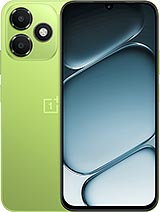
Oppo A6t Pro review
This phone suits anyone in a region with unreliable grid access or long stretches away from a charger who can tolerate a blurry screen in exchange for two days of battery life. Everyone else should cross-shop sharper or faster rivals at the same cost.

This review is written with AI assistance from Oppo’s published specifications and public benchmark data for the Oppo A6t Pro, and the rating is spec-based. GoSolo does not physically test devices; where we estimate real-world behaviour such as battery life or charge time, we say so. How we rate phones.
Overview
The A6t Pro is an endurance-focused budget-midrange phone that sacrifices screen clarity for battery life and charging speed—a sensible trade for markets where the grid is unreliable. The Snapdragon 685 handles daily tasks and light gaming just fine, but there is no camera quality or performance upside here that justifies buying it over rivals.
Design & build
At 215g and 8.6mm thick, the A6t Pro is slim and not overweight—a pleasant surprise for a 7000 mAh battery phone. The glass front, plastic frame, and plastic back keep it light but feel less durable than metal-framed rivals. The IP68/IP69 rating is genuine: it survives dust immersion and high-pressure water jets, which matters in dusty or humid climates. The side-mounted fingerprint sensor is reliable and fast. Two colors (Crystal Violet, Crystal White) are understated without flair.
Display
The 6.75-inch IPS LCD is big and bright (1125 nits peak), making it legible in direct sunlight and giving plenty of viewing area for streaming or reading. The 120Hz refresh feels smooth when scrolling. But 720p resolution on this canvas is a real sacrifice: at 256 ppi, text is noticeably grainy, and UI elements look larger and less sharp than phones at the same price point that hit 1080p. This is a deliberate choice to save power, and it pays off in battery life, but it is the first thing you notice coming from a sharper phone.
Performance
The Snapdragon 685 is a competent mainstream midrange chip for 2026. It handles messaging, social media, video playback, and everyday apps without stutter. Light games like turn-based strategy or puzzle titles run smoothly. Heavier 3D games (action, racing) work at moderate settings but will throttle or drop frames after 15–20 minutes under load, which is normal for this silicon. If you are not a gamer or only play casual titles, you will not notice the limits. The 8GB of RAM and UFS 2.2 storage are adequate for multitasking, though app switching is not lightning-quick.
Software
ColorOS 15 on Android 15 is Oppo's overlay, and it is clean enough for a budget phone—fewer bloatware pre-installs than some rivals. Updates are not guaranteed for long, so expect two years of major Android releases and maybe three of security patches. The side-mounted fingerprint sensor works reliably and is faster than older capacitive options, but face unlock is absent, which is a minor convenience loss for a phone in this category.
Camera
The 50 MP main camera (f/1.8, PDAF) is decent in bright light, producing sharp, well-exposed photos with good color. Indoors or at dusk, noise creeps in and detail softens—typical for a modest sensor at this price. The f/1.8 aperture helps, but there is no night mode to recover underexposed shadows, so low-light shooting is a weakness. The 8 MP selfie camera is basic but adequate for video calls. Video maxes out at 1080p/30fps with no ultrawide option, limiting creative range. The panorama mode is a nice inclusion but rarely essential. Overall, this is a functional camera for daylight snapshots, not a strength of the phone.
Battery & charging
The 7000 mAh battery easily stretches to a full day and a half on moderate use (mixed scrolling, messaging, some video). If you favor text-heavy apps and skim media, you can eke out two days. This is a meaningful advantage over smaller-battery rivals and a key reason to consider this phone in regions where charging access is sparse or unreliable. The 45W SuperVOOC charging is quick: you hit 80% in about 30–40 minutes and full in under an hour. That speed means you can top up while eating breakfast or during a rest stop, reducing the need to plan your day around charging windows.
Value & verdict
The A6t Pro occupies an awkward middle ground. It costs more than true budget phones but lacks the camera quality, chipset grunt, or display sharpness of better-equipped midrange competitors. The battery and charging speed are genuine strengths, but only if endurance matters more to you than pixel density or gaming performance. At its price point, rivals often offer 1080p or higher resolution, faster chips, or better zoom lenses. The A6t Pro is a specialist tool: it excels if you value battery life above all else, have limited charging access, and use your phone for media consumption and apps rather than gaming. For anyone wanting a all-rounder at this price, a sharper display or stronger camera usually tips the scales elsewhere.
Verdict
This phone suits anyone in a region with unreliable grid access or long stretches away from a charger who can tolerate a blurry screen in exchange for two days of battery life. Everyone else should cross-shop sharper or faster rivals at the same cost.
- 7000 mAh battery stretches to nearly two days on moderate use, a real advantage for anyone far from a charger
- 45W charging refills the tank in under an hour, fast enough to top up between errands
- IP68/IP69 water and dust resistance is solid for the price tier
- 120Hz display feels smooth despite the low resolution
- 256 ppi pixel density on a 6.75-inch screen makes text noticeably blocky and icons fuzzy compared to rivals at this price
- Snapdragon 685 throttles after 15–20 minutes of sustained 3D gaming; no gaming endgame here
- 1080p video capture and no ultrawide camera means limited creative options
Oppo A6t Pro Key Specifications
The essentials at a glance. See the full spec sheet.
| Released | 2026, January 13 |
|---|---|
| Display | 6.75 inches, 111.4 cm2 (~85.2% screen-to-body ratio), IPS LCD, 120Hz, 1125 nits (peak) |
| Resolution | 720 x 1570 pixels, 19.5:9 ratio (~256 ppi density) |
| Chipset | Qualcomm SM6225 Snapdragon 685 (6 nm) |
| RAM & storage | 128GB 8GB RAM |
| Main camera | 50 MP, f/1.8, (wide), PDAF Auxiliary lens |
| Selfie camera | 8 MP, f/2.0, (wide) |
| Battery | 7000 mAh |
| Charging | SuperVOOC up to 45 W |
| Software | Android 15, ColorOS 15 |
| Dimensions | 166.6 x 78.5 x 8.6 mm (6.56 x 3.09 x 0.34 in) |
| Weight | 215 g (7.58 oz) |
| Build | Glass front, plastic frame, plastic back |
| Durability | IP68/IP69 dust tight and water resistant (high pressure water jets; immersible up to 1.5m for 30 min) |
| Network | GSM / HSPA / LTE |
| NFC | Yes (market/region dependent) |
| USB | USB Type-C 2.0, OTG |
Oppo A6t Pro FAQ
Common questions, answered from the spec sheet.
Does the A6t Pro support 5G?
No. The A6t Pro tops out at GSM / HSPA / LTE, without 5G.
What chipset does the A6t Pro use?
The A6t Pro runs on the Qualcomm SM6225 Snapdragon 685 (6 nm).
What display does the A6t Pro have?
A 6.75 inches, 111.4 cm2 (~85.2% screen-to-body ratio) IPS LCD, 120Hz, 1125 nits (peak), 720 x 1570 pixels, 19.5:9 ratio (~256 ppi density).
How big is the A6t Pro battery?
The A6t Pro has a 7000 mAh battery. Charging is rated at SuperVOOC up to 45 W.
Does the A6t Pro have NFC?
Yes, the A6t Pro has NFC.
Is the A6t Pro water resistant?
The A6t Pro carries a IP68/IP69 dust tight and water resistant (high pressure water jets; immersible up to 1.5m for 30 min) rating.
Does the A6t Pro support a microSD card?
Yes, the A6t Pro supports expandable storage (microSDXC).
Alternatives to consider
If the A6t Pro isn’t quite right, these are the closest calls.

A6t Pro 4G

A6t Pro 5G

A6 Pro 5G

A5 Pro 5G
Galaxy M17e