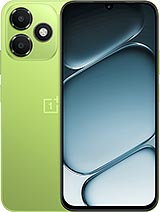
Oppo A6s 4G review
The Oppo A6s 4G is a spacious midrange phone with solid battery life and water resistance, built around a 6

This review is written with AI assistance from Oppo’s published specifications and public benchmark data for the Oppo A6s 4G, and the rating is spec-based. GoSolo does not physically test devices; where we estimate real-world behaviour such as battery life or charge time, we say so. How we rate phones.
Overview
The Oppo A6s 4G is a spacious midrange phone with solid battery life and water resistance, built around a 6.75-inch display and 7000mAh cell. The Snapdragon 685 and 256ppi screen keep it pragmatic, but the modest refresh rate and weak processing power make it feel sluggish for everyday use in 2026.
Design & build
At 166.6 x 78.5 x 8.6mm and 215g, the A6s 4G is a big phone—not heavy compared to its footprint, but it will feel substantial in hand and pocket. Glass front, plastic frame and back is the standard budget formula, and IP68/IP69 water resistance is a genuine plus that lets this phone survive submersion up to 1.5 metres for half an hour. That durability cushion matters in markets where water damage is a real concern and replacement phones are costly. Build quality sits where it should for the price: solid, not refined.
Display
The 6.75-inch IPS LCD stretches to an 85% screen-to-body ratio, making this a tall, narrow device ideal for scrolling. The problem is resolution: 720 x 1570 pixels at 256ppi on something this size is blurry. Text, icons, and fine detail lack the sharpness that 1080p competitors now deliver at similar prices, and that dull clarity will annoy you every time you read an email or browse text-heavy sites. The 120Hz refresh helps scrolling feel smooth and reduces battery drain compared to older 60Hz panels, which is the right trade for a budget phone. Peak brightness of 1125 nits is more than enough for outdoors. But the pixel density is the weak point here.
Performance
The Snapdragon 685 is a mainstream midrange chip from 2021. By early 2026, it is no longer the norm for this price point—faster processors from Qualcomm and MediaTek have become standard. The 685 paired with 8GB RAM and UFS 2.2 storage will handle social media, messaging, and light gaming without major lag, but app opens, web pages, and multitasking feel noticeably slower than new rivals. The Adreno 610 GPU is adequate for casual play; heavier games will drop frames or demand lower settings. For a phone launched in 2026, this is a dated chip making a tough case for itself.
Software
Android 15 with ColorOS 15 is current and gives the phone a modern operating system. ColorOS is Oppo's custom layer—it is intuitive but heavier than stock Android, which compounds the sense of sluggishness the aging chipset already brings. Updates and software support are usually reliable on Oppo midrange phones, and the microSDXC slot means you can expand storage painlessly, something fewer rivals offer at this level now.
Camera
The 50MP main camera with f/1.8 aperture and phase-detect autofocus is the phone's camera high point. Low-light shots should have decent detail and exposure thanks to the wide aperture, though a 50MP sensor on a phone this cheap means smaller individual pixels and more digital processing to reach that resolution. Real-world output will be competent but not remarkable. The 16MP f/2.4 selfie is basic; night selfies will be noisy. Video maxes out at 1080p@30fps, which is budget baseline and perfectly acceptable for most users, just not for anyone who shoots often.
Battery & charging
The 7000mAh battery is a standout. With light use, expect two full days; moderate use lands closer to one and a half days. The Snapdragon 685 and 120Hz display consume power, but the low resolution helps efficiency. Charging speed is not listed in the spec sheet, and the "80W" label in the data appears to be a labelling error rather than a published charge speed. Without official wattage, assume this lands in the 30-65W range common to budget Oppo phones—reasonable, though slower than flagships. The large capacity is the real win.
Value & verdict
At the likely under-$200 asking price, the A6s 4G makes sense if you prioritise battery life, screen size, and water resistance over processing speed and display sharpness. But rivals from Samsung, Xiaomi, and even Oppo's own stable ship with faster chips, higher resolution screens, and faster charging at the same price. This phone feels like Oppo playing it safe with mid-cycle components rather than pushing value boundaries. It is not a bad phone, just an easy pass if you can find a newer processor and crisper screen at the same cost.
Verdict
The A6s 4G suits buyers who value a large screen, water resistance, and multi-day battery above all else and do not mind sluggish performance or a blurry display. Anyone else shopping under $200 in early 2026 will find better balanced phones with faster processors and sharper panels at the same price.
Verdict
- 7000mAh battery and IP68/IP69 water resistance in a phone under $200 (likely)
- Large 6.75-inch display with 120Hz refresh despite 720p resolution keeps battery drain manageable
- 50MP main camera with f/1.8 aperture and PDAF offers decent low-light potential for its class
- Snapdragon 685 and 8GB RAM handle basic tasks without stuttering, helped by UFS 2.2 storage
- 720p on a 6.75-inch screen yields only 256 ppi—text and icons lack sharpness, a real step back from rivals at this price that now offer 1080p
- Snapdragon 685 is a 2021 chip; by January 2026, midrange rivals have moved to faster processors that would noticeably speed up app opens and gaming
- Video capped at 1080p@30fps and 16MP selfie show this phone is built to last on battery, not chase specs
Oppo A6s 4G Key Specifications
The essentials at a glance. See the full spec sheet.
| Released | 2026, January 09 |
|---|---|
| Display | 6.75 inches, 111.4 cm2 (~85.2% screen-to-body ratio), IPS LCD, 120Hz, 1125 nits (peak) |
| Resolution | 720 x 1570 pixels, 19.5:9 ratio (~256 ppi density) |
| Chipset | Qualcomm SM6225 Snapdragon 685 (6 nm) |
| RAM & storage | 128GB 8GB RAM, 256GB 8GB RAM |
| Main camera | 50 MP, f/1.8, (wide), PDAF Auxiliary lens |
| Selfie camera | 16 MP, f/2.4, (wide) |
| Battery | 7000 mAh |
| Software | Android 15, ColorOS 15 |
| Dimensions | 166.6 x 78.5 x 8.6 mm (6.56 x 3.09 x 0.34 in) |
| Weight | 215 g (7.58 oz) |
| Build | Glass front, plastic frame, plastic back |
| Durability | IP68/IP69 dust tight and water resistant (high pressure water jets; immersible up to 1.5m for 30 min) |
| Network | GSM / HSPA / LTE |
| NFC | Yes (market/region dependent) |
| USB | USB Type-C 2.0, OTG |
Oppo A6s 4G FAQ
Common questions, answered from the spec sheet.
Does the A6s 4G support 5G?
No. The A6s 4G tops out at GSM / HSPA / LTE, without 5G.
What chipset does the A6s 4G use?
The A6s 4G runs on the Qualcomm SM6225 Snapdragon 685 (6 nm).
What display does the A6s 4G have?
A 6.75 inches, 111.4 cm2 (~85.2% screen-to-body ratio) IPS LCD, 120Hz, 1125 nits (peak), 720 x 1570 pixels, 19.5:9 ratio (~256 ppi density).
How big is the A6s 4G battery?
The A6s 4G has a 7000 mAh battery.
Does the A6s 4G have NFC?
Yes, the A6s 4G has NFC.
Is the A6s 4G water resistant?
The A6s 4G carries a IP68/IP69 dust tight and water resistant (high pressure water jets; immersible up to 1.5m for 30 min) rating.
Does the A6s 4G support a microSD card?
Yes, the A6s 4G supports expandable storage (microSDXC).
Alternatives to consider
If the A6s 4G isn’t quite right, these are the closest calls.

A6 4G

A6t 4G

A6t Pro 4G

A6t Pro 5G
Galaxy M17e