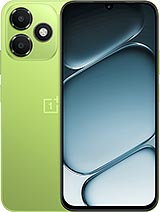
Oppo A6c review
The A6c is for people who prioritize screen size and battery longevity over performance and display sharpness, and who have time to charge slowly overnight. Others in the 130-euro space can offer sharper screens and faster chips without raising the price meaningfully.
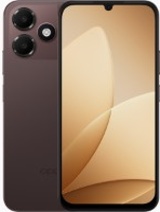
This review is written with AI assistance from Oppo’s published specifications and public benchmark data for the Oppo A6c, and the rating is spec-based. GoSolo does not physically test devices; where we estimate real-world behaviour such as battery life or charge time, we say so. How we rate phones.
Overview
The Oppo A6c is a 130-euro entry-level phone with a sprawling 6.75-inch LCD and a 7000mAh battery, but the 720p display and Unisoc T7250 chipset limit it to light daily tasks. It is honest value for the price in markets where battery size and screen real estate matter more than performance.
Design & build
At 215g and 8.9mm, the A6c feels solid in hand without being light. The glass-front plastic-frame-and-back construction is par for the budget tier, and the IP64 rating—meaning dust-tight and splash-resistant—is a real asset at this price; few 130-euro competitors bother with it. The phone does not wobble or feel cheap, but neither does it feel refined. It is built to last a couple of years of normal wear, which is all anyone should ask at this price.
Display
The 6.75-inch IPS LCD with 120Hz refresh is the A6c's strongest draw. The sheer screen size makes video, browsing, and reading feel less cramped than smaller rivals, and the 120Hz motion is noticeably smoother than a 60Hz panel—a luxury at this tier. But the 720p resolution (256 ppi) is the catch. Text looks slightly fuzzy, photos lack fine detail, and you will notice the softness if you have handled any phone with a 1080p or higher display in the last two years. By 2026 budget standards, where 1080p IPS or AMOLED is becoming the norm even below 150 euros, the A6c's resolution feels like a deliberate compromise to keep the price down rather than an acceptable trade-off.
Performance
The Unisoc T7250 is an entry-level chip that handles text, light social media, and streaming without hiccups, but it hits a wall the moment you multitask or open heavier apps. Game performance is poor; even casual games will stutter. Switching between apps can feel sluggish, and video editing or any sustained CPU load will slow the phone noticeably. The 4GB of RAM does not help—it leaves little headroom for the OS and background processes. For basic calling, messaging, and content consumption the A6c works fine, but power users or anyone planning to keep the phone beyond a year should look elsewhere.
Software
Android 15 with ColorOS 15 is current and will receive updates for a reasonable span. ColorOS has become leaner in recent years, and on the A6c it does not aggressively bloat the experience, though you will see Oppo's own apps and services pre-installed. The software layer is not a drawback, but it cannot overcome the hardware limits beneath it.
Camera
The 13MP main camera is basic by any standard. It has autofocus and LED flash, but no optical zoom, no ultra-wide, and critically, no night mode or computational night photography. In daylight, photos are acceptable but lack detail and color punch. Once the light drops, the camera struggles; low-light shots are grainy and flat. The 5MP selfie is thin and only good for video calls. At 130 euros you should not expect miracles, but the camera feels like the one area where Oppo cut too deep.
Battery & charging
The 7000mAh cell is the standout spec. In real use, expect 35 to 40 hours between charges on light usage (messaging, calls, light streaming), and a full day even with moderate browsing and video. Two-day stretches are plausible. The drawback is charging: the specs mention 15W, which is slow. A full charge takes about 3 hours, and by 2026 standards—when 33W and 65W are standard in this price range—the speed is dated. If you are willing to charge overnight, the battery capacity makes it irrelevant; if you live by quick top-ups, you will notice the lag.
Value & verdict-context
At 130 euros, the A6c occupies an awkward middle ground. It is not the cheapest phone you can find, but it is not cheap enough to excuse all its shortcomings. The 7000mAh battery and 6.75-inch screen appeal to people who prioritize screen time and go-days between charges over performance and camera quality. In markets where charging infrastructure is unreliable or expensive, the battery alone is a real selling point. But the 720p display and slow chip feel like concessions rather than features, and a rival with a faster chipset and sharper 1080p screen for the same price—such options are emerging in 2026—would be the smarter pick. The A6c suits someone who watches a lot of video, rarely leaves Wi-Fi, and values all-day endurance above all else. Anyone else should look at competing models with faster chips and better displays at the same price.
Verdict
The A6c is for people who prioritize screen size and battery longevity over performance and display sharpness, and who have time to charge slowly overnight. Others in the 130-euro space can offer sharper screens and faster chips without raising the price meaningfully.
- 7000mAh battery will last two days of light use without requiring a hunt for a charger
- 6.75-inch LCD with 120Hz is roomy and smooth enough for browsing and video, even if resolution is soft
- IP64 rating gives real water splash protection at this price tier
- microSDXC card slot allows cheap storage expansion without relying on cloud services
- 720p display density (256 ppi) is noticeably soft; text and photos lack sharpness compared to the 1080p standard now common even in budget phones
- Unisoc T7250 is slow for gaming and multitasking; app switches stutter, and heavier apps feel sluggish by 2026 standards
- 13MP camera with no optical zoom and no night mode leaves you short-changed in challenging light, and selfies are thin at 5MP
Oppo A6c Key Specifications
The essentials at a glance. See the full spec sheet.
| Released | 2026, April |
|---|---|
| Display | 6.75 inches, 111.4 cm2 (~85.2% screen-to-body ratio), IPS LCD, 120Hz, 700 nits (typ) |
| Resolution | 720 x 1570 pixels, 19.5:9 ratio (~256 ppi density) |
| Chipset | Unisoc T7250 (12 nm) |
| RAM & storage | 64GB 4GB RAM, 128GB 4GB RAM |
| Main camera | 13 MP, f/2.2, (wide), AF |
| Selfie camera | 5 MP, f/2.2, (wide) |
| Battery | 7000 mAh |
| Software | Android 15, ColorOS 15 |
| Dimensions | 166.5 x 78.5 x 8.9 mm (6.56 x 3.09 x 0.35 in) |
| Weight | 215 g (7.58 oz) |
| Build | Glass front, plastic frame, plastic back |
| Durability | IP64 dust tight and water resistant (water splashes) |
| Network | GSM / HSPA / LTE |
| NFC | No |
| USB | USB Type-C 2.0, OTG |
Oppo A6c FAQ
Common questions, answered from the spec sheet.
Does the A6c support 5G?
No. The A6c tops out at GSM / HSPA / LTE, without 5G.
What chipset does the A6c use?
The A6c runs on the Unisoc T7250 (12 nm).
What display does the A6c have?
A 6.75 inches, 111.4 cm2 (~85.2% screen-to-body ratio) IPS LCD, 120Hz, 700 nits (typ), 720 x 1570 pixels, 19.5:9 ratio (~256 ppi density).
How big is the A6c battery?
The A6c has a 7000 mAh battery.
Does the A6c have NFC?
No, the A6c does not list NFC support.
Is the A6c water resistant?
The A6c carries a IP64 dust tight and water resistant (water splashes) rating.
Does the A6c support a microSD card?
Yes, the A6c supports expandable storage (microSDXC).
Alternatives to consider
If the A6c isn’t quite right, these are the closest calls.

K14 Lite

A6 4G

A6s 4G

A6t 4G
Galaxy M17e