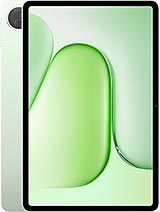
OnePlus Pad Go 2 review
The Pad Go suits someone whose main tablet use is reading, web browsing, and video streaming on a large, bright screen, with little care for gaming or demanding applications. Anyone who plans to use it for photo editing, video work, or wants longer software support should look at either older iPad models or a slightly pricier Android tablet with a current-generation chip.
This review is written with AI assistance from OnePlus’s published specifications and public benchmark data for the OnePlus Pad Go 2, and the rating is spec-based. GoSolo does not physically test devices; where we estimate real-world behaviour such as battery life or charge time, we say so. How we rate phones.
Overview
The OnePlus Pad Go is a large, thin tablet built for reading and streaming on a bright screen, with solid battery life and modest charging speed. Its ageing chipset and low-resolution cameras barely matter for the job it does, but the 90Hz display and entry-level price make it a sensible choice for buyers who want screen real estate without flagship expense.
Design & Build
At 6.9 mm thick and 532 grams, the Pad Go is genuinely pocketable for an 11-inch tablet. The footprint sits comfortably between a large phone and a keyboard-less laptop. Build quality is not specified, so expect plastic or a plastic-aluminium mix typical of the sub-250 EUR segment. The weight distribution and thinness make it feel lighter than it is, which matters if you're holding it for long reading sessions or traveling. Stylus support is listed, though OnePlus has not detailed whether the pen comes in the box or sells separately, which is common in this tier. The design trades premium materials for practicality.
Display
The 11.35-inch IPS LCD running at 90Hz and 260 ppi is the core reason to buy this tablet. The pixel density is sharp enough that individual pixels vanish during normal reading and streaming; text remains crisp at typical viewing distances. 400 nits brightness is adequate for indoor use and casual outdoor viewing, though it will struggle in direct sunlight compared to brighter rivals. 90Hz refresh keeps scrolling smooth, but competitors at this price now routinely offer 120Hz, which makes this feel incremental rather than an advantage. The 82.6% screen-to-body ratio is solid and means minimal bezel waste. This is a no-nonsense screen built for content consumption, not HDR gaming or color work.
Performance
The MediaTek Helio G99 is a 2022 chipset aimed at midrange phones and budget tablets, not 2024 or 2025 devices. By 2026 standards, it is outdated. The octa-core CPU with two faster cores and six efficiency cores handles everyday tasks competently: email, web browsing, document editing, and light YouTube streaming are all smooth. Where it falters is sustained multitasking and any modern gaming beyond simple 2D titles. Apps that demand constant processor headroom—video editing, photo manipulation, high-refresh gaming—will cause stuttering or throttling. For a device at this price intended for reading and video, the GPU shortfall is less critical, but anyone planning to do more than passive consumption will notice the limitation. The 8GB RAM prevents some bottlenecking, but the chipset is the brake.
Software
OxygenOS 13.2 on Android 13 is two Android versions behind the current release (Android 15 as of early 2026). OnePlus does not have a strong track record of keeping budget tablets current, so do not expect major version jumps after this initial release. OxygenOS itself is reasonably lean and fast for budget hardware, lacking the bloat of some competitors, but it is aging. Security patches will likely taper within a year. The tablet modes and windowing features are present but basic. Software support is the weakest promise on this device.
Camera
Both rear and front cameras max out at 8 MP and 1080p video, which is barely adequate for a 2023 tablet. These sensors are functional for video calls and the occasional document scan, but do not expect quality photo capture. The 8 MP resolution on an 11-inch screen means visible softness and noise in good light, and poor results in shadows. For most buyers, cameras on a tablet are afterthoughts—this one makes that clear. If you need a tablet to also be a serious camera device, look elsewhere.
Battery & Charging
The 8000 mAh battery should deliver around 10 to 12 hours of mixed use (reading, streaming, browsing), which is the tablet's strongest asset. Real-world longevity depends heavily on brightness and app choice; heavy gaming will drain it in 6 to 8 hours, while reading with moderate brightness could stretch it past a day. 33W SuperVOOC charging fills the battery in roughly 90 to 120 minutes from empty, which is acceptable but not fast by today's standards. Tablets at this price point increasingly offer 65W or higher, so charging time lags. The large battery capacity means you will rarely need the charger daily, which partially offsets the slower speed.
Value & Verdict
At around 230 EUR, the Pad Go occupies a useful gap: it costs less than most 11-inch flagships and more than basic 10-inch budget models, offering screen size without flagship overhead. The design (thin, light) and battery life matter more here than raw power. Real competitors are ageing iPad Airs from previous years and similarly priced tablets with Helio G99 or slightly newer MediaTek chips. Against those, the Pad Go holds its ground, but it is not a performance bargain—it is a screen bargain. Buyers should go in knowing they are buying a reading and streaming device, not a work machine or gaming tablet. For that niche, it delivers. For anyone who needs speed or sees tablets as secondary computers, the dated chipset and software support are legitimate red flags.
Verdict
The Pad Go suits someone whose main tablet use is reading, web browsing, and video streaming on a large, bright screen, with little care for gaming or demanding applications. Anyone who plans to use it for photo editing, video work, or wants longer software support should look at either older iPad models or a slightly pricier Android tablet with a current-generation chip.
- 11.35-inch screen at 260 ppi is sharp enough for reading and watching, with 400 nits brightness adequate for most indoor use
- 8000 mAh battery should deliver a full day of mixed reading, streaming, and browsing without anxiety
- Thin and light at 6.9 mm and 532 g makes it genuinely portable for a tablet this size
- Stylus support and microSD expansion are useful extras at this price point
- 90Hz display is smooth for scrolling but trails competitors at this price that now offer 120Hz
- MediaTek Helio G99 is from 2022 and struggles with demanding apps or multitasking; no meaningful gaming headroom
- 33W charging takes roughly 90 to 120 minutes for the 8000 mAh battery, which is slow relative to rivals
OnePlus Pad Go 2 Key Specifications
The essentials at a glance. See the full spec sheet.
| Released | 2023, October 06 |
|---|---|
| Display | 11.35 inches, 396.1 cm2 (~82.6% screen-to-body ratio), IPS LCD, 90Hz, 400 nits (typ) |
| Resolution | 1720 x 2408 pixels (~260 ppi density) |
| Chipset | Mediatek Helio G99 (6 nm) |
| RAM & storage | 128GB 8GB RAM, 256GB 8GB RAM |
| Main camera | 8 MP |
| Selfie camera | 8 MP |
| Battery | 8000 mAh |
| Charging | SuperVOOC up to 33 W |
| Software | Android 13, OxygenOS 13.2 |
| Dimensions | 255.1 x 188 x 6.9 mm (10.04 x 7.40 x 0.27 in) |
| Weight | 532 g (1.17 lb) |
| Durability | Stylus support |
| Network | GSM / HSPA / LTE |
| NFC | No |
| USB | USB Type-C 2.0 |
OnePlus Pad Go 2 FAQ
Common questions, answered from the spec sheet.
Does the Pad Go 2 support 5G?
No. The Pad Go 2 tops out at GSM / HSPA / LTE, without 5G.
What chipset does the Pad Go 2 use?
The Pad Go 2 runs on the Mediatek Helio G99 (6 nm).
What display does the Pad Go 2 have?
A 11.35 inches, 396.1 cm2 (~82.6% screen-to-body ratio) IPS LCD, 90Hz, 400 nits (typ), 1720 x 2408 pixels (~260 ppi density).
How big is the Pad Go 2 battery?
The Pad Go 2 has a 8000 mAh battery. Charging is rated at SuperVOOC up to 33 W.
Does the Pad Go 2 have NFC?
No, the Pad Go 2 does not list NFC support.
Is the Pad Go 2 water resistant?
The Pad Go 2 carries a Stylus support rating.
Does the Pad Go 2 support a microSD card?
Yes, the Pad Go 2 supports expandable storage (microSDXC (dedicated slot)).
Alternatives to consider
If the Pad Go 2 isn’t quite right, these are the closest calls.
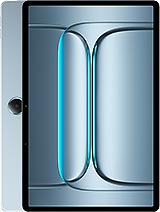
Pad Lite
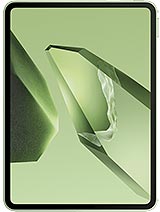
Pad 2 China
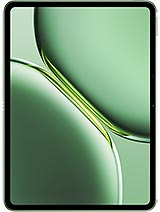
Pad 2 Pro

Pad OPD2407
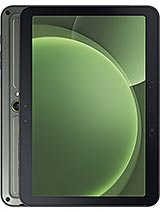
Galaxy Tab Active5 Pro