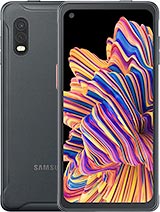
Nokia 215 4G (2026) review
Buy this if you want to escape smartphone habits without joining a monastery, or if you live in a market where 4G feature phones remain the norm. Skip it if you need even basic web browsing, maps, or the ability to forward a photo to someone without wrestling a feature-phone menu for five minutes.
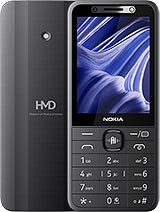
This review is written with AI assistance from Nokia’s published specifications and public benchmark data for the Nokia 215 4G (2026), and the rating is spec-based. GoSolo does not physically test devices; where we estimate real-world behaviour such as battery life or charge time, we say so. How we rate phones.
Overview
The Nokia 215 4G is a basic 4G feature phone for users who want simple calls, texts, and FM radio without smartphone complexity. At this segment and price, it delivers what you'd expect—no more, no less—but the tiny screen and minimal storage mean it's genuinely only for those who need nothing else.
Design & build
This is as straightforward as feature phones get. At 104g and 12.8mm thick, the Nokia 215 4G is lightweight and pocketable—exactly what you want when you're not buying this thing for bells and whistles. The body feels durable in the way old Nokias always did, built for hands that don't coddle. Dual Nano-SIM slots and a microSDHC card slot mean you can carry two networks and expand storage, which matters more on a device this simple. USB Type-C is a practical touch; you're not stuck hunting for old proprietary chargers. A physical flashlight button rounds out the no-frills toolkit. There are no surprises here, and that is the entire point.
Display
The 2.8-inch TFT LCD screen pushes 240 x 320 pixels at 143 ppi—numbers that instantly tell you what you're dealing with. This is not a screen for browsing or video; it is a screen for reading SMS and seeing who called. The 4:3 aspect ratio and 34.3% screen-to-body ratio confirm Nokia built this for function, not immersion. Colours are washed and contrast is flat by 2026 standards, but the text is readable and menus load without fuss. If you have spent the last decade on smartphones, booting this up will feel like stepping into 2010. That jolt is intentional.
Performance & software
The spec sheet lists 64MB RAM and 128MB internal storage, a combination that screams 'calls and texts only.' There is no processor listed, which tells you this runs on whatever chipset keeps feature phones alive—modest and power-efficient. The operating system is proprietary, not Android, so you get a simple menu-driven interface: no app stores, no notifications, no social media scrolling. A smart voice assistant and cloud apps portal hint at some modern scaffolding, but they exist to avoid complete isolation, not to turn this into a lite smartphone. Everything responds snappily because there is so little running. This is not slow because it is old; it is fast because it does almost nothing.
Camera & multimedia
The 0.3MP front camera is there for video calls and nothing else. Do not expect photos; expect a blurry grey box if you point it anywhere. An FM radio, MP3 player, and voice assistant round out the entertainment offering. These are token features for people who want an alternative to their phone's always-on behavior. You will not shoot, edit, or share media on this thing. What you will do is listen to the radio during a commute and take a call when someone rings. That is the entire entertainment ecosystem, and for a feature phone, it is adequate.
Battery & charging
The 1450mAh removable battery is one of the few genuinely useful touches. Removability means you can carry a spare and swap on the fly, something smartphones stopped allowing years ago. In a device this stripped-down, battery life should stretch to multiple days of light use—calls, texts, FM radio, maybe an occasional voice assistant query. Charging via USB Type-C is straightforward, though actual charge times depend on the bundled power delivery, which the spec sheet does not name. A removable battery also means this phone is repairable; if the battery dies in three years, you replace it for a few dollars, not the whole handset.
Value & verdict-context
The Nokia 215 4G sits in a shrinking corner of the market: the digital detox / simplicity phone for people who genuinely do not want what a smartphone offers. At typical feature-phone pricing (likely under $100 at launch), the value proposition is transparent: no games, no notifications, no algorithm. Dual SIM and a microSD slot are more than a basic phone needs, and 4G connectivity keeps it from feeling completely marooned. The display and camera are embarrassments by smartphone standards, but that is not the point. The point is that you pick this up to make a call, check an SMS, and put it back in your pocket. Against an entry-level Android phone three times the price, the Nokia loses on apps and screen real estate by design, not accident. Against another feature phone from 2024, you get 4G bands and USB Type-C for minimal cost difference.
Verdict
Buy this if you want to escape smartphone habits without joining a monastery, or if you live in a market where 4G feature phones remain the norm. Skip it if you need even basic web browsing, maps, or the ability to forward a photo to someone without wrestling a feature-phone menu for five minutes.
- Removable battery and microSD expansion mean real repairability and storage flexibility in a phone most people will use for five years
- Dual Nano-SIM slots let you carry two networks without juggling devices, useful in regions where this form factor still thrives
- 4G connectivity keeps it relevant for basic data in an era when 2G is fading, and USB Type-C avoids proprietary charging nonsense
- Storage is almost comically low (128MB internal); real usage shrinks to voice calls, texts, radio, and maybe a contact photo or two
- The 2.8-inch screen makes any menu navigation tedious, and the 143ppi TFT display is a visual step backward even for feature-phone standards
- No Wi-Fi means data only works on 4G, pushing phone bills higher in regions where this price tier still dominates
Nokia 215 4G (2026) Key Specifications
The essentials at a glance. See the full spec sheet.
| Released | 2026, July 03 |
|---|---|
| Display | 2.8 inches, 24.3 cm2 (~34.3% screen-to-body ratio), TFT LCD |
| Resolution | 240 x 320 pixels, 4:3 ratio (~143 ppi density) |
| RAM & storage | 128MB 64MB RAM |
| Selfie camera | 0.3 MP |
| Battery | 1450 mAh |
| Software | Android |
| Dimensions | 128.8 x 55 x 12.8 mm (5.07 x 2.17 x 0.50 in) |
| Weight | 104 g (3.67 oz) |
| Durability | Flashlight |
| Network | GSM / HSPA / LTE |
| NFC | No |
| USB | USB Type-C |
Nokia 215 4G (2026) FAQ
Common questions, answered from the spec sheet.
Does the 215 4G (2026) support 5G?
No. The 215 4G (2026) tops out at GSM / HSPA / LTE, without 5G.
What display does the 215 4G (2026) have?
A 2.8 inches, 24.3 cm2 (~34.3% screen-to-body ratio) TFT LCD, 240 x 320 pixels, 4:3 ratio (~143 ppi density).
How big is the 215 4G (2026) battery?
The 215 4G (2026) has a 1450 mAh battery.
Does the 215 4G (2026) have NFC?
No, the 215 4G (2026) does not list NFC support.
Is the 215 4G (2026) water resistant?
The 215 4G (2026) carries a Flashlight rating.
Does the 215 4G (2026) support a microSD card?
Yes, the 215 4G (2026) supports expandable storage (microSDHC).
Alternatives to consider
If the 215 4G (2026) isn’t quite right, these are the closest calls.
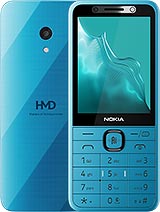
235 4G (2026)
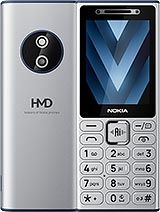
210 4G
110 Power
300 Charge
nova Y74