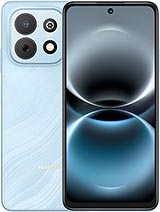
Nokia 210 4G review
The Nokia 210 4G is for buyers in markets where older networks and low budgets make a smartphone impractical, and who value durability, battery life, and repairability over capability. Anyone in a developed market, or anyone who needs to photograph, video, or browse with any competence should look elsewhere.
This review is written with AI assistance from Nokia’s published specifications and public benchmark data for the Nokia 210 4G, and the rating is spec-based. GoSolo does not physically test devices; where we estimate real-world behaviour such as battery life or charge time, we say so. How we rate phones.
Overview
The Nokia 210 4G is a throwback feature phone that prioritizes durability and battery endurance over connectivity or camera capability, landing squarely in the niche of buyers who want reliable calling and texting without a smartphone's overhead. For the global south, where 2G and 3G networks still matter and data remains costly, it has real purpose—but the 0.3MP cameras and tiny 2.4-inch display are practical tools, not compromises masquerading as choices.
What it is
The Nokia 210 4G is an intentional throwback. It runs no Android or iOS, but rather the simplicity of a feature phone OS built around GSM, HSPA, and LTE calling and SMS. No app store drama, no social media infinite scroll, no ambient spyware. It is a voice-and-text device first, with internet access as an afterthought. In 2026, that is almost quaint, yet in many parts of the global south, this exact category remains a sensible choice. Markets where smartphones are too expensive, where data plans are metered by the kilobyte, or where older networks still dominate will find a genuine fit here.
Design & build
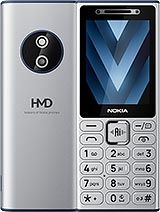
At 92.7g and 13mm thick, the 210 4G is feather-light and genuinely pocketable by today's standard. It feels deliberate: dual Nano-SIM slots enable local or international roaming without swapping SIMs, and the removable battery—a relic now—actually matters in regions where replacement units are still sold and repairs happen outside authorized centers. The industrial plastic form is robust without pretense. Colours (Dark Blue, Silver) are neutral. You will not confuse it for anything else, nor will it break easily if dropped. For a phone explicitly not trying to be a smartphone, the industrial honesty is refreshing.
Display
A 2.4-inch TFT LCD at 240x320 pixels and 167 ppi is unambitious by any era's standards, yet this is feature-phone baseline. Viewing angles are poor, brightness likely insufficient in direct sun, and colour accuracy irrelevant at this resolution and density. Text is legible but not sharp; it feels cramped compared even to budget Android phones from five years ago. For calls, SMS, and basic menu navigation it suffices. Do not expect to read an email comfortably or watch video on this. That is not its purpose.
Performance & storage
The specs do not list a CPU, likely because it is a basic ARM-based chipset running feature phone firmware—adequate for its single job. However, the 128MB of internal storage is genuinely problematic. With only 64MB of RAM and a tiny onboard pool, the phone will choke if you try to install even simple downloaded applications. The microSD card slot is not a luxury here; it is a necessity for storing anything beyond the bare OS. A user will quickly learn to treat microSD as essential infrastructure, not optional expansion. Even modest apps or offline content require an external card. This is the clearest concession to cost-cutting.
Camera
The 0.3MP sensor—front and back—is essentially decorative. It captures enough light to prove that a thing exists in front of the lens and nothing more. Do not expect detail, dynamic range, colour accuracy, or anything resembling a usable photo. Video calls via the selfie camera are technically supported but will be low-res and grainy. In a pinch, you could scan a QR code if the image is large and the lighting is kind. For anything else, you need another device. Buyers of this phone have likely already accepted that photography is off the table.
Battery & connectivity
The 1450 mAh removable battery trades capacity for serviceability. Actual endurance will depend heavily on whether you are mostly on voice calls (best case, multi-day usage) or regularly using LTE data and the MP3 player (closer to one to two days). Without running apps or a constantly lit screen, multi-day standby is realistic. LTE support is genuinely useful in markets where 3G is phasing out; Bluetooth 5.0 is present for audio, though the lack of built-in Wi-Fi means you rely entirely on cellular for data. That limitation is by design—keeping the cost and complexity floor low—but it also means data charges will accumulate if you are not tethered to Wi-Fi elsewhere.
Value & verdict
At an expected price below USD 80 (typical for re-entry Nokia feature phones), this is a rational calculator for a specific buyer: someone in a market where a working second phone matters more than capabilities, where electricity access is intermittent, where data plans are pay-as-you-go, or where a smartphone's distraction is actively unwanted. In wealthy markets or urban centers with fast networks and cheap data, it has no place. But in regions where telecom infrastructure is fragmented, repair culture is still alive, and a phone's job is still fundamentally to call and text, the 210 4G lands with real clarity. It does not pretend to be a smartphone and does not charge like one. That honesty is its strongest move.
Verdict
The Nokia 210 4G is for buyers in markets where older networks and low budgets make a smartphone impractical, and who value durability, battery life, and repairability over capability. Anyone in a developed market, or anyone who needs to photograph, video, or browse with any competence should look elsewhere.
- Removable battery and microSD slot mean repairability and storage that modern phones have abandoned
- Light weight (92.7g) and compact form factor make it genuinely pocketable; 13mm thickness beats most current devices
- LTE support with dual Nano-SIM gives it real utility in markets where 2G is dying but 3G networks persist
- Claimed battery endurance suits intermittent users or those in areas with unreliable charging
- 0.3MP cameras are essentially non-functional for anything beyond confirming something exists; not a usable tool for documentation or memory
- 128MB internal storage (alongside 64MB RAM) is crippled even for a feature phone, forcing heavy reliance on a microSD card for any real app or file use
- TFT LCD display at 167 ppi is dim and coarse by any modern standard, making text and icons a strain in daylight
Nokia 210 4G Key Specifications
The essentials at a glance. See the full spec sheet.
| Released | 2026, July 03 |
|---|---|
| Display | 2.4 inches, 17.8 cm2 (~28.0% screen-to-body ratio), TFT LCD |
| Resolution | 240 x 320 pixels, 4:3 ratio (~167 ppi density) |
| RAM & storage | 128MB 64MB RAM |
| Main camera | 0.3 MP |
| Selfie camera | 0.3 MP |
| Battery | 1450 mAh |
| Software | Android |
| Dimensions | 126.1 x 50.5 x 13 mm (4.96 x 1.99 x 0.51 in) |
| Weight | 92.7 g (3.28 oz) |
| Network | GSM / HSPA / LTE |
| NFC | No |
| USB | USB Type-C |
Nokia 210 4G FAQ
Common questions, answered from the spec sheet.
Does the 210 4G support 5G?
No. The 210 4G tops out at GSM / HSPA / LTE, without 5G.
What display does the 210 4G have?
A 2.4 inches, 17.8 cm2 (~28.0% screen-to-body ratio) TFT LCD, 240 x 320 pixels, 4:3 ratio (~167 ppi density).
How big is the 210 4G battery?
The 210 4G has a 1450 mAh battery.
Does the 210 4G have NFC?
No, the 210 4G does not list NFC support.
Does the 210 4G support a microSD card?
Yes, the 210 4G supports expandable storage (microSDHC).
Alternatives to consider
If the 210 4G isn’t quite right, these are the closest calls.
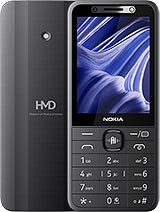
215 4G (2026)
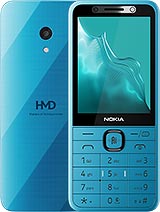
235 4G (2026)
110 Power
300 Charge
Galaxy XCover 7 Pro