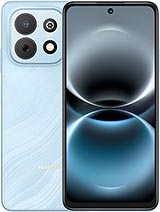
Nokia 110 Power review
The Nokia 110 Power is an honest device for people in regions with reliable 2G coverage who prioritize battery life and simplicity over connectivity. If your country is still shutting down 2G networks or you need any form of internet access, this phone becomes a paperweight.
This review is written with AI assistance from Nokia’s published specifications and public benchmark data for the Nokia 110 Power, and the rating is spec-based. GoSolo does not physically test devices; where we estimate real-world behaviour such as battery life or charge time, we say so. How we rate phones.
Overview
The Nokia 110 Power is a straightforward GSM feature phone with a 2-inch screen, 1750 mAh removable battery, and just enough storage for calls, texts, and FM radio. It is purpose-built for users in areas with weak networks, frequent travelers who need week-long battery life, or anyone seeking relief from smartphone dependence—at €20, it costs less than most accessories.
Design & build
At 88 grams and 14.2 mm thick, the Nokia 110 Power is pocket-friendly to the point of being forgettable. The compact form factor is not a weakness; it is the whole point. Dual SIM support adds a practical touch for people juggling two numbers or swapping carriers, and the removable battery is genuinely useful—you can carry a spare and swap it when the phone dies, a feature smartphones killed and some users genuinely miss. The phone feels like a device from the early 2010s, which is precisely what buyers for this price bracket expect.
Display
The 2-inch TFT screen displays 120x160 pixels, which translates to a noticeably grainy, blocky image at 100 ppi. This is not a shortcoming for its intended use—caller ID, contact names, and short SMS messages are legible—but reading anything longer, checking URLs, or working with any complex interface is uncomfortable. The 21% screen-to-body ratio confirms this is a voice and text device first, and everything else a distant second. For basic calls and messages, it does its job; for anything requiring sustained reading, it falls short, but that is not why someone buys this phone.
Battery & connectivity
The 1750 mAh removable battery is the headline here. With a minimal display, no data processing, and no wireless radios beyond GSM, battery life easily stretches to two or three days on a typical call-and-text diet, and the removable design means you can carry a spare. That is a real advantage over any smartphone. However, the phone relies on GSM 2G bands (900/1800 MHz), and 2G networks are shutting down in many countries—North America, parts of Europe, and Asia are phasing them out. In regions where 2G still exists, the Nokia works fine; elsewhere, it becomes a dumb brick. Check your local carrier before buying.
Storage & features
With only 4 MB of internal memory, the phone has room for the OS and little else. Music, photos, or any real data require a microSD card (up to 32 GB supported), which adds cost and complexity for a device that is supposed to be simple. The phone includes an FM radio and an MP3 player, which assumes you have music on an SD card. A QVGA camera (around 0.1 MP) is included but is barely functional—it captures stills with no video. In 2026, even basic feature phones usually offer a usable camera; this one is more a checkbox than a feature.
Who should consider this
The Nokia 110 Power makes sense for specific audiences. Travelers in regions with good 2G coverage who want a week-long battery between charges and do not need data; people in areas where GSM is still the dominant network; and anyone genuinely seeking to escape smartphone notifications and social media. At €20, it is cheaper than a replacement phone screen. Anyone living in a 4G/5G-only area, or who needs internet access, maps, or any modern connectivity, should not waste time with this phone.
Verdict
The Nokia 110 Power is an honest device for people in regions with reliable 2G coverage who prioritize battery life and simplicity over connectivity. If your country is still shutting down 2G networks or you need any form of internet access, this phone becomes a paperweight.
- Removable 1750 mAh battery that lasts multiple days without a charge, with the option to swap a spare
- Extremely compact and light at 88 grams, fitting easily in a pocket with no weight penalty
- Dual SIM support on a GSM network, useful for travelers or those managing two phone numbers
- Costs about 20 EUR; no ongoing subscription or software bloat required
- 2-inch 120x160 TFT screen is blocky and difficult to read for any content beyond caller ID or text previews
- 4 MB internal storage forces dependence on a microSD card for music or photos, making it impractical for offline media
- GSM-only on 2G bands means poor or absent coverage in many countries already shifting 2G networks offline
Nokia 110 Power Key Specifications
The essentials at a glance. See the full spec sheet.
| Released | 2026, February |
|---|---|
| Display | 2.0 inches, 12.4 cm2 (~21.0% screen-to-body ratio), TFT |
| Resolution | 120 x 160 pixels, 4:3 ratio (~100 ppi density) |
| RAM & storage | 4 MB 4 MB RAM |
| Main camera | QVGA |
| Selfie camera | No |
| Battery | 1750 mAh |
| Software | Android |
| Dimensions | 117.7 x 50 x 14.2 mm (4.63 x 1.97 x 0.56 in) |
| Weight | 88 g (3.10 oz) |
| Network | GSM |
| NFC | No |
| USB | microUSB |
Nokia 110 Power FAQ
Common questions, answered from the spec sheet.
Does the 110 Power support 5G?
No. The 110 Power tops out at GSM, without 5G.
What display does the 110 Power have?
A 2.0 inches, 12.4 cm2 (~21.0% screen-to-body ratio) TFT, 120 x 160 pixels, 4:3 ratio (~100 ppi density).
How big is the 110 Power battery?
The 110 Power has a 1750 mAh battery.
Does the 110 Power have NFC?
No, the 110 Power does not list NFC support.
Does the 110 Power support a microSD card?
Yes, the 110 Power supports expandable storage (microSDHC).
Alternatives to consider
If the 110 Power isn’t quite right, these are the closest calls.
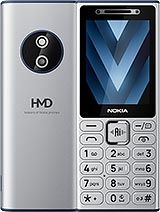
210 4G
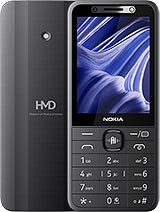
215 4G (2026)
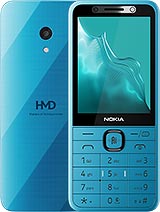
235 4G (2026)
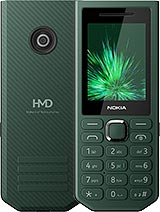
300 Charge
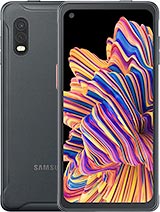
Galaxy XCover 7 Pro