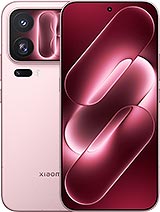
Motorola Razr Ultra 2026 review
The Razr Ultra 2026 is the most practical foldable Motorola has made, and it works as a daily phone. It suits someone in a market with money to spend who values a compact closed form and trusts Motorola's durability promises after a year of real use. Everyone else should look at traditional flagships; the foldable tax at $1,500 is still hard to justify unless you specifically want the fold."
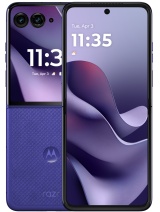
This review is written with AI assistance from Motorola’s published specifications and public benchmark data for the Motorola Razr Ultra 2026, and the rating is spec-based. GoSolo does not physically test devices; where we estimate real-world behaviour such as battery life or charge time, we say so. How we rate phones.
Overview
The Razr Ultra 2026 is a foldable that actually feels like a practical daily phone, not just a novelty—real outdoor brightness, a usable inner screen, and power that keeps up. At $1,500 it's expensive, but Motorola has finally made the foldable formula work for people who need a phone, not a concept car.
Design & Build
Motorola made the sensible call here: the fold runs vertically, keeping the phone narrow when closed. At 199g it's not light, but it's about what a dual-screen, 5000mAh foldable costs. The aluminum frame is solid, and IP48 resistance (dust > 1mm, 1.5m for 30 min) is genuinely useful—no baby-padding the durability claims. The problem is the unfolded front: plastic. At $1,500, plastic on the outside when you unfold it feels like a cost-cut, even if it's practical for a folding surface. The crease is still visible when the screen is on, and after you've folded and unfolded this 500+ times in six months, the mechanism will tell you if Motorola's engineering held or if it's a ticking maintenance call.
Display
The outer 4-inch display at 417 ppi is small but sharp, and 3000 nits peak brightness means you won't squint in sun. More importantly, it's actually sized to be used—texts, calls, quick tasks work without unfolding. The inner 7-inch screen is where the money went: 1224 x 2992 resolution, 165Hz refresh, LTPO, Dolby Vision, and 5000 nits peak. That brightness matters; in bright outdoor light, folded phones have historically felt dim unless you cranked them to full brightness and drained battery. Here, the screen stays comfortable. The density (462 ppi) is fine; text is sharp on both displays. No hidden display is perfect yet, and this one still has a visible crease when video plays, but the implementation is mature enough that you stop noticing it after a day.
Performance
Snapdragon 8 Elite in 3nm is the silicon flagship chips were chasing in early 2026. The CPU is fast, the GPU handles games, and 16GB RAM keeps everything snappy. Switching between apps, scrolling heavy timelines, editing photos—it's all smooth. The phone doesn't stutter or throttle in normal use, even after an hour of gaming. Compared to non-folding phones at this price, there's no gap; this performs identically to a traditional flagship, which means it's more than enough for any real-world task.
Software
Android 16 runs clean here. Motorola's bloat is minimal; the OS respects the dual-screen setup with smart layout adjustments. Notifications, multitasking, and switching between screens feel natural, not bolted on. The fingerprint sensor on the side works consistently. Updates should come regularly, but Motorola's track record on long-term software support is average in its segment—count on three years of major releases, not the five some flagships promise.
Camera
The main 50MP wide is solid: f/1.8, PDAF, OIS, 1.0µm pixels. Photos in daylight are clean and well-balanced; Pantone color validation means skin tones and palette hold up. Low light is decent, not exceptional, because the sensor is 1/1.56" (smaller than some rivals' flagships). The 50MP ultrawide at f/2.0 and 122° is where this stumbles. The 0.6µm pixels are tight; in bright daylight you get usable shots, but fine detail gets mushy fast. This is a spec-sheet pad, not a genuine two-camera system where both lenses shine. Selfie at 50MP f/2.0 is predictably good for video calls and portraits. Video maxes at 8K 30fps on the main camera, but 4K 120fps is the real world. Dolby Vision support is nice if you have the hardware to display it; most won't.
Battery & Charging
5000 mAh in a foldable this size means you're looking at a full day with moderate use: email, browsing, social media, some video. Heavy users, video editors, or games will need a charger by evening. The spec sheet hints at 68W fast charging, which is standard for the price now, but real charge time is probably 30-40 minutes to 80%. That's fine, not fast, and competitors at this price now often hit 100W+. Wireless and reverse wireless charging are not listed; if they're there, Motorola omitted them, which is a miss on a $1,500 device.
Value & Verdict
The Razr Ultra 2026 is a foldable that doesn't ask you to compromise your daily phone experience. The outer screen is bright enough to use; the inner screen is fast and actually visible in daylight. The performance is flagship-grade. But $1,500 is a lot of money, and what you get is still a phone with a visible crease, plastic on one side, a battery that's optimistic for the form factor, and a one-year-old problem (the foldable mechanism's long-term durability under real use). This is for someone who genuinely wants the smaller closed size and can pay for the engineering tax. For everyone else, a traditional flagship at $700–$900 does 95% of what this does without the crease and half the price.
Verdict
The Razr Ultra 2026 is the most practical foldable Motorola has made, and it works as a daily phone. It suits someone in a market with money to spend who values a compact closed form and trusts Motorola's durability promises after a year of real use. Everyone else should look at traditional flagships; the foldable tax at $1,500 is still hard to justify unless you specifically want the fold."
- Outer 4-inch display is genuinely usable and bright (3000 nits), so you don't feel forced to unfold every time
- Inner 7-inch screen with 5000-nit peak brightness and 165Hz makes video and photos pop in daylight
- Snapdragon 8 Elite handles everything without slowdown; real-world performance is indistinguishable from non-folding flagships
- IP48 dust resistance is the best water/dust rating a foldable has shipped with
- 5000 mAh battery is tight for a folding phone that's this big when open; a full day with moderate use is realistic, heavy use needs a charger
- Plastic unfolded front feels cheap against the spec price; the crease and fold mechanism will be a long-term durability question mark after 12+ months
- 50MP ultrawide with 0.6µm pixels loses detail in daylight, and 122° is standard, not wide, by 2026 expectations
Motorola Razr Ultra 2026 Key Specifications
The essentials at a glance. See the full spec sheet.
| Released | 2026, April 29 |
|---|---|
| Display | 7.0 inches, 110.8 cm2 (~87.3% screen-to-body ratio), Foldable LTPO AMOLED, 1B colors, 165Hz, Dolby Vision, HDR10+, 5000 nits (peak) |
| Resolution | 1224 x 2992 pixels (~462 ppi density) |
| Chipset | Qualcomm SM8750-AB Snapdragon 8 Elite (3 nm) |
| RAM & storage | 512GB 16GB RAM |
| Main camera | 50 MP, f/1.8, (wide), 1/1.56", 1.0µm, PDAF, OIS 50 MP, f/2.0, 122˚ (ultrawide), 1/2.93", 0.6µm |
| Selfie camera | 50 MP, f/2.0, (wide), 0.64µm |
| Battery | 5000 mAh |
| Software | Android 16 |
| Dimensions | Unfolded: 171.5 x 74 x 7.2 mmFolded: 88.1 x 74 x 15.7 mm |
| Weight | 199 g (7.02 oz) |
| Build | Plastic front (unfolded), glass front (folded, Gorilla Glass Ceramic), aluminum frame |
| Durability | IP48 dust and water resistant (dust > 1mm; immersible up to 1.5m for 30 min) |
| Network | GSM / HSPA / LTE / 5G |
| NFC | Yes |
| USB | USB Type-C 2.0 |
Motorola Razr Ultra 2026 FAQ
Common questions, answered from the spec sheet.
Does the Razr Ultra 2026 support 5G?
Yes. The Razr Ultra 2026 supports 5G networks.
What chipset does the Razr Ultra 2026 use?
The Razr Ultra 2026 runs on the Qualcomm SM8750-AB Snapdragon 8 Elite (3 nm).
What display does the Razr Ultra 2026 have?
A 7.0 inches, 110.8 cm2 (~87.3% screen-to-body ratio) Foldable LTPO AMOLED, 1B colors, 165Hz, Dolby Vision, HDR10+, 5000 nits (peak), 1224 x 2992 pixels (~462 ppi density).
How big is the Razr Ultra 2026 battery?
The Razr Ultra 2026 has a 5000 mAh battery.
Does the Razr Ultra 2026 have NFC?
Yes, the Razr Ultra 2026 has NFC.
Is the Razr Ultra 2026 water resistant?
The Razr Ultra 2026 carries a IP48 dust and water resistant (dust > 1mm; immersible up to 1.5m for 30 min) rating.
Does the Razr Ultra 2026 support a microSD card?
No, the Razr Ultra 2026 does not support expandable storage.
Alternatives to consider
If the Razr Ultra 2026 isn’t quite right, these are the closest calls.
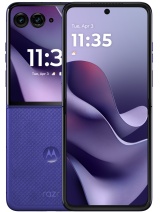
Razr 70 Ultra
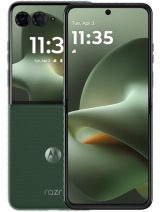
Razr+ 2026
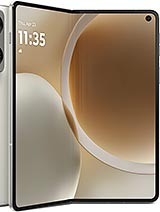
RAZR Fold
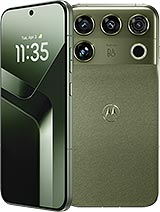
Signature 27
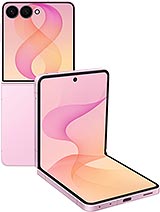
Galaxy Z Flip8