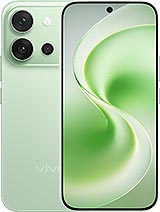
Motorola Razr+ 2026 review
Buy this if you fold often and want a narrow, light foldable with durable glass and titanium that won't require excuses—or if you're loyal to Motorola's near-stock software and prefer not to live inside Samsung's ecosystem. Look elsewhere if your priority is all-day battery, zoom lenses, or waiting for another year to see if the hardware really justifies the price premium over a straight flagship."
This review is written with AI assistance from Motorola’s published specifications and public benchmark data for the Motorola Razr+ 2026, and the rating is spec-based. GoSolo does not physically test devices; where we estimate real-world behaviour such as battery life or charge time, we say so. How we rate phones.
Overview
The Razr+ 2026 is a foldable that swaps the flamboyance of last year's design for real-world durability and a more balanced fold experience. It folds narrower, weighs less, charges faster, and finally ditches a plastic unfolded screen for something durable—but the battery and overall hardware evolution feel incremental for a year on, and the price remains brutally high.
Design & Build
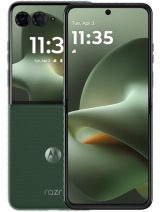
Motorola listened. The Razr+ 2026 narrows to 88.1mm folded—nearly 3mm tighter than the 2025 model—without adding thickness, and at 189g it's lighter than rivals, making it genuinely pocket-friendly even when the crease is visible on the outer 4-inch display. The outer screen is now Gorilla Glass Victus instead of plastic, and the titanium hinge pairs with an IP48 rating that covers dust over 1mm and submersion to 1.5m for half an hour. This is the first Razr that doesn't feel like a compromise on durability. The unfolded body trades glass for plastic on the front, which reads as a cost choice, but it works—thinner, lighter, and less prone to shattering if you drop it open. The 7.1mm unfolded thickness keeps it feather-light in hand. Mountain View is the only color at launch, a understated choice that suits the design.
Display
The 6.9-inch main AMOLED hits 1084 x 2640 pixels, 414 ppi, with 165Hz, Dolby Vision, and a claimed 3000 nits peak brightness. That's bright enough outdoors and the 85.1% screen-to-body ratio maximizes usable space, but the ppi is adequate rather than class-leading—noticeable grain if you hold it close, though nobody notices at arm's length. The crease is present and more visible here than on Samsung's folds, especially in portrait; in landscape or when watching video, it fades from consciousness. The outer 4-inch display, also 165Hz and AMOLED at 417 ppi, is snappier to use for quick tasks and video than older text-focused folding covers, though the 1272 x 1080 resolution means scaling can feel a touch coarse. Dual 165Hz refresh is overkill marketing, but it does make both screens feel responsive.
Performance
The Snapdragon 8s Gen 3 pairs a single Cortex-X4 core and four A720s with a trio of efficiency cores, a proven architecture that delivers snappy UI navigation, handle multi-app switching without lag, and run demanding games at high settings without throttling. This is a near-flagship chip for 2026, not a mid-tier compromise, so apps launch instantly and the device keeps up with everything Android throws at it. The 12GB RAM and UFS 4.0 storage are paired well enough, though the 256GB fixed storage cap means you can't expand, and large game libraries or 4K video hoarding will force choices. For the $1,099.99 price tag, you're not left wanting for raw power—the performance ceiling is high, and the experience is smooth across Android 16.
Camera
The dual rear setup is 50MP f/1.8 main (1/1.95", 0.8µm, OIS) and 50MP f/2.0 ultrawide at 122 degrees with a tighter 1/2.76" sensor. The main sensor is solid—strong in daylight, good edge retention, and stabilized for video. The ultrawide is where it falters: f/2.0 is stopped down relative to rivals' f/1.8 or wider apertures, and the 0.64µm pixels mean it's darker in low light. There's no telephoto, so zoomed shots default to digital crop, a notable omission for a phone at this price. Video is 4K at 30/60fps with HDR10+ and Dolby Vision, which reads impressive on paper but the codec and bitrate matter more than the format label. The 32MP f/2.4 selfie is serviceable for calls and the occasional portrait but won't win any beautification wars. Pantone colour validation is a nice touch if you shoot for content creation, but it doesn't offset the lack of focal length variety.
Battery & Charging
The 4500 mAh battery is the Razr+'s weak spot. On a 6.9-inch screen device, this capacity lands you a full day with moderate mixed use—browsing, messaging, some photography, light gaming. Heavy users will hit the red zone by dinner. The 45W charging is welcome progress and among the faster options in the foldable market, though exact charge times aren't published; estimate around 50 minutes to full. Wireless charging is absent, a curious omission at this price. In absolute terms, the battery outlasts a Galaxy S25 and slightly undercuts Samsung's Z Fold 6, but for a foldable screen that drains faster, it feels conservative. If you fold and unfold constantly throughout the day, swap to the outer display frequently, or use Always-On, you'll need a midday pit stop or a power bank.
Software
Android 16 ships here, and Motorola's near-stock skin is blessedly light on bloat. The My UX customization options—icon packs, gesture controls—are present but don't clutter the core experience. The device handles the two displays without friction: apps reflow sensibly between fold states, multitasking is smooth, and there's no stuttering when unfolding mid-app. Battery settings and fold-state awareness are baked in. Motorola's track record on security updates and OS upgrades is respectable for a flagship, so you can expect three to four major Android versions and timely patches. Nothing groundbreaking, but solid and unintrusive.
Value & Verdict
At $1,099.99, the Razr+ 2026 sits shoulder-to-shoulder with Samsung's Z Fold 6 and costs nearly double most flagship candy bars. What you're paying for is the narrow fold, the lighter weight, the faster charging, and a design that feels matured—this is the first Razr that doesn't require apologies about durability. The year-on-year leap is real but modest: narrower hinge, glass outer screen, better thermals, fractionally quicker charging. If you own a 2025 Razr+, this doesn't justify the jump. If you're foldable-curious and can't stomach Samsung's deeper ecosystem lock-in, this is a genuine alternative. The battery life and camera versatility are ordinary for the price, and the fixed storage stings. For global-south buyers where this lands at premium markups, the value proposition tilts further toward "wait for the 2027 model unless you urgently need a foldable today."
Verdict
Buy this if you fold often and want a narrow, light foldable with durable glass and titanium that won't require excuses—or if you're loyal to Motorola's near-stock software and prefer not to live inside Samsung's ecosystem. Look elsewhere if your priority is all-day battery, zoom lenses, or waiting for another year to see if the hardware really justifies the price premium over a straight flagship."
- Folds to 88.1mm when closed, meaningfully narrower than most foldables, making it pocket-friendly even with the crease visible on the outer display
- Faster charging at 45W (the spec sheet notes this), a noticeable step up from typical 30W rivals in the foldable class
- Durable now: Gorilla Glass Victus on the outer screen and titanium hinge, plus IP48 rating, removes excuses about foldable fragility
- Snapdragon 8s Gen 3 is a proven, responsive chip that handles Android 16 with zero stutter across daily use and games
- 4500 mAh battery is tight for a device this size and screen; expect a full day only with moderate use, not the staying power rivals like Samsung's Z Fold offer
- Rear cameras are solid but not exceptional—the 50MP ultrawide is tight at f/2.0, and there's no zoom lens to speak of, limiting versatility
- Still $1,099.99, no cheaper than Galaxy Z Fold, and the one-year leap feels iterative enough to make skipping tempting if you own the 2025 model
Motorola Razr+ 2026 Key Specifications
The essentials at a glance. See the full spec sheet.
| Released | 2026, April 29 |
|---|---|
| Display | 6.9 inches, 107.9 cm2 (~85.1% screen-to-body ratio), Foldable LTPO AMOLED, 1B colors, Dolby Vision, 165Hz, HDR10+, 3000 nits (peak) |
| Resolution | 1084 x 2640 pixels (~414 ppi density) |
| Chipset | Qualcomm SM8635 Snapdragon 8s Gen 3 (4 nm) |
| RAM & storage | 256GB 12GB RAM |
| Main camera | 50 MP, f/1.8, (wide), 1/1.95", 0.8µm, PDAF, OIS 50 MP, f/2.0, 122˚ (ultrawide), 1/2.76", 0.64µm |
| Selfie camera | 32 MP, f/2.4, (wide), 0.7µm |
| Battery | 4500 mAh |
| Software | Android 16 |
| Dimensions | Unfolded: 171.4 x 74 x 7.1 mmFolded: 88.1 x 74 x 15.3 mm |
| Weight | 189 g (6.67 oz) |
| Build | Plastic front (unfolded), glass front (folded, Gorilla Glass Victus), hinge (titanium) |
| Durability | IP48 dust and water resistant (dust > 1mm; immersible up to 1.5m for 30 min) |
| Network | GSM / HSPA / LTE / 5G |
| NFC | Yes |
| USB | USB Type-C 2.0 |
Motorola Razr+ 2026 FAQ
Common questions, answered from the spec sheet.
Does the Razr+ 2026 support 5G?
Yes. The Razr+ 2026 supports 5G networks.
What chipset does the Razr+ 2026 use?
The Razr+ 2026 runs on the Qualcomm SM8635 Snapdragon 8s Gen 3 (4 nm).
What display does the Razr+ 2026 have?
A 6.9 inches, 107.9 cm2 (~85.1% screen-to-body ratio) Foldable LTPO AMOLED, 1B colors, Dolby Vision, 165Hz, HDR10+, 3000 nits (peak), 1084 x 2640 pixels (~414 ppi density).
How big is the Razr+ 2026 battery?
The Razr+ 2026 has a 4500 mAh battery.
Does the Razr+ 2026 have NFC?
Yes, the Razr+ 2026 has NFC.
Is the Razr+ 2026 water resistant?
The Razr+ 2026 carries a IP48 dust and water resistant (dust > 1mm; immersible up to 1.5m for 30 min) rating.
Does the Razr+ 2026 support a microSD card?
No, the Razr+ 2026 does not support expandable storage.
Alternatives to consider
If the Razr+ 2026 isn’t quite right, these are the closest calls.
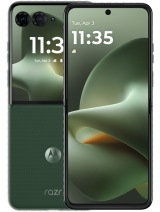
Razr 70+
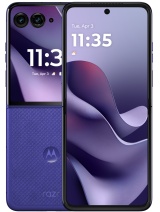
Razr Ultra 2026
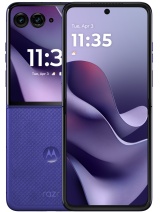
Razr 70 Ultra
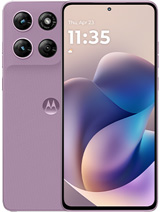
Moto G Stylus (2026)
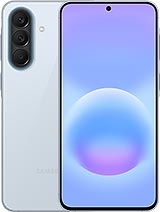
Galaxy A57