Motorola Moto G8 Power Lite review
The Moto G8 Power Lite suits users in cost-conscious markets who spend their day on messaging, email, and light web browsing and can tolerate slow charging and a soft-focus screen in exchange for battery peace of mind. Anyone else should look at a newer budget phone, even if it costs a bit more, because the 720p screen and Pie OS are real friction by 2024 standards, and the slow charging is a genuine drawback that no battery capacity can fully excuse."
This review is written with AI assistance from Motorola’s published specifications and public benchmark data for the Motorola Moto G8 Power Lite, and the rating is spec-based. GoSolo does not physically test devices; where we estimate real-world behaviour such as battery life or charge time, we say so. How we rate phones.
Overview
The Moto G8 Power Lite is a 2020 budget phone built around a giant 5000mAh battery and a large screen, not speed or sharpness. It's honest about its trade-offs: slow charging, a pixelated 720p display, and weak performance will frustrate anyone used to faster phones, but it delivers real all-day battery life and costs almost nothing, making it a genuine fit for users in cost-conscious markets who spend more time reading and messaging than gaming.
Design and build
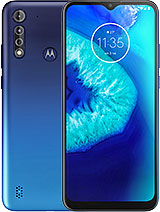
At 200g and 9.2mm thick, the Moto G8 Power Lite sits comfortably in the hand and feels sturdy without being heavy. The glass front and plastic back with plastic frame keep it light, and the water-repellent coating is a practical addition for daily life—it handles rain splashes and spilled drinks without drama. That said, 'water-repellent' is not waterproof; a drop onto concrete or submersion will damage the phone, so do not mistake the coating for durability. The rear fingerprint sensor is reliable and responsive. For a budget phone at this price, the build is fit for purpose, though it does not feel premium and will not survive rough handling.
Display
The 6.5-inch IPS LCD panel with an 82% screen-to-body ratio is genuinely large and makes browsing, reading, and video playback feel spacious. However, the 720p resolution at 269 ppi is its Achilles heel. Text is legible at normal viewing distances, but up close or side by side with a 1080p phone, the pixelation becomes obvious. Fine details like icons and small text appear soft and lack sharpness. For basic web browsing, social media, and video, this is acceptable; for anyone coming from a more recent budget phone with a 1080p screen, the downgrade will be immediately visible and frustrating. IPS colors are neutral and viewing angles are wide, but there is no HDR or refresh rate advantage here.
Performance
The Mediatek Helio P35 paired with 4GB of RAM handles everyday tasks—messaging, email, light web browsing, 1080p video playback—without obvious lag. Social media apps like WhatsApp, Instagram, and Facebook run smoothly. Beyond that, performance hits a wall quickly. Multitasking with five or six open apps causes perceptible stuttering, loading times stretch, and the battery drains faster under load. Any game beyond casual puzzlers or turn-based titles will frame-drop and feel sluggish. For a 2020 entry-level chipset, this is typical, but do not expect fast app launches or seamless heavy use. Users who spend their day on email and messages will see no real friction; those who switch between apps constantly or play games will feel the limitations.
Software
The phone launched with Android 9.0 Pie, which is now several versions behind. Motorola's near-stock Android approach means minimal bloat, but the lack of major OS updates is a real limit for long-term use. Security patches may still roll out, but do not expect Android 11, 12, or later; the hardware simply was not positioned for that upgrade path. For users primarily concerned with messaging, email, and social media, this matters less. For anyone who cares about staying current with Android features or security, this is a dealbreaker.
Camera
The 16MP f/2.0 main camera with PDAF performs reasonably in bright daylight, producing clear, sharp shots with good color and detail. The wide f/2.0 aperture helps indoors, where it gathers more light than a narrower lens would. However, low-light photography becomes noticeably noisy and dark, and the 2MP macro auxiliary lens is a gimmick that adds little practical value. Video caps out at 1080p@30fps with no electronic stabilization, so handheld footage is shaky and feels dated compared to rivals. The 8MP selfie camera is adequate for video calls and social media posts. For a budget phone, the daytime camera is acceptable; night performance and video are below what you would get from a 2022 or later mid-range phone at a similar price.
Battery and charging
The 5000mAh battery is the Moto G8 Power Lite's best feature. Paired with a 720p screen, a modest chipset, and light-use patterns typical of budget-phone buyers, real-world battery life reaches a full day comfortably, or 6–8 hours of screen-on time with typical mixed use. Heavy users may need a top-up by evening, but light users will stretch it to a second day without anxiety. The problem is charging: 10W is slow by any modern standard. A full charge from dead takes about 3–4 hours, which means there is no practical way to recover from a dead battery before heading to work. You must charge overnight, every night, or risk running out.
Value and verdict
At about 160 EUR in 2020, the Moto G8 Power Lite undercuts faster, sharper rivals by squeezing maximum battery life out of a minimal spec sheet. It succeeds at that mission: it is cheap, it lasts a long time, and it does the basics without fuss. It is honest about its compromises—the display is soft, performance lags, charging crawls, and the OS is outdated. It is not a phone for someone upgrading from anything made in the last three years, and it will feel slow and blurry by comparison. But for someone in a market where budget is the primary constraint and everyday tasks matter more than speed or sharpness, it delivers battery confidence at rock-bottom cost. It is also now discontinued, so you are buying used or old stock, which makes the outdated software and lack of future updates even less forgivable.
Verdict
The Moto G8 Power Lite suits users in cost-conscious markets who spend their day on messaging, email, and light web browsing and can tolerate slow charging and a soft-focus screen in exchange for battery peace of mind. Anyone else should look at a newer budget phone, even if it costs a bit more, because the 720p screen and Pie OS are real friction by 2024 standards, and the slow charging is a genuine drawback that no battery capacity can fully excuse."
- 5000mAh battery realistically lasts a full day or more on light use, including messaging, browsing, and video without anxiety about finding a charger
- 6.5-inch screen is genuinely large and comfortable for reading, despite the low pixel density
- Plastic frame and water-repellent coating make it resistant to accidental splashes and scrapes without the weight penalty of metal
- Dedicated microSD slot allows practical storage expansion, unlike many rivals that switched to hybrid slots
- 10W charging takes 3–4 hours from empty, making morning top-ups unfeasible if the phone dies overnight
- 720p resolution at 6.5 inches leaves text and icons noticeably soft and blurry compared to 1080p screens at the same size
- Helio P35 and 4GB RAM stutter noticeably in demanding apps and multitasking, and games beyond casual titles will lag and drain the battery faster
Motorola Moto G8 Power Lite Key Specifications
The essentials at a glance. See the full spec sheet.
| Released | 2020, April 03. Released 2020, April 03 |
|---|---|
| Display | 6.5 inches, 102.8 cm2 (~82.2% screen-to-body ratio), IPS LCD |
| Resolution | 720 x 1600 pixels, 20:9 ratio (~269 ppi density) |
| Chipset | Mediatek MT6765 Helio P35 (12 nm) |
| RAM & storage | 64GB 4GB RAM |
| Main camera | 16 MP, f/2.0, (wide), 1.0µm, PDAF 2 MP (macro) Auxiliary lens |
| Selfie camera | 8 MP, f/2.0, (wide), 1.12µm |
| Battery | 5000 mAh |
| Charging | 10W wired |
| Software | Android 9.0 (Pie) |
| Dimensions | 164.9 x 75.8 x 9.2 mm (6.49 x 2.98 x 0.36 in) |
| Weight | 200 g (7.05 oz) |
| Build | Glass front, plastic back, plastic frame |
| Durability | Water-repellent coating |
| Network | GSM / HSPA / LTE |
| NFC | No |
| USB | microUSB 2.0 |
Motorola Moto G8 Power Lite FAQ
Common questions, answered from the spec sheet.
Does the Moto G8 Power Lite support 5G?
No. The Moto G8 Power Lite tops out at GSM / HSPA / LTE, without 5G.
What chipset does the Moto G8 Power Lite use?
The Moto G8 Power Lite runs on the Mediatek MT6765 Helio P35 (12 nm).
What display does the Moto G8 Power Lite have?
A 6.5 inches, 102.8 cm2 (~82.2% screen-to-body ratio) IPS LCD, 720 x 1600 pixels, 20:9 ratio (~269 ppi density).
How big is the Moto G8 Power Lite battery?
The Moto G8 Power Lite has a 5000 mAh battery. Charging is rated at 10W wired.
Does the Moto G8 Power Lite have NFC?
No, the Moto G8 Power Lite does not list NFC support.
Is the Moto G8 Power Lite water resistant?
The Moto G8 Power Lite carries a Water-repellent coating rating.
Does the Moto G8 Power Lite support a microSD card?
Yes, the Moto G8 Power Lite supports expandable storage (microSDXC (dedicated slot)).
Does the Moto G8 Power Lite have a headphone jack?
Yes, the Moto G8 Power Lite has a 3.5mm headphone jack.
Alternatives to consider
If the Moto G8 Power Lite isn’t quite right, these are the closest calls.

Moto G8 Power Lite Dual SIM

Moto G8 Power Dual SIM
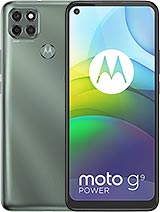
Moto G9 Power
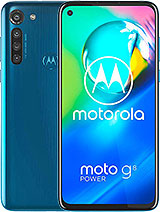
Moto G8 Power
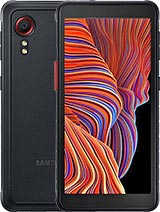
Galaxy XCover 5