Motorola Moto G Max review
The Moto G Max suits buyers who prize a bright, tough screen and genuine durability over speed and fast charging. If charging time and processing power are deal-breakers, look elsewhere; if you need a phone that survives rougher use and looks good doing it, this delivers.
This review is written with AI assistance from Motorola’s published specifications and public benchmark data for the Motorola Moto G Max, and the rating is spec-based. GoSolo does not physically test devices; where we estimate real-world behaviour such as battery life or charge time, we say so. How we rate phones.
Overview
The Moto G Max is a big, sturdy midrange phone with a genuinely good 6.8-inch AMOLED display and 5G, but hamstrung by a weak Dimensity 6400 chip and modest 30W charging that lag behind rivals at €420. It suits buyers who prioritize screen quality and ruggedness over raw speed and fast top-ups.
Design & build
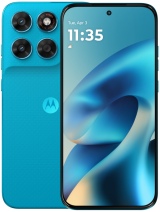
At 183 grams and 7.3 mm thick, the G Max is a sizable but not unwieldy phone. The eco-leather back feels intentional rather than cheap, and the glass front with Gorilla Glass 7i suggests confidence in durability. What sets it apart is the IP68/IP69 certification: it's truly waterproof and dust-proof to the highest standard, plus it'll survive a 1.2-meter drop without flinching. The MIL-STD-810H compliance adds weight to that claim. This is a phone you can take to a beach or building site without paranoia, which matters more than most specs for a device at this price point.
Display
The 6.8-inch AMOLED screen is the G Max's headline act. At 449 ppi, sharpness is excellent; the 19.5:9 aspect ratio gives you tall, narrow real estate that suits scrolling without feeling cramped. More importantly, 120Hz is silky for everyday swiping, and the 5000-nit peak brightness means you can actually use the thing in direct sunlight, unlike many phones that disappear in daylight. HDR support rounds it out. For a midrange device, this display is a genuine strength and justifies much of the asking price; most rivals at €420 cut corners here.
Performance
The Dimensity 6400 is mainstream midrange silicon, fine for apps, messaging, and light gaming but not a speed demon. You'll notice the difference if you juggle heavy browser tabs or play demanding games; throttling creeps in after sustained load. For typical daily tasks—social media, email, video streaming—it handles itself without drama. The 8GB of RAM helps, and the 256GB storage is welcome at this tier, though microSDXC expansion is on a shared slot with the SIM. This is not a phone for power users or mobile gamers; it is a phone for people who want reliability and reserve their phone for normal tasks.
Software
Android 16 is current and appreciated. Motorola's near-stock approach means minimal bloat and faster updates than skinned rivals, a meaningful advantage in the budget and midrange tiers where update delays are common. Smart Connect support suggests integration with other Motorola gear if you're in that ecosystem, though most buyers won't feel its absence.
Camera
The 200MP main camera is spec-sheet ammunition, but real-world results hinge on tuning rather than megapixel count alone. The f/1.8 aperture and OIS are genuinely useful for low light and video, and the 8MP ultrawide is present if unremarkable. The 32MP selfie is adequate. Video tops out at 1440p@30fps, which is respectable but not exceptional. In good light the camera performs solidly; push it into dim conditions or fast motion and you'll see the limits of the chipset's image pipeline holding it back. It is not a camera phone; it is a competent camera on a phone.
Battery & charging
The 5200 mAh cell is generous in capacity but paired with modest efficiency gains from the Dimensity 6400, so all-day life is realistic only with moderate use. The real stumble is 30W charging, which was fine in 2023 but is now slow for 2026. Rivals at €420 now routinely offer 65W or 100W, shaving an hour or more off top-up time. On the G Max, a full charge from zero takes well over an hour, a noticeable drag if you value speed.
Value & verdict
At €420, the Moto G Max occupies an awkward middle ground. It excels at durability and screen quality, two things that genuinely improve day-to-day life, but the slow charging and modest processing power feel increasingly out of step. If you need a rugged, bright phone and can live with slower charging and performance, this makes sense. If you prioritize charging speed, gaming, or peak responsiveness, rivals offer more for the money. For buyers in markets where durability matters—construction workers, outdoor enthusiasts, people with a track record of dropping phones—the ruggedness certification and AMOLED screen justify the price.
Verdict
The Moto G Max suits buyers who prize a bright, tough screen and genuine durability over speed and fast charging. If charging time and processing power are deal-breakers, look elsewhere; if you need a phone that survives rougher use and looks good doing it, this delivers.
- 6.8-inch AMOLED with 120Hz and 5000 nits peak brightness: vivid and usable outdoors, rare at this price
- IP68/IP69 rating plus MIL-STD-810H and drop resistance to 1.2m; genuinely built to take punishment
- 5G connectivity and Android 16 out of the box
- 200MP camera with OIS, though output quality depends more on tuning than the megapixel count
- Dimensity 6400 is entry midrange; expect throttling in sustained gaming or heavy multitasking
- 30W charging is slow for 2026; rivals at this price now push 65–100W, adding hours to the wait
- 5200 mAh battery with modest efficiency means you'll likely need a charge every day even with light use
Motorola Moto G Max Key Specifications
The essentials at a glance. See the full spec sheet.
| Released | 2026, June 11 |
|---|---|
| Display | 6.8 inches, 113.1 cm2 (~88.9% screen-to-body ratio), AMOLED, 1B colors, 120Hz, HDR, 5000 nits (peak) |
| Resolution | 1272 x 2772 pixels, 19.5:9 ratio (~449 ppi density) |
| Chipset | Mediatek Dimensity 6400 (6 nm) |
| RAM & storage | 256GB 8GB RAM |
| Main camera | 200 MP, f/1.8, (wide), 0.5µm, PDAF, OIS 8 MP, f/2.2, 120˚ (ultrawide), 1.12µm |
| Selfie camera | 32 MP, f/2.2, (wide) |
| Battery | 5200 mAh |
| Software | Android 16 |
| Dimensions | 164.5 x 77.3 x 7.3 mm (6.48 x 3.04 x 0.29 in) |
| Weight | 183 g (6.46 oz) |
| Build | Glass front (Gorilla Glass 7i), plastic frame, silicone polymer (eco leather) back |
| Durability | IP68/IP69 dust tight and water resistant (high pressure water jets; immersible up to 1.5m for 30 min) MIL-STD-810H compliant* * does not guarantee ruggedness or use in extreme conditions Drop resistant up to 1.2m |
| Network | GSM / HSPA / LTE / 5G |
| NFC | Yes |
| USB | USB Type-C 2.0 |
Motorola Moto G Max FAQ
Common questions, answered from the spec sheet.
Does the Moto G Max support 5G?
Yes. The Moto G Max supports 5G networks.
What chipset does the Moto G Max use?
The Moto G Max runs on the Mediatek Dimensity 6400 (6 nm).
What display does the Moto G Max have?
A 6.8 inches, 113.1 cm2 (~88.9% screen-to-body ratio) AMOLED, 1B colors, 120Hz, HDR, 5000 nits (peak), 1272 x 2772 pixels, 19.5:9 ratio (~449 ppi density).
How big is the Moto G Max battery?
The Moto G Max has a 5200 mAh battery.
Does the Moto G Max have NFC?
Yes, the Moto G Max has NFC.
Is the Moto G Max water resistant?
The Moto G Max carries a IP68/IP69 dust tight and water resistant (high pressure water jets; immersible up to 1.5m for 30 min) MIL-STD-810H compliant* * does not guarantee ruggedness or use in extreme conditions Drop resistant up to 1.2m rating.
Does the Moto G Max support a microSD card?
Yes, the Moto G Max supports expandable storage (microSDXC (uses shared SIM slot)).
Alternatives to consider
If the Moto G Max isn’t quite right, these are the closest calls.
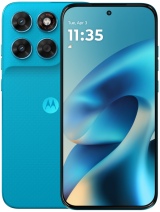
Moto G87
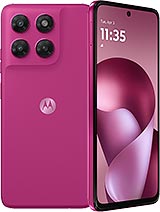
Moto G77 Power
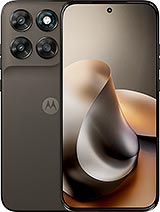
Moto G77
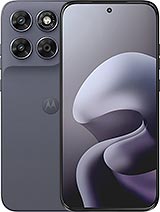
Moto G67
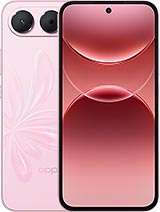
A7 Pro