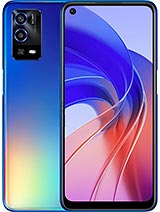
Motorola Moto E (2020) review
This phone suits people in mature 4G networks who prioritize battery life, expandability, and basic calling over gaming or photography, and do not mind noticeable performance lag when switching apps. Everyone else should spend a little more for a phone with better RAM, a sharper screen, or screen protection.
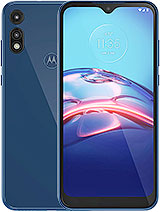
This review is written with AI assistance from Motorola’s published specifications and public benchmark data for the Motorola Moto E (2020), and the rating is spec-based. GoSolo does not physically test devices; where we estimate real-world behaviour such as battery life or charge time, we say so. How we rate phones.
Overview
The Moto E (2020) is a basic 4G phone for light tasks—calling, texting, light browsing—with a large 6.2-inch screen and a full day of battery on modest use. It's honest entry-level; don't expect gaming, multitasking, or strong low-light photos.
Design & Build
At 185 grams and 8.7 mm thick, this phone is genuinely slim and light in hand. The glass front and plastic back are standard fare for the price, and the water-repellent coating stops splashes but is not a substitute for real waterproofing. The real catch is durability: the LCD screen has no Gorilla Glass or equivalent protection, so a drop onto tile or concrete will crack it easily. For a phone at this price sold in regions where repairs are costly and hard to reach, that's a meaningful weakness. Build itself is competent but forgettable.
Display
The 6.2-inch, 720p IPS LCD is bright and readable indoors, and the 19:9 ratio gives you usable height. But at 271 ppi density, text and icons show visible grain compared to 1080p phones at the same diagonal. Watch a video or scroll through photos and the pixelation becomes obvious. For casual web browsing and messaging, it works; for anything visual—watching video, reading comics, browsing galleries—you'll notice the compromise. Rivals at this price in 2020 were already pushing toward 1080p, so this feels like a deliberate cost cut rather than a limitation of the budget tier.
Performance
The Snapdragon 632 is mainstream midrange silicon from 2018, paired here with just 2 GB of RAM on the base model. This combination handles messaging, calls, light web browsing, and simple maps fine. But open two or three apps, switch between them, or run anything beyond casual games and you'll hit stutters and slowdowns. Watching video while texting feels sluggish. The RAM is the real bottleneck; Android 10 alone needs about 1.5 GB to run cleanly. The 3 GB variant eases the pain slightly but does not eliminate it. For anyone used to a phone from the last five years, this will feel noticeably slower.
Software
Motorola ships near-stock Android 10 with minimal bloat, which is a genuine strength at this price. The interface is responsive within its limitations, and the lack of heavy customization means fewer battery drains from background processes. It is clean and straightforward. However, Android 10 in 2020 was already dated, and this phone will not see Android 11 or beyond, so software support will be limited. For basic, undemanding users who just need messaging and calling, this simplicity is good. Anyone wanting to future-proof their phone or run heavier apps should look elsewhere.
Camera
The 13 MP f/2.0 main camera takes acceptable daylight shots with decent color and detail for casual snapshots. Indoors or at dusk, it struggles: photos are dark and visibly noisy, and the autofocus can be slow in low light. The 5 MP selfie is adequate for video calls but soft for detailed shots. There is no ultra-wide, no macro, and the 2 MP depth sensor is mainly for blurry background effects rather than a real second camera. By 2020 standards, even budget phones were offering better low-light performance and wider lenses, so the camera setup feels a step behind the class.
Battery & Charging
The 3550 mAh battery is modest but adequate for a light user. On a day of texting, calling, and occasional browsing, you'll reach the evening comfortably. Heavy social media, video streaming, or gaming will drain it by afternoon. There is no fast charging listed in the specs, so recharging is a slow affair—likely 2+ hours from empty. For regions where power is inconsistent or users work long hours away from outlets, this is a meaningful drawback. The battery is not particularly large, and the lack of quick charging makes downtime noticeable.
Value & Verdict Context
At about 90 EUR in 2020, the Moto E was genuinely cheap, and that price set expectations. It delivers on the basics: LTE connectivity, a large screen, expandable storage, and respectable build. But it cuts corners where it hurts—low RAM, no screen protection, weak low-light camera, no fast charging. In its own time, rivals like the Samsung Galaxy A10 or A20 offered better screens, more RAM, or faster charging for similar or slightly higher prices. Today, as a used or budget option, it is honest about what it is: a phone for calls, texts, and light tasks, not a do-everything device. Anyone expecting gaming, strong multitasking, or good low-light photos will be disappointed.
Verdict
This phone suits people in mature 4G networks who prioritize battery life, expandability, and basic calling over gaming or photography, and do not mind noticeable performance lag when switching apps. Everyone else should spend a little more for a phone with better RAM, a sharper screen, or screen protection.
- Dual SIM and microSD expansion, with a dedicated slot so you don't have to choose
- Slim at 8.7 mm and light enough (185g) to pocket without feeling it
- Lasts a full day on light use; heavier users will see dusk shutdowns but not drastic drain
- Headphone jack and FM radio still here, useful in regions where streaming isn't assumed
- The 720p LCD at 6.2 inches shows visible pixelation in text and video compared to 1080p rivals at the same size
- Snapdragon 632 with 2 GB RAM stutters badly under any real multitasking or app switching
- No screen protection and unprotected LCD scratches and cracks far more easily than tempered glass on more expensive models
Motorola Moto E (2020) Key Specifications
The essentials at a glance. See the full spec sheet.
| Released | 2020, June 05. Released 2020, June 10 |
|---|---|
| Display | 6.2 inches, 95.9 cm2 (~78.4% screen-to-body ratio), IPS LCD |
| Resolution | 720 x 1520 pixels, 19:9 ratio (~271 ppi density) |
| Chipset | Qualcomm SDM632 Snapdragon 632 (14 nm) |
| RAM & storage | 32GB 2GB RAM, 32GB 3GB RAM |
| Main camera | 13 MP, f/2.0, 1/3.1", 1.12µm, PDAF Auxiliary lens |
| Selfie camera | 5 MP, f/2.0, 1.12µm |
| Battery | 3550 mAh |
| Software | Android 10 |
| Dimensions | 159.8 x 76.6 x 8.7 mm (6.29 x 3.02 x 0.34 in) |
| Weight | 185 g (6.53 oz) |
| Build | Glass front, plastic back, plastic frame |
| Durability | Water-repellent coating |
| Network | GSM / CDMA / HSPA / EVDO / LTE |
| NFC | No |
| USB | microUSB 2.0 |
Motorola Moto E (2020) FAQ
Common questions, answered from the spec sheet.
Does the Moto E (2020) support 5G?
No. The Moto E (2020) tops out at GSM / CDMA / HSPA / EVDO / LTE, without 5G.
What chipset does the Moto E (2020) use?
The Moto E (2020) runs on the Qualcomm SDM632 Snapdragon 632 (14 nm).
What display does the Moto E (2020) have?
A 6.2 inches, 95.9 cm2 (~78.4% screen-to-body ratio) IPS LCD, 720 x 1520 pixels, 19:9 ratio (~271 ppi density).
How big is the Moto E (2020) battery?
The Moto E (2020) has a 3550 mAh battery.
Does the Moto E (2020) have NFC?
No, the Moto E (2020) does not list NFC support.
Is the Moto E (2020) water resistant?
The Moto E (2020) carries a Water-repellent coating rating.
Does the Moto E (2020) support a microSD card?
Yes, the Moto E (2020) supports expandable storage (microSDXC (dedicated slot)).
Does the Moto E (2020) have a headphone jack?
Yes, the Moto E (2020) has a 3.5mm headphone jack.
Alternatives to consider
If the Moto E (2020) isn’t quite right, these are the closest calls.

Moto G8 Power Lite

Moto G8 Power Dual SIM
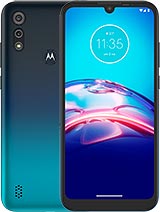
Moto E6s 2020
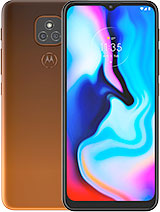
Moto E7 Plus
Galaxy XCover 5