LG T385 review
This phone is not for anyone shopping new; it has been obsolete for 12 years. If you live in an area with deteriorating access to electricity or modern networks and need a used device that holds a charge for weeks and makes calls reliably, it might be a practical fallback, but nothing more.
This review is written with AI assistance from LG’s published specifications and public benchmark data for the LG T385, and the rating is spec-based. GoSolo does not physically test devices; where we estimate real-world behaviour such as battery life or charge time, we say so. How we rate phones.
Overview
The LG T385 is a 2012 feature phone with a 3.2-inch display, 2MP camera, and 950mAh removable battery—basic even for its era. It's a phone for calls, texts, and FM radio, not much more, and by modern standards has been obsolete for over a decade.
Design & Build
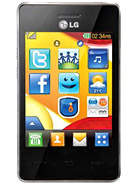
At 103 x 59 x 10.7mm, the T385 is genuinely pocketable—weight data is missing, but the dimensions suggest it sits somewhere around 90–100 grams. The build is plastic and sparse; there is nothing here to remark on beyond the removable battery cover, which was standard in 2012 but is now so rare in any phone category that it is worth noting. The Mini-SIM slot and modest button layout are what you'd expect from a device pitched at voice and text first. It is not durable by modern standards and is certainly not a phone you would trust on a long journey into rough terrain.
Display
The 3.2-inch TFT screen with 240 x 320 resolution and 125 ppi density is a relic. Even for 2012, rivals were already pushing toward higher densities; this one renders text and icons with visible pixelation on anything smaller than a headline. The 4:3 aspect ratio makes it squarer than typical phones, wasting space relative to a 16:9 layout. Color reproduction is capped at 256K (16-bit), which looks washed compared to what even budget phones offered that same year. Outdoor visibility in sunlight would be rough, and anyone accustomed to a modern screen will find it exhausting to look at for more than a few minutes.
Performance & Storage
Specs on the chipset are absent from the data, but the 64MB of RAM and 50MB of usable storage tell you everything: this phone crawls. You have room for maybe two or three downloaded songs, a handful of photos, or a single app, then the device runs out of space. The microSDHC slot is a lifeline, but only for media; apps cannot run from the card. Wi-Fi and Bluetooth 2.1 are present but dated. For its time, this was budget-tier even within the feature phone segment, and it shows in the way the interface would stutter under any load.
Camera
Two megapixels shooting at QCIF resolution—144p—is a punchline, even in 2012. The frame rate of 15fps compounds the misery; you get a slideshow instead of a video. Photos would be grainy and soft, good only for proof-of-concept shots if you had no other option. Do not expect to print anything or crop and share with any dignity. This camera exists to let you send extremely basic MMS messages to prove you own a phone.
Battery & Standby
The 950mAh removable Li-Ion battery is the T385's single practical strength in 2024 hindsight. Removing it to swap in a fresh one (if you had spares) was a genuine workaround in areas where charging access was sporadic or power grids unreliable. The quoted 15 hours of talk time is credible for a device with so little going on; standby time of up to 560 hours (over 23 days) is possible if you turn off everything and just leave it powered. In practice, a light user might eke out several days between charges, which is more than you'd get from most modern phones—though the screen is so dim and the interface so laggy that you would not want to use it for long anyway.
Connectivity & Features
GSM-only on four bands, no 3G, no 4G—this phone would struggle to connect to modern networks in many regions today. Wi-Fi 802.11b/g/n is present, which is at least something. The FM radio with RDS is genuinely useful if you live somewhere that still broadcasts FM and have no data plan, but it is a curiosity almost everywhere else. Built-in apps cover the basics: MP3 and MP4 playback, an organizer, a document viewer, voice memo recording, and SNS integration, which in 2012 meant basic Twitter and Facebook widgets. None of these feel responsive or feature-rich now.
Verdict & Context
The LG T385 is a phone from 2012 sold for about 60 EUR as an entry-level option in markets where owning any phone mattered more than owning a capable one. It is discontinued and obsolete by every modern measure: the network bands do not align with current infrastructure in most countries, the storage is comically insufficient, and the performance is glacial. If you own one today, it is either a relic you keep for sentimental reasons, a backup in case your main phone fails and you need something that simply works on GSM, or a curiosity. It is not a phone to choose unless you live somewhere with zero infrastructure for anything newer and are shopping used for survival.
Verdict
This phone is not for anyone shopping new; it has been obsolete for 12 years. If you live in an area with deteriorating access to electricity or modern networks and need a used device that holds a charge for weeks and makes calls reliably, it might be a practical fallback, but nothing more.
- Removable battery—practically extinct in phones today, which matters if you need a spare in areas with spotty power
- Dedicated microSDHC slot for storage expansion, useful given the measly 50MB usable space
- Actual FM radio with RDS, no data plan required
- Compact and light enough to carry without thought
- 50MB usable storage is crippling even for a feature phone—you cannot store meaningful music or documents
- 2MP camera shoots QCIF video at 15fps, which is barely watchable and useless for anything beyond a novelty
- 950mAh battery paired with only 15 hours of talk time is underwhelming; standby time of 560 hours sounds inflated for daily use
LG T385 Key Specifications
The essentials at a glance. See the full spec sheet.
| Released | 2012, March. Released 2012, Q3 |
|---|---|
| Display | 3.2 inches, 31.7 cm2 (~52.2% screen-to-body ratio), TFT, 256K colors |
| Resolution | 240 x 320 pixels, 4:3 ratio (~125 ppi density) |
| RAM & storage | 50MB 128MB ROM 64MB RAM |
| Main camera | 2 MP |
| Selfie camera | No |
| Battery | 950 mAh |
| Software | Android |
| Dimensions | 103 x 59 x 10.7 mm (4.06 x 2.32 x 0.42 in) |
| Network | GSM |
| USB | 2.0 |
LG T385 FAQ
Common questions, answered from the spec sheet.
Does the T385 support 5G?
No. The T385 tops out at GSM, without 5G.
What display does the T385 have?
A 3.2 inches, 31.7 cm2 (~52.2% screen-to-body ratio) TFT, 256K colors, 240 x 320 pixels, 4:3 ratio (~125 ppi density).
How big is the T385 battery?
The T385 has a 950 mAh battery.
Does the T385 support a microSD card?
Yes, the T385 supports expandable storage (microSDHC (dedicated slot)).