LG P936 review
The P936 worked for people who valued display quality and LTE connectivity over smooth performance and did not multitask heavily. Anyone doing more than light use—or expecting the phone to feel responsive—should have looked at competitors with better processors and more RAM, even at the same price.
This review is written with AI assistance from LG’s published specifications and public benchmark data for the LG P936, and the rating is spec-based. GoSolo does not physically test devices; where we estimate real-world behaviour such as battery life or charge time, we say so. How we rate phones.
Overview
The LG P936 was a respectable mid-range Android phone in 2012 with a bright 4.5-inch display and LTE support, but its 1.5 GHz dual-core processor and 1 GB RAM made multitasking feel sluggish even by that year's standards. It offered decent value for basic use—messaging, web browsing, media—but lacked the smoothness and app performance you'd get from rivals with newer chips or more RAM.
Design & build
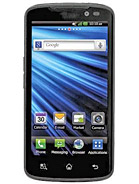
At 135 grams and 10.4 mm thick, the P936 was competently slim and light for 2012, making it comfortable to pocket and hold. LG went with a straightforward plastic construction that felt solid enough without pretense. The removable battery was a practical touch many users appreciated then, though it meant the phone lacked the tighter sealing that competitors were beginning to offer. There is nothing particularly distinguished here, but nothing cheap or fragile either; it sat comfortably in the middle of the mid-range pack.
Display
The 4.5-inch True HD-IPS LCD screen at 720 by 1280 pixels (326 ppi) was bright and colorful, one of the phone's genuine strengths. IPS viewing angles were good, and the pixel density was sharp enough for text and photos at a normal viewing distance. In 2012, this display held its own against rivals, though you could see the seams if you were coming from a higher-end Samsung Galaxy S or HTC flagship. For the price and class, it delivered solid everyday usability without the eye strain of lower-resolution panels.
Performance
The dual-core 1.5 GHz Snapdragon S3 with 1 GB of RAM was the P936's weakest point and the reason many buyers hesitated. By mid-2012, this chipset was already feeling dated; newer rivals were shipping dual-core Snapdragon S4 processors and some had 2 GB of RAM. Scrolling through Android, switching between apps, and loading web pages had a noticeable lag—nothing catastrophic, but enough to remind you that you weren't running a fast phone. Gaming and media editing were genuinely unpleasant. The 4 GB of internal storage also meant you filled it quickly after installing a handful of apps.
Software
Android 2.3.6 Gingerbread was already aging by the phone's May 2012 release; Ice Cream Sandwich was the current standard, and some flagships already shipped with it. Gingerbread lacked the refinement and speed of newer versions, and the app ecosystem was beginning to move past it. LG's custom interface added little of value and further weighed down the thin processor. Software support was minimal, with few updates expected—a trade-off buyers at this price had to accept.
Camera
The 8 MP main camera with autofocus and LED flash was respectable on paper and could deliver decent daylight shots, though colors sometimes looked flat. Video at 1080p at 30 fps was competitive for the time. The 1.3 MP front camera was workable for occasional video calls, though quality was basic. Low-light photography suffered from the modest sensor and flash limitations. For casual snapshots and social media, it was adequate; anything more demanding revealed its limitations.
Battery & charging
The 1830 mAh battery was modest and reflected the era's smaller screens and less power-hungry chips. Real-world battery life hovered around a full day with mixed use, though heavy streaming or gaming would drain it by afternoon. The removable battery design meant you could carry a spare, which was genuinely useful for users on the go. No fast charging technology existed in 2012, so refueling took the standard 2-3 hours via microUSB.
Value & verdict context
At about 220 EUR in 2012, the P936 occupied an awkward middle position. It had nice things—a good display, LTE, removable battery—but the processor and RAM held it back from smooth everyday performance. You were paying for connectivity and screen size while tolerating sluggish responsiveness. Rivals with more RAM or faster chips offered better value, even if they cost the same. For someone whose needs stopped at messaging, calling, and light web use, it worked. For anyone doing more, the lag became a daily frustration.
Verdict
The P936 worked for people who valued display quality and LTE connectivity over smooth performance and did not multitask heavily. Anyone doing more than light use—or expecting the phone to feel responsive—should have looked at competitors with better processors and more RAM, even at the same price.
- Bright, sharp 4.5-inch IPS display that was genuinely competitive in its class and year
- LTE connectivity at a time when most mid-range phones still relied on 3G
- Thin and light build (10.4 mm, 135 g) that felt good in hand
- Removable battery and microSDHC slot meant swappable spares and storage expansion
- 1.5 GHz dual-core processor with 1 GB RAM felt underpowered even in 2012; scrolling and app switching had noticeable lag
- Outdated Android 2.3.6 Gingerbread at launch; already behind the current software generation
- Only 4 GB internal storage, filling up quickly with apps and media
LG P936 Key Specifications
The essentials at a glance. See the full spec sheet.
| Released | 2012, April. Released 2012, May |
|---|---|
| Display | 4.5 inches, 55.8 cm2 (~61.9% screen-to-body ratio), True HD-IPS LCD |
| Resolution | 720 x 1280 pixels, 16:9 ratio (~326 ppi density) |
| Chipset | Qualcomm APQ8060 Snapdragon S3 |
| RAM & storage | 4GB 1GB RAM |
| Main camera | 8 MP, AF |
| Selfie camera | 1.3 MP |
| Battery | 1830 mAh |
| Software | Android 2.3.6 (Gingerbread) |
| Dimensions | 132.9 x 67.9 x 10.4 mm (5.23 x 2.67 x 0.41 in) |
| Weight | 135 g (4.76 oz) |
| Network | GSM / HSPA / LTE |
| USB | microUSB 2.0 (MHL TV-out) |
LG P936 FAQ
Common questions, answered from the spec sheet.
Does the P936 support 5G?
No. The P936 tops out at GSM / HSPA / LTE, without 5G.
What chipset does the P936 use?
The P936 runs on the Qualcomm APQ8060 Snapdragon S3.
What display does the P936 have?
A 4.5 inches, 55.8 cm2 (~61.9% screen-to-body ratio) True HD-IPS LCD, 720 x 1280 pixels, 16:9 ratio (~326 ppi density).
How big is the P936 battery?
The P936 has a 1830 mAh battery.
Does the P936 support a microSD card?
Yes, the P936 supports expandable storage (microSDHC (dedicated slot), 16 GB included).