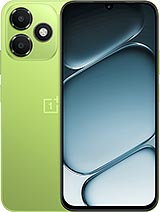
Lava Virat V1 review
The Virat V1 suits buyers who prioritize price, battery life, and practical features like dual SIM and microSD over screen quality and raw performance. Anyone buying based on camera capability, gaming, or expecting a versatile everyday flagship should look at phones with better processors and 1080p displays, even if that means stretching the budget slightly.
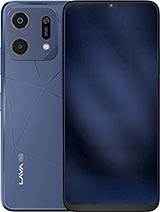
This review is written with AI assistance from Lava’s published specifications and public benchmark data for the Lava Virat V1, and the rating is spec-based. GoSolo does not physically test devices; where we estimate real-world behaviour such as battery life or charge time, we say so. How we rate phones.
Overview
The Lava Virat V1 is a no-frills 5G phone aimed squarely at buyers in emerging markets who need basic connectivity and a big screen without stretching the budget. It does that job—long battery, dual SIM, microSD expansion—but the 260 ppi display, entry-level chipset, and sparse camera make it a device you buy for price and practicality, not enjoyment.
Design & build
At 210 grams and 8.8 mm thick, the Virat V1 feels light and slim for its 6.75-inch footprint—an asset if you carry it all day. The body hits IP64 rating, meaning dust ingress protection and splash resistance, which is more than you'd expect at 110 euros. Dual nano-SIM setup and a dedicated microSD slot mean no storage compromises, a practical choice that undercuts phones forcing you to pick between a second line and expandable memory. The industrial design itself is unremarkable—plastic and glass, glossy finishes—but that is the trade-off for the price. Nothing here breaks in ordinary use.
Display
The 6.75-inch IPS LCD screen is bright and big enough to make videos and e-books comfortable. The 120Hz refresh is a pleasant surprise at this price and does smooth scrolling meaningfully. The problem is resolution: 720 by 1600 pixels yields 260 ppi density, which is noticeably soft. Text in messaging apps and web pages has visible pixellation. By 2026 standards, rivals at the same price have moved to 1080p panels. This is the one place where the Virat V1 clearly lags—you notice it every day, and there is no workaround.
Performance
The Unisoc T8200 is an entry-level chip designed for light work: calling, messaging, social media, light browsing. It runs Android 16 without stutters in casual use, and everyday tasks feel responsive enough. Open a demanding game, try to run multiple large apps in the background, or edit video and the phone will slow down. This is not a device for power users or anyone who juggles heavy workloads. For the target audience—buyers who need practical connectivity and don't ask much of the processor—it suffices. Just do not expect snappy multitasking or future-proofing.
Software
Android 16 is current and provides a clear, straightforward interface. The phone ships with minimal bloatware, which is rare and welcome at this price tier. Lava's skin is light-handed, letting Android do the heavy lifting. Updates depend on Lava's commitment; major budget brands have improved here in recent years, but smaller names still lag. Do not count on years of OS upgrades, though security patches are more likely. If you need a long-term investment, this is not it; if you need a phone that works now without junk, it delivers.
Camera
The 13MP main sensor captures adequately lit scenes with decent color and sharpness for social media posting and messaging. Indoors or at night, noise and loss of detail are obvious. There is no ultrawide or telephoto lens, no macro mode, and no computational photography tricks—what you frame is what you get. The 5MP selfie is functional but coarse. Video maxes out at 1080p and 30fps, fine for clips but not for serious recording. If photography matters to you at all, this is where the Virat V1 compromises most. It is a camera phone in the literal sense, not a aspiring photographer's tool.
Battery & charging
The 6000 mAh battery comfortably lasts a full day of moderate use—calling, browsing, messaging, some streaming. Heavy users might need a top-up by evening. The spec sheet does not list charging wattage, which is a red flag; assume it is slow, typical for phones at this price. No wireless charging, naturally. The long runtime is the Virat V1's strongest practical asset, and in markets where power is inconsistent, a big battery is genuinely valued.
Value & verdict
At 110 euros, the Lava Virat V1 is a direct hit for buyers in emerging markets where price is the primary constraint and brand familiarity matters. Lava is a known Indian brand with local service networks, which counts. For the money, you get 5G, a big screen, dual SIM, microSD expansion, a large battery, and decent durability. What you lose is display clarity, processing speed, and camera quality—all things that cost more elsewhere. The phone does not try to punch above its weight; it is honest about what it is. That clarity has value.
Verdict
The Virat V1 suits buyers who prioritize price, battery life, and practical features like dual SIM and microSD over screen quality and raw performance. Anyone buying based on camera capability, gaming, or expecting a versatile everyday flagship should look at phones with better processors and 1080p displays, even if that means stretching the budget slightly.
- Large 6.75-inch screen with 120Hz refresh is good for media and reading at this price point
- 6000 mAh battery easily clears a full day of moderate use, even with the modest chipset
- 5G support, dual SIM, and microSD expansion—practical features for markets where these matter
- Light and thin at 210g and 8.8mm, with IP64 dust and splash protection for a phone this cheap
- 720p display on a 6.75-inch screen leaves text soft and images grainy; rival budget phones now ship 1080p as standard
- Unisoc T8200 is entry-level even for budget tier—gaming, multitasking, and heavy apps will stutter
- 13MP main camera and 5MP selfie are genuinely basic; no ultrawide, no depth sensor, 1080p video only
Lava Virat V1 Key Specifications
The essentials at a glance. See the full spec sheet.
| Released | 2026, July 24 |
|---|---|
| Display | 6.75 inches, 110.0 cm2 (~86.3% screen-to-body ratio), IPS LCD, 120Hz |
| Resolution | 720 x 1600 pixels, 20:9 ratio (~260 ppi density) |
| Chipset | Unisoc T8200 (6 nm) |
| RAM & storage | 64GB 4GB RAM |
| Main camera | 13 MP |
| Selfie camera | 5 MP |
| Battery | 6000 mAh |
| Software | Android 16 |
| Dimensions | 165.9 x 76.8 x 8.8 mm (6.53 x 3.02 x 0.35 in) |
| Weight | 210 g (7.41 oz) |
| Durability | IP64 dust tight and water resistant (water splashes) |
| Network | GSM / HSPA / LTE / 5G |
| NFC | No |
| USB | USB Type-C 2.0, OTG |
Lava Virat V1 FAQ
Common questions, answered from the spec sheet.
Does the Virat V1 support 5G?
Yes. The Virat V1 supports 5G networks.
What chipset does the Virat V1 use?
The Virat V1 runs on the Unisoc T8200 (6 nm).
What display does the Virat V1 have?
A 6.75 inches, 110.0 cm2 (~86.3% screen-to-body ratio) IPS LCD, 120Hz, 720 x 1600 pixels, 20:9 ratio (~260 ppi density).
How big is the Virat V1 battery?
The Virat V1 has a 6000 mAh battery.
Does the Virat V1 have NFC?
No, the Virat V1 does not list NFC support.
Is the Virat V1 water resistant?
The Virat V1 carries a IP64 dust tight and water resistant (water splashes) rating.
Does the Virat V1 support a microSD card?
Yes, the Virat V1 supports expandable storage (microSDXC (dedicated slot)).
Alternatives to consider
If the Virat V1 isn’t quite right, these are the closest calls.
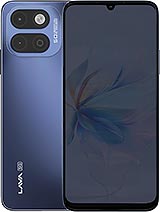
Virat V1 Pro
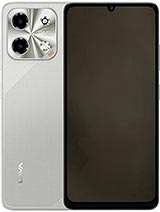
Shark 2
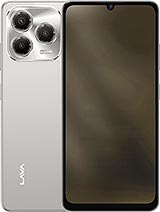
Bold N2 Pro
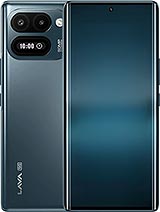
Virat Curve
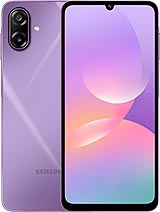
Galaxy M17e