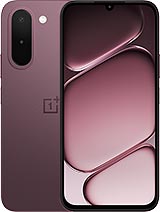
Itel Zeno 20 Max review
The Zeno 20 Max suits users in emerging markets who prioritize battery life and durability on a 60 EUR budget and use the phone mainly for calling, messaging, and light browsing. Anyone who needs faster performance, modern camera quality, or quick charging should look elsewhere.
This review is written with AI assistance from Itel’s published specifications and public benchmark data for the Itel Zeno 20 Max, and the rating is spec-based. GoSolo does not physically test devices; where we estimate real-world behaviour such as battery life or charge time, we say so. How we rate phones.
Overview
The Itel Zeno 20 Max is a bare-bones entry-level phone aimed squarely at dual-SIM markets in the Global South, with a 5000 mAh battery and 90Hz display that stretch daily comfort on a shoestring budget. It is fine for calls, texts, and light browsing, but the weak chipset and sparse 13 MP camera mean you're buying longevity and connectivity, not performance or picture quality.
Design & Build
Itel has kept weight and dimensions off the spec sheet, but the 9 mm thickness and 5000 mAh battery suggest a modest, likely unremarkable slab. The IP54 rating is the real win here: dust protection and splash resistance mean this phone can handle a spilled chai or rain, and the 1.2 m drop tolerance suggests it is built to take a fall in a pocket or off a lap without shattering. Dual nano-SIM slots are crucial in markets where switching carriers or maintaining work and personal lines on one device is routine. There is no flourish, but for 60 EUR, durability that does not feel fragile is more useful than thin.
Display
A 6.6 inch IPS LCD at 720p sounds ancient on paper, and at 267 ppi it is not sharp: text at arm's length will show a slight grain, and web pages will look soft. But 90 Hz makes a real difference in this class. Scrolling feeds and lists feels smoother than the 60 Hz budget phones that still dominate this price tier, and the 480 nits typical brightness is workable indoors and in shade. The 1500 nit peak suggests some outdoor readability if you are in direct sun, though you will squint. For someone coming from a 60 Hz phone, the 90 Hz refresh will feel like the main thing that got better. For anyone used to modern flagships, this is rough, but it is honest work for 60 EUR.
Performance
The Unisoc T7100 is entry-level silicon. It handles calls, messaging, WhatsApp, basic browsing, and YouTube without stuttering, but anything demanding will remind you of its limits. Heavy apps, games with any complexity, video editing, or fast photo processing will lag or stall. The 3 GB or 4 GB RAM depends on your variant, and more RAM does not fix the chip. Android 14 Go Edition is the right choice here: Google stripped it for low-end hardware, so you get fewer bloated background services and better battery life. This is not a gaming or creative phone; it is a communication and media-consumption phone. If that is your use, you will not feel frustrated. If you want to do more, you will.
Software
Android 14 Go Edition is lightweight and designed for this chipset tier. Itel's OS 14 overlay is minimal and does not clutter the experience. Updates are the question: Itel has not earned a reputation for long-term support, so do not expect more than one or two years of OS updates. Security patches may continue longer, but that is a guess. In markets where phones are often used for three to five years, this is a real concern, though the Go Edition's low resource footprint means it will age less poorly than stock Android would on this hardware.
Camera
A 13 MP main sensor with autofocus is present but not impressive. It will capture decent daylight snapshots and group photos, but detail is modest, and low-light performance will be noisy and soft. The 5 MP front camera is for video calls and selfies; do not expect to print them. LED flash helps, and features like HDR and panorama are there, but they do not overcome the sensor's limitations. This phone shoots 1080p video at 30 fps, which is fine for WhatsApp messages or social media clips but not for anything you want to keep. If photography matters, this is not your phone.
Battery & Charging
The 5000 mAh battery is the Zeno 20 Max's strongest feature. On light use—calls, messages, social browsing—expect around 1.5 days between charges. Heavy video streaming or gaming will cut that to a single day or less. For most dual-SIM users in markets where the phone is sold, a day and a half is the expectation, and it lands here. Charging is slow: 15 W takes roughly 2 to 2.5 hours from empty. That is not a quick top-up, so overnight charging is the reality. Many rivals in this price tier hit 30 W or more, but Itel prioritized raw capacity over speed. For most users, the trade-off works: a phone that lasts 36 hours beats one that charges in 90 minutes if it only lasts 20 hours.
Storage & Connectivity
You get 64 GB of internal storage with no option for more RAM or storage variants mentioned in the core spec. A dedicated microSD slot takes the pressure off: you can expand storage to 2 TB (in theory, though practical SD cards top out lower) for photos, videos, and apps without internal bloat. LTE support covers most bands globally, and dual nano-SIM means you can keep two lines live. No 5G, no NFC, no FM radio—absent features in this price class are not flaws, just the tier. USB Type-C 2.0 is standard now and welcomed.
Value & Verdict
At 60 EUR, the Itel Zeno 20 Max is priced for emerging markets where budget is a hard ceiling and reliability is the buy. You are not paying for speed, sharpness, or features; you are paying for a phone that boots, connects, and lasts two days between charges. The 5000 mAh battery is the honest centerpiece. The IP54 durability is real. The 90 Hz display is a small but tangible lift over static 60 Hz panels at the same price. The Unisoc T7100 is weak, the camera is basic, and software longevity is uncertain, but these are known compromises of the price tier, not surprises. For someone who needs a reliable dual-SIM phone for work and family calls with light media on a tight budget, this lands. For anyone expecting flagship performance, modern camera quality, or multi-year software support, it does not belong in your shortlist.
Verdict
The Zeno 20 Max suits users in emerging markets who prioritize battery life and durability on a 60 EUR budget and use the phone mainly for calling, messaging, and light browsing. Anyone who needs faster performance, modern camera quality, or quick charging should look elsewhere.
- 5000 mAh battery delivers 1.5+ days on light use, a genuine advantage over smaller rivals in this price tier
- IP54 rating and 1.2 m drop resistance add real durability for daily mishaps (spills, falls) without inflating the cost
- 90 Hz refresh rate makes scrolling and feeds noticeably smoother than the 60 Hz budget phones that still dominate at this price
- Dedicated microSD slot for storage expansion, removing the storage bottleneck that plagues budget phones
- Weak Unisoc T7100 chipset struggles with anything beyond light apps and messaging; gaming and video work will lag
- Slow 15 W charging takes 2 to 2.5 hours from empty, forcing overnight charging habits
- Basic 13 MP camera captures usable daylight snapshots but lacks detail and struggles in low light
Itel Zeno 20 Max Key Specifications
The essentials at a glance. See the full spec sheet.
| Released | 2025, December 21 |
|---|---|
| Display | 6.6 inches, 104.6 cm2, IPS LCD, 90Hz, 480 nits (typ), 1500 nits (peak) |
| Resolution | 720 x 1612 pixels, 20:9 ratio (~267 ppi density) |
| Chipset | Unisoc T7100 |
| RAM & storage | 64GB 3GB RAM, 64GB 4GB RAM |
| Main camera | 13 MP, AF Auxiliary lens |
| Selfie camera | 5 MP |
| Battery | 5000 mAh |
| Charging | USB Power Delivery up to 15 W |
| Software | Android 14 (Go edition), itel OS 14 |
| Durability | IP54 dust protected and water resistant (water splashes) Drop resistant up to 1.2m |
| Network | GSM / HSPA / LTE |
| NFC | No |
| USB | USB Type-C 2.0, OTG |
Itel Zeno 20 Max FAQ
Common questions, answered from the spec sheet.
Does the Zeno 20 Max support 5G?
No. The Zeno 20 Max tops out at GSM / HSPA / LTE, without 5G.
What chipset does the Zeno 20 Max use?
The Zeno 20 Max runs on the Unisoc T7100.
What display does the Zeno 20 Max have?
A 6.6 inches, 104.6 cm2 IPS LCD, 90Hz, 480 nits (typ), 1500 nits (peak), 720 x 1612 pixels, 20:9 ratio (~267 ppi density).
How big is the Zeno 20 Max battery?
The Zeno 20 Max has a 5000 mAh battery. Charging is rated at USB Power Delivery up to 15 W.
Does the Zeno 20 Max have NFC?
No, the Zeno 20 Max does not list NFC support.
Is the Zeno 20 Max water resistant?
The Zeno 20 Max carries a IP54 dust protected and water resistant (water splashes) Drop resistant up to 1.2m rating.
Does the Zeno 20 Max support a microSD card?
Yes, the Zeno 20 Max supports expandable storage (microSDXC (dedicated slot)).
Alternatives to consider
If the Zeno 20 Max isn’t quite right, these are the closest calls.
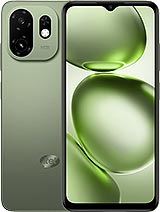
Zeno 100
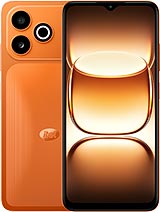
A300C
A100 Pro
A100Cs
Galaxy M17e