Huawei nova 16 Pro review
This phone suits buyers who prioritize battery life, optical zoom, and raw hardware and can accept HarmonyOS as either native (if in China or Asia) or a tolerable inconvenience. Anyone reliant on Google apps, Google Maps, or the Western app ecosystem should look at a Pixel or Samsung instead; the friction is real and won't fade.
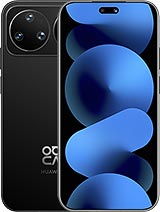
This review is written with AI assistance from Huawei’s published specifications and public benchmark data for the Huawei nova 16 Pro, and the rating is spec-based. GoSolo does not physically test devices; where we estimate real-world behaviour such as battery life or charge time, we say so. How we rate phones.
Overview
The nova 16 Pro is a capable mid-large phone with Huawei's latest flagship chip, a 7000 mAh battery, and genuinely useful optics—especially the periscope telephoto. For €500, it's a solid all-rounder if you can live with HarmonyOS and no Google apps, though the charging speed trails rivals and the display's brightness advantage doesn't translate to everyday visibility gains.
Design & build
At 218g and 7.1mm thick, the nova 16 Pro is a solid, substantial phone—heavy by 2026 standards and definitely a two-hander. The glass-and-aluminum construction feels durable, and IP65 rating means it shrugs off dust and low-pressure water, though not full submersion. The 6.84-inch footprint is genuinely large, pushing into phablet territory; if you've been fine with 6.3-inch phones, this will feel like an upgrade in desk real estate but a step up in pocket friction. The weight sits just above what you'd call light, closer to the ballpark of older flagships, so there's a trade-off being made here for the battery size.
Display
The 6.84-inch LTPO OLED is sharp enough at 460 ppi and benefits from the variable refresh rate to preserve battery life. The 6000 nits peak brightness is genuinely excessive—sunlight legibility was settled years ago at half that—and feels like a spec-sheet play, though the practical upshot is the panel looks crisp outdoors without fussing. The 19.5:9 aspect ratio is tall and narrow, which suits video but makes one-handed use a reach. Kunlun Glass protection is standard for flagship Huaweis. Color accuracy and black levels are what you expect from OLED in this generation, nothing surprising, nothing disappointing.
Performance
The Kirin 9010S is a high-end chip for mid-2026, trading blows with the latest Snapdragons in synthetic benchmarks and real-world gaming. Apps launch briskly, multitasking stays smooth, and demanding games run at high settings without hiccups. Battery and thermals stay under control through regular use; the 12GB of RAM is generous and future-proofs against memory pressure for another couple of years. This is not a last-gen compromise—the chip is current-generation flagship-class hardware, so performance-wise you're not sacrificing anything at this price.
Software
HarmonyOS 6.0 is Huawei's homegrown alternative to Android, born out of U.S. sanctions. The operating system is polished and responsive, with gesture navigation and customization that rival stock Android. The catch is the Google Play Store is absent. For users in China or those willing to sideload or use alternative app stores, this is fine; for anyone accustomed to seamless app access, it's a friction point. Huawei's own app ecosystem is growing but remains incomplete outside Asia. Security updates are timely within Huawei's sphere of influence, though Western users should factor in the support uncertainty.
Camera
The 200MP main sensor with f/1.8 aperture and optical stabilization is the foundation, and while 200MP sounds like overkill, Huawei's binning and processing keep photos sharp and color-accurate in variable light. The 50MP ultrawide at 118 degrees is broad and useful for landscapes; distortion is controlled. The standout is the 50MP periscope telephoto with a 3.7x optical zoom and OIS. At this price, most rivals force you to crop from the main sensor or offer a mediocre 2x; Huawei's periscope is a real intermediate reach that doesn't sacrifice clarity. The color spectrum sensor is a nice touch, helping white balance hold steady in tungsten or fluorescent light. Video is solid at 4K with gyro stabilization and HDR Vivid, though not class-leading. Portrait mode works as expected, and night mode is competent if not revolutionary. The 50MP ultrawide selfie is overkill for video calls but nice for group shots.
Battery & charging
The 7000 mAh battery is the phone's strongest play for endurance. In mixed use—social media, messaging, music, moderate gaming—expect 1.5 to 2 days easily; heavy users will stretch to a full two days without reaching single digits. Standby is equally impressive, meaning you can skip a charger on a day trip without anxiety. The flip side is charging: 100W over USB Type-C 2.0 is adequate but trailing the curve. In 2026, rivals in the mid-premium segment hit 120W or higher, shaving 20 to 30 minutes off the charge time. For a 7000 mAh pack, that means roughly an hour to full charge rather than the 40 minutes leaders achieve. Wireless charging is absent, as is typical for Huawei, so it's wired or nothing.
Value & verdict
At around €500, the nova 16 Pro undercuts true flagships by €150–200 while keeping the core hardware competitive: flagship-class chip, large OLED, real telephoto, and endurance that will outlast most rivals on a charge. The trade-offs are real but manageable—you lose charging speed, gain HarmonyOS friction, and carry a phone that's heavier and larger than the sleek flagships it price-mates against. For European and Western buyers, the software ecosystem lock-in is the wildcard; for Chinese and Asian users, it's a non-issue and the value becomes compelling. The camera system, particularly the periscope, undercuts what you'd pay for equivalent optics elsewhere. It's not a compromise device; it's a different path through the mid-premium tier.
Verdict
This phone suits buyers who prioritize battery life, optical zoom, and raw hardware and can accept HarmonyOS as either native (if in China or Asia) or a tolerable inconvenience. Anyone reliant on Google apps, Google Maps, or the Western app ecosystem should look at a Pixel or Samsung instead; the friction is real and won't fade.
- 7000 mAh battery and Kirin 9010S chipset deliver all-day endurance and smooth performance for everyday tasks and games
- 3.7x periscope telephoto with OIS is genuinely useful and rare at this price, beating the crop-and-zoom approach most rivals default to
- 6.84-inch LTPO OLED at 460 ppi is large and fluid; the 6000 nits peak brightness is overkill but the panel stays readable in sun
- Ultrawide and 200 MP main sensor give you shooting range; color spectrum sensor adds a real differentiator for accurate white balance in tricky light
- 100W charging is middle-of-the-road for 2026; competitors regularly hit 120W or faster, and you're losing 20-30 minutes daily
- HarmonyOS 6.0 and no Google Play Store mean a fragmented app ecosystem—fine for Chinese users, awkward for anyone outside that sphere
- 218g and 6.84 inches makes this a two-handed phone; it's not unwieldy, but it's noticeably heavier and larger than a standard flagship
Huawei nova 16 Pro Key Specifications
The essentials at a glance. See the full spec sheet.
| Released | 2026, June 01 |
|---|---|
| Display | 6.84 inches, 115.0 cm2 (~90.4% screen-to-body ratio), LTPO OLED, 1B colors, HDR Vivid, 120Hz, 2160Hz PWM, 6000 nits (peak) |
| Resolution | 1320 x 2856 pixels, 19.5:9 ratio (~460 ppi density) |
| Chipset | Kirin 9010S |
| RAM & storage | 256GB 12GB RAM, 512GB 12GB RAM, 1TB 12GB RAM |
| Main camera | 200 MP, f/1.8, 23mm (wide), 1/1.28", PDAF, OIS 50 MP, f/2.6, 88mm (periscope telephoto), PDAF, OIS, 3.7x optical zoom 50 MP, f/2.2, 13mm, 118˚ (ultrawide), AF |
| Selfie camera | 50 MP, f/2.4, (ultrawide), 1/2.5", Dual Pixel PDAF |
| Battery | 7000 mAh |
| Software | HarmonyOS 6.0 |
| Dimensions | 163 x 78 x 7.1 mm (6.42 x 3.07 x 0.28 in) |
| Weight | 218 g (7.69 oz) |
| Build | Glass front, aluminum frame, glass back |
| Durability | IP65 dust tight and water resistant (low pressure water jets) |
| Network | GSM / HSPA / LTE / 5G |
| NFC | Yes |
| USB | USB Type-C 2.0, OTG |
Huawei nova 16 Pro FAQ
Common questions, answered from the spec sheet.
Does the nova 16 Pro support 5G?
Yes. The nova 16 Pro supports 5G networks.
What chipset does the nova 16 Pro use?
The nova 16 Pro runs on the Kirin 9010S.
What display does the nova 16 Pro have?
A 6.84 inches, 115.0 cm2 (~90.4% screen-to-body ratio) LTPO OLED, 1B colors, HDR Vivid, 120Hz, 2160Hz PWM, 6000 nits (peak), 1320 x 2856 pixels, 19.5:9 ratio (~460 ppi density).
How big is the nova 16 Pro battery?
The nova 16 Pro has a 7000 mAh battery.
Does the nova 16 Pro have NFC?
Yes, the nova 16 Pro has NFC.
Is the nova 16 Pro water resistant?
The nova 16 Pro carries a IP65 dust tight and water resistant (low pressure water jets) rating.
Does the nova 16 Pro support a microSD card?
No, the nova 16 Pro does not support expandable storage.
Alternatives to consider
If the nova 16 Pro isn’t quite right, these are the closest calls.
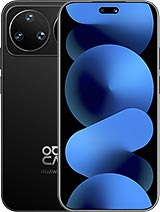
nova 16s Pro
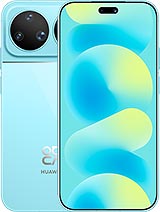
nova 16 Ultra
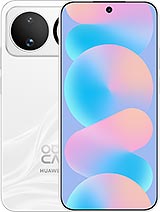
nova 16
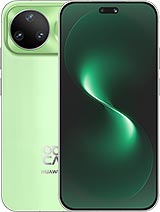
Nova 15 Pro
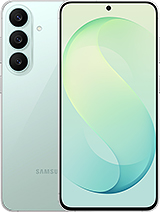
Galaxy S26 FE