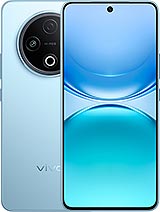
Huawei nova 14 Ultra review
This suits someone in a market where HarmonyOS is mainstream (China, Middle East, Southeast Asia) who shoots outdoors often, needs durability, and values camera reach and screen brightness over raw processing speed. European and North American buyers should verify HarmonyOS app support in their region before committing, and anyone wanting current-gen performance should cross-shop Snapdragon 8 Gen 3 rivals at the same price.
This review is written with AI assistance from Huawei’s published specifications and public benchmark data for the Huawei nova 14 Ultra, and the rating is spec-based. GoSolo does not physically test devices; where we estimate real-world behaviour such as battery life or charge time, we say so. How we rate phones.
Overview
The nova 14 Ultra is a large-screen camera phone built around a 5500-nit OLED display and a 50MP main camera with a real 3.7x periscope telephoto—this is a daylight shooter with solid durability and fast charging, but the Kirin 8020 is a generation behind flagship performance and the phone feels like an upsized camera accessory rather than a versatile flagship killer for the price.
Design & build
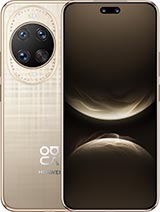
At 204 grams and 7.8mm thick, the nova 14 Ultra is a large, manageable slab that feels solid in the hand. The 6.81-inch screen dominates the front with a 89.9% screen-to-body ratio, leaving thin bezels but also making one-handed use a stretch for most people. IP68/IP69 durability—immersible to 2 meters for 30 minutes, plus resistance to high-pressure water jets—places it above many rivals in its price band, a real plus if you shoot outdoors or travel rough. Kunlun Glass provides decent scratch resistance, though not a game-changer in practice.
Display
The 6.81-inch LTPO3 OLED with 5500 nits peak brightness is the phone's headline feature, and it delivers what matters: in direct sunlight, where most phones bleach into invisibility, this screen stays vivid and readable. The 120Hz refresh rate and LTPO adaptive tech keep scrolling smooth while preserving battery life in idle moments. Resolution of 1272 x 2860 pixels lands at 460 ppi, sharp enough that individual pixels vanish in normal use. Peak nits only apply to small highlights and HDR content, not the entire screen, but the gap between this and standard OLED brightness is visibly real when you're outside reviewing photos or shooting in bright conditions.
Performance
The Kirin 8020 is the weak spot. By 2025 standards at this price, rivals are shipping Snapdragon 8 Gen 3 or other current-gen flagships; Huawei's chip is a generation behind in raw speed and efficiency. Everyday apps open and run without stutter, and the Maleoon 920 GPU handles moderate gaming, but demanding titles and sustained load scenarios reveal the gap against what you'd get in a 500-EUR Xiaomi or OnePlus. The 12GB RAM keeps multitasking fluid. For photography apps, video editing, and casual use, the nova 14 Ultra is plenty capable; for competitive mobile gaming or heavy machine learning tasks, you'll notice the lag.
Software
HarmonyOS 5.0 is Huawei's closed ecosystem, and that's a permanent friction point outside China. The OS is fast and clean, but the app library remains shallow: many Western services (banking, social media, streaming) either lack native apps or rely on workarounds like web wrappers. If you live in China, Southeast Asia, or the Middle East, this is less of an issue; if you're in Europe or North America, expect to troubleshoot app availability before buying.
Camera
The camera setup is what justifies the nova 14 Ultra's existence. The 50MP main sensor with f/1.4 aperture and optical image stabilization handles low light well, and the 88mm periscope telephoto with 3.7x optical zoom and OIS lets you frame distant subjects without resorting to digital cropping (which kills detail). The 13MP 120-degree ultrawide rounds out the trio. For daytime photography, especially outdoors in varied lighting, this is a competent, well-rounded system. The 50MP ultrawide selfie camera with autofocus is also solid if you shoot vlogs or group selfies, though the 8MP telephoto selfie feels like overkill. Video maxes at 4K with gyro-EIS and HDR Vivid; good for vlogging but not exceptional.
Battery & charging
The 5500mAh battery paired with a 6.81-inch LTPO OLED screen means roughly one full day on moderate use—social media, email, light video. Heavy users (constant video playback, gaming, or photography) will need a top-up by evening. The LTPO adaptive refresh helps, dropping to lower frame rates when content doesn't demand 120Hz. 100W wired charging is fast: zero to full in about 20–30 minutes, practical enough to grab a quick top-up before leaving home. No wireless charging is a miss, but at this price tier, it is becoming standard at the high end, so losing it is a small downside.
Value & verdict-context
At 520 EUR, the nova 14 Ultra sits in a crowded space: it competes with Xiaomi flagships, OnePlus models, and Samsung mid-range phones. Against those rivals, it trades processing power for camera reach and exceptional display brightness. The Kirin 8020 is dated, and HarmonyOS remains a barrier in many markets. If your priority is outdoor photography with real optical zoom and a screen that doesn't fade in sunlight, this phone delivers. If you want the latest performance, a smaller form factor, or universal app compatibility, look elsewhere. Buyers in China, Middle East, or Southeast Asia get more value from HarmonyOS; those in Western markets should weigh app friction carefully.
Verdict
This suits someone in a market where HarmonyOS is mainstream (China, Middle East, Southeast Asia) who shoots outdoors often, needs durability, and values camera reach and screen brightness over raw processing speed. European and North American buyers should verify HarmonyOS app support in their region before committing, and anyone wanting current-gen performance should cross-shop Snapdragon 8 Gen 3 rivals at the same price.
- 5500-nit peak brightness on the LTPO OLED display stays readable in direct sun, a real advantage for outdoor photography and video review
- 50MP main sensor with f/1.4 aperture and OIS paired with an 88mm periscope telephoto (3.7x optical zoom) gives you genuine reach without cropping
- 100W wired charging tops the 5500mAh battery in about 20–30 minutes, practical for a phone this size
- IP68/IP69 rating plus Kunlun Glass makes it one of the more durable mid-range flagships for rough outdoor use
- Kirin 8020 is last-generation silicon compared to rivals using Snapdragon 8 Gen 3 or newer Tensor chips, which affects gaming and demanding apps noticeably
- 204g and 6.81 inches makes this a two-handed phone; most users cross-shopping at 520 EUR will prefer something smaller
- HarmonyOS 5.0 still lacks the app breadth and polish of Android or iOS in many regions outside China, a real friction point for global buyers
Huawei nova 14 Ultra Key Specifications
The essentials at a glance. See the full spec sheet.
| Released | 2025, May 19 |
|---|---|
| Display | 6.81 inches, 111.1 cm2 (~89.9% screen-to-body ratio), LTPO3 OLED, 1B colors, HDR, 120Hz, 5500 nits (peak) |
| Resolution | 1272 x 2860 pixels, 20:9 ratio (~460 ppi density) |
| Chipset | Kirin 8020 |
| RAM & storage | 256GB 12GB RAM, 512GB 12GB RAM, 1TB 12GB RAM |
| Main camera | 50 MP, f/1.4-4.0, 24mm (wide), PDAF, OIS 50 MP, f/2.2, 88mm (periscope telephoto), PDAF, OIS, 3.7x optical zoom 13 MP, f/2.2, 13mm, 120˚ (ultrawide), AF |
| Selfie camera | 8 MP, f/2.2, 52mm (telephoto), AF, 2x optical zoom 50 MP, f/2.0, (ultrawide), 1/2.5", Dual Pixel PDAF |
| Battery | 5500 mAh |
| Charging | 100W wired, SCP, UFCS, PD, PPS, QC5W reverse wired |
| Software | HarmonyOS 5.0 |
| Dimensions | 163.4 x 75.6 x 7.8 mm (6.43 x 2.98 x 0.31 in) |
| Weight | 204 g (7.20 oz) |
| Durability | IP68/IP69 dust tight and water resistant (high pressure water jets; immersible up to 2m for 30 min) |
| Network | GSM / CDMA / HSPA / CDMA2000 / LTE / 5G |
| NFC | Yes |
| USB | USB Type-C 2.0, OTG |
Huawei nova 14 Ultra FAQ
Common questions, answered from the spec sheet.
Does the nova 14 Ultra support 5G?
Yes. The nova 14 Ultra supports 5G networks.
What chipset does the nova 14 Ultra use?
The nova 14 Ultra runs on the Kirin 8020.
What display does the nova 14 Ultra have?
A 6.81 inches, 111.1 cm2 (~89.9% screen-to-body ratio) LTPO3 OLED, 1B colors, HDR, 120Hz, 5500 nits (peak), 1272 x 2860 pixels, 20:9 ratio (~460 ppi density).
How big is the nova 14 Ultra battery?
The nova 14 Ultra has a 5500 mAh battery. Charging is rated at 100W wired, SCP, UFCS, PD, PPS, QC5W reverse wired.
Does the nova 14 Ultra have NFC?
Yes, the nova 14 Ultra has NFC.
Is the nova 14 Ultra water resistant?
The nova 14 Ultra carries a IP68/IP69 dust tight and water resistant (high pressure water jets; immersible up to 2m for 30 min) rating.
Does the nova 14 Ultra support a microSD card?
No, the nova 14 Ultra does not support expandable storage.
Does the nova 14 Ultra have a headphone jack?
No, the nova 14 Ultra does not have a 3.5mm headphone jack.
Alternatives to consider
If the nova 14 Ultra isn’t quite right, these are the closest calls.

nova 14 Pro
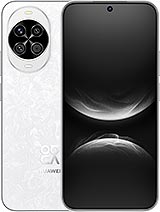
nova 14
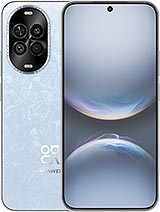
nova 14 Lite
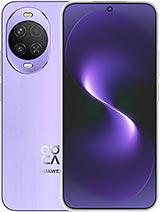
Nova 15
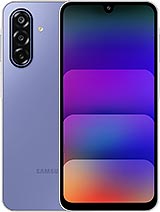
Galaxy F17 5G