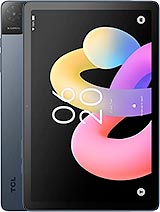
Huawei MatePad 11.5 S 2026 review
This tablet suits someone who reads on screens, watches video, and does light work in controlled indoor environments—commuters, students, bedside browsing. If you need outdoor usability, a broad app ecosystem, or any real performance headroom, the compromises add up quickly.
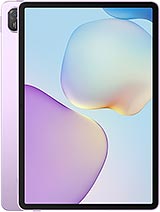
This review is written with AI assistance from Huawei’s published specifications and public benchmark data for the Huawei MatePad 11.5 S 2026, and the rating is spec-based. GoSolo does not physically test devices; where we estimate real-world behaviour such as battery life or charge time, we say so. How we rate phones.
Overview
A thin, light 11.5-inch tablet built around a 3:2 display and magnetic stylus support, designed for reading and media on the move rather than serious performance. For the price, it delivers a solid screen and decent battery, though the LCD panel and modest brightness hold it back from excelling outdoors.
Design & Build
At 515 grams and 6.1 mm thin, this MatePad is genuinely light—you can hold it one-handed without arm fatigue setting in. The aluminum frame and back with a glass front feel solid enough for a tablet at this price, and the 3:2 aspect ratio is rare and useful for reading documents or web pages without constant scrolling. Magnetic stylus support is included, though Huawei doesn't bundle the pen itself. The lack of any IP rating or water-resistance claim suggests this is not built for rough handling; it's a couch and desk tablet, not a field device.
Display
The 11.5-inch TFT LCD panel runs at 120Hz and delivers 255 ppi, which is sharp enough for reading at arm's length. The 3:2 ratio is the real strength here, eliminating much of the wasted black bar space you get on widescreen models when reading or working in portrait. Brightness is the limiting factor: 600 nits peak sounds adequate until you try it outdoors or near a window in daylight, where it washes out noticeably. For a tablet aimed at media and reading, this is workable indoors but frustrating if you move between rooms or work outside regularly. The TFT technology itself is fine—not an OLED's contrast, but stable and flicker-free for extended viewing.
Performance
The Kirin T82B is a mid-range chip, not a powerhouse. It handles everyday tablet tasks—browsing, email, video playback, light document work—without stutter. Gaming and video editing will feel sluggish by flagship standards, but that is not what this tablet is designed for. The 12-core CPU and Maleoon 920c GPU are competent for their tier; performance rarely becomes a bottleneck for casual use. The choice between 8 GB and 12 GB RAM matters less here than it would on a high-performance device; 8 GB is adequate for most users, and 12 GB provides breathing room if you juggle many apps.
Software
Harmony OS 5.1 runs the show, which means no Google Play Store and a smaller ecosystem compared to Android tablets. If you live in a region where Huawei's app store is well-stocked, this is less of an issue; elsewhere, it can feel limiting. The operating system itself is stable and tablet-optimized, with decent multitasking support and stylus integration. Long-term software support from Huawei remains unclear, so don't count on years of updates the way you might with Samsung or Apple.
Camera
A 13 MP rear camera and 8 MP front camera are present but unremarkable for a 2026 tablet. Photos are acceptable for social media or reference shots, but low-light performance will disappoint, and there is no optical zoom. The 105-degree ultrawide front camera is useful for video calls in tight spaces. These are functional, not aspirational. Most buyers will take stills occasionally but should not expect this tablet to replace a smartphone camera.
Battery & Charging
The 10,100 mAh battery should deliver about a full day of mixed use—reading, video, light apps—before hitting empty. Heavy video playback will cut that shorter. The 40W SuperCharge is solid by tablet standards and gets the cell to full in under two hours, which is faster than many competing tablets at this price. Real-world endurance depends on brightness and workload; with the screen cranked up indoors, you can expect 12–14 hours comfortably.
Value & Verdict
At around 220 EUR, this is a competent mid-range tablet built for reading, streaming, and lightweight work. The thin profile and 3:2 display are genuine assets if that is how you actually use a tablet. The tradeoffs are real: Harmony OS limits the app ecosystem, the LCD screen struggles in bright light, and performance is merely adequate, not brisk. It competes with budget Android tablets and older iPad models, and the trade-off between portability and screen brightness is a genuine one to weigh. For someone who reads books, browses the web, and watches videos at a desk or in bed, this delivers. For outdoor work or performance-heavy tasks, look elsewhere.
Verdict
This tablet suits someone who reads on screens, watches video, and does light work in controlled indoor environments—commuters, students, bedside browsing. If you need outdoor usability, a broad app ecosystem, or any real performance headroom, the compromises add up quickly.
- 3:2 display ratio cuts wasted space when reading or working, a rarity in this market
- Feather-light at 515 grams and only 6.1 mm thick, genuinely comfortable to hold one-handed for extended periods
- 40W charging is brisk for a tablet, reaching full in under two hours
- Magnetic stylus support included, though the pen is sold separately
- 600 nits brightness is workable indoors but washes out badly in daylight or strong sunlight
- Harmony OS and no Google Play Store limits app availability in many regions, creating friction for users accustomed to Android
- Mid-range Kirin T82B handles everyday tasks but delivers sluggish performance for gaming, video editing, or intensive multitasking
Huawei MatePad 11.5 S 2026 Key Specifications
The essentials at a glance. See the full spec sheet.
| Released | 2025, December 22 |
|---|---|
| Display | 11.5 inches, 390.2 cm2 (~83.7% screen-to-body ratio), TFT LCD, 120Hz, 600 nits (peak) |
| Resolution | 1600 x 2456 pixels, 3:2 ratio (~255 ppi density) |
| Chipset | Kirin T82B |
| RAM & storage | 128GB 8GB RAM, 256GB 8GB RAM, 256GB 12GB RAM |
| Main camera | 13 MP, f/1.8, (wide), AF |
| Selfie camera | 8 MP, f/2.2, 105˚ (ultrawide) |
| Battery | 10100 mAh |
| Charging | SuperCharge up to 40 W |
| Software | Harmony OS 5.1 |
| Dimensions | 262.6 x 177.5 x 6.1 mm (10.34 x 6.99 x 0.24 in) |
| Weight | 515 g (1.14 lb) |
| Build | Glass front, aluminum frame, aluminum back |
| Durability | Stylus support (magnetic) |
| Network | No cellular connectivity |
| NFC | No |
| USB | USB Type-C 2.0, OTG, magnetic accessory connector |
Huawei MatePad 11.5 S 2026 FAQ
Common questions, answered from the spec sheet.
Does the MatePad 11.5 S 2026 support 5G?
No. The MatePad 11.5 S 2026 tops out at No cellular connectivity, without 5G.
What chipset does the MatePad 11.5 S 2026 use?
The MatePad 11.5 S 2026 runs on the Kirin T82B.
What display does the MatePad 11.5 S 2026 have?
A 11.5 inches, 390.2 cm2 (~83.7% screen-to-body ratio) TFT LCD, 120Hz, 600 nits (peak), 1600 x 2456 pixels, 3:2 ratio (~255 ppi density).
How big is the MatePad 11.5 S 2026 battery?
The MatePad 11.5 S 2026 has a 10100 mAh battery. Charging is rated at SuperCharge up to 40 W.
Does the MatePad 11.5 S 2026 have NFC?
No, the MatePad 11.5 S 2026 does not list NFC support.
Is the MatePad 11.5 S 2026 water resistant?
The MatePad 11.5 S 2026 carries a Stylus support (magnetic) rating.
Does the MatePad 11.5 S 2026 support a microSD card?
No, the MatePad 11.5 S 2026 does not support expandable storage.
Alternatives to consider
If the MatePad 11.5 S 2026 isn’t quite right, these are the closest calls.
MatePad 11.5 S 2025
MatePad 11.5 2025
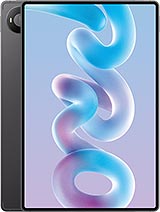
MatePad Pro 12 (2026)
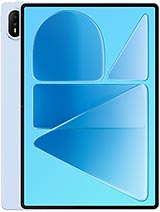
MatePad Air (2026)
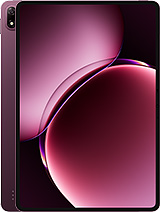
Pad 9 Pro Max