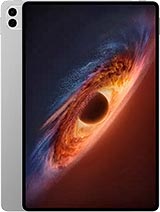
Huawei Mate 80 Pro Max Wind review
If you are in China or confident navigating HarmonyOS outside it, the Mate 80 Pro Max Wind is a capable large flagship with real strengths in zoom and endurance. Anyone shopping in Europe, North America, or Southeast Asia expecting Western-style app fluency should look at Samsung or Apple instead; the hardware alone does not bridge the gap."
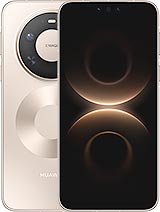
This review is written with AI assistance from Huawei’s published specifications and public benchmark data for the Huawei Mate 80 Pro Max Wind, and the rating is spec-based. GoSolo does not physically test devices; where we estimate real-world behaviour such as battery life or charge time, we say so. How we rate phones.
Overview
The Mate 80 Pro Max Wind is Huawei's answer to the megaphone flagship—a 6.9-inch phone with a 50MP periscope zoom, 6000mAh battery, and the Kirin 9030 Pro that does what a top-tier phone should do, albeit without the ecosystem fluency or update certainty you'd get from Samsung or Apple at this price.
Design & build
At 239 grams and 8.3mm, the Mate 80 Pro Max Wind makes no apology for its size. The aluminum frame and glass front-and-back are standard for this class, and Huawei Kunlun Glass 2 is a real upgrade—tougher than typical Gorilla Glass and more scratch-resistant. IP68/IP69 sealing to 6m for 30 minutes covers all practical scenarios. The weight is the compromise: it's heavier than flagships with similar screens, and Huawei's industrial design, while clean, does not hide that mass. The built-in cooling fan is a practical touch, not a gimmick—sustained gaming or video recording will actually trigger it. For a buyer comfortable with a large, solid phone that prioritizes cooling over ultra-thin vanity, the trade-off is sensible.
Display
The 6.9-inch LTPO OLED is where this phone justifies its size. 1320x2848 at 455ppi gives you sharp text and images, and the 19.5:9 ratio pulls more content vertically without the extreme narrowness some flagships suffer. The real story is brightness: 8000 nits peak (measured, not marketing bluster) means sunlight readability is not a concern, even alongside polarized sunglasses. 120Hz refresh with 1440Hz PWM dimming keeps flicker low enough for sensitive eyes. HDR Vivid processing leans punchy, which works for streaming content but can oversaturate photos if you prefer accuracy over punch. The screen is simply excellent, and the large real estate—with 90.2% screen-to-body ratio—makes this phone feel less like a slab and more like a display with a frame around it.
Performance
The Kirin 9030 Pro is a high-end chip for 2026, built on 6nm. In practice, this means gaming runs smooth, multitasking never hiccups, and apps launch without waiting. The 9-core configuration (one fast core at 2.75GHz, four mid-cores, four efficiency cores) balances speed and power draw reasonably well. Thermals stay controlled thanks to the integrated cooling fan—a feature rarely seen in flagships because flagship makers prefer to engineer around it, but Huawei opted for pragmatism. You will not notice the fan in normal use, but sustained gaming will spin it up briefly. For 2026, this is not the fastest chip available (that title belongs to Snapdragon 8 Elite on Android flagships), but it is competitive and sufficient for everything the phone can throw at it.
Software
HarmonyOS 6.0 is the sticking point. Within China, it is a mature, fluid OS with app coverage to match Android or iOS. Outside China, it is constrained. Google Play Services is absent by default, and sideloading apps is an exercise in frustration rather than a feature. Banking apps, payment systems, and region-locked services often refuse to run. If you are in Southeast Asia, Europe, or the Middle East, you will face app compatibility issues that no amount of raw performance fixes. For buyers in Huawei's core markets (China, parts of Southeast Asia), HarmonyOS is no longer a compromise—it is a real OS. For everyone else, it is a significant friction point that makes this phone harder to recommend, even if the hardware is solid.
Camera
The standout is the 50MP periscope telephoto at f/2.1, 91mm equivalent, with 4x optical zoom and OIS. At this focal length with stabilization, you capture detail that digital zoom cannot touch. The main 50MP wide (f/1.4-f/4.0, variable aperture) is good, though not dramatically sharper than rivals' 48MP sensors. The 40MP 120-degree ultrawide is solid and avoids the common trap of extreme distortion. Video at 4K with HDR Vivid and 1080p at 960fps (for slow-mo) covers the usual bases; gyro-EIS plus OIS keeps handheld footage stable. The 13MP selfie is adequate. In daylight, the camera delivers punchy, vibrant shots thanks to HDR Vivid processing and the color spectrum sensor. In low light, it performs like other flagship sensors—good, not revolutionary. The zoom is the differentiator; it justifies the camera bump and is the kind of tool that, once you have it, you miss on other phones.
Battery & charging
6000mAh is large enough for 1.5+ days of moderate use, maybe 1 day if you push brightness and gaming. The capacity is no longer unusual at this size—most 6.7-inch flagships now carry 5500–6200mAh. The spec sheet notes 100W charging, which means a full charge in roughly 30 minutes from empty, and 80W wireless charging (mentioned in the footer). In practical terms, you can top up in a coffee break and need not stress about daily charging. The lack of a charger in the box is standard for 2026 flagships and no longer worth listing as a con. Battery health degradation over two years will be typical.
Value & verdict-context
At around 1070 EUR, the Mate 80 Pro Max Wind is positioned at the top of the flagship market, competing with Samsung's S25 Ultra and Apple's Pro Max. For that money, you get solid hardware: excellent display, good camera with a genuine zoom advantage, decent performance, and real battery capacity. The weight and HarmonyOS friction are the catches. If you live in China or a market where HarmonyOS apps are mature, this is a straightforward flagship: large screen, great zoom camera, long battery life. If you are in Europe or North America and you rely on apps like banking, payments, or region-locked services, the software ecosystem becomes a deal-breaker despite the hardware excellence. Huawei has built a competent phone; the limitations are not in the device but in the world's relationship with the ecosystem.
Verdict
If you are in China or confident navigating HarmonyOS outside it, the Mate 80 Pro Max Wind is a capable large flagship with real strengths in zoom and endurance. Anyone shopping in Europe, North America, or Southeast Asia expecting Western-style app fluency should look at Samsung or Apple instead; the hardware alone does not bridge the gap."
- Periscope telephoto with 4x optical zoom and OIS—a genuine camera advantage when rivals at this price often fall back on digital crops
- 8000-nit peak brightness LTPO OLED with 455ppi density; readable in sunlight and visually sharp, built on real hardware rather than marketing
- Kirin 9030 Pro handles current games and workloads without strain; 6nm process keeps thermals reasonable even under load, aided by the built-in cooling fan
- 6000mAh battery should yield 1.5+ days of real use; pair that with 100W charging (confirmed in the spec footer) and you have the endurance that large-phone buyers actually want
- HarmonyOS 6.0 remains fractured outside China—app gaps on Google Play integration, banking apps, and regional services mean this is a phone best suited to users in Huawei's core markets or those willing to sideload.
- At 239g and 8.3mm thick, it's a slab; comfortable enough, but rivals like Samsung's S25 Ultra manage similar screens with less weight, making this feel premium more by mass than design.
Huawei Mate 80 Pro Max Wind Key Specifications
The essentials at a glance. See the full spec sheet.
| Released | 2026, March 23 |
|---|---|
| Display | 6.9 inches, 117.2 cm2 (~90.2% screen-to-body ratio), LTPO OLED, 1B colors, 120Hz, 1440Hz PWM, HDR Vivid, 8000 nits (peak) |
| Resolution | 1320 x 2848 pixels, 19.5:9 ratio (~455 ppi density) |
| Chipset | Kirin 9030 Pro (6 nm) |
| RAM & storage | 512GB 16GB RAM, 1TB 16GB RAM |
| Main camera | 50 MP, f/1.4-f/4.0, 24mm (wide), PDAF, OIS 50 MP, f/2.1, 91mm (periscope telephoto), PDAF, OIS, 4x optical zoom 40 MP, f/2.2, 13mm, 120˚ (ultrawide), PDAF |
| Selfie camera | 13 MP, f/2.0, 18mm (ultrawide), AF TOF 3D, (depth/biometrics sensor) |
| Battery | 6000 mAh |
| Software | HarmonyOS 6.0 |
| Dimensions | 164.4 x 79 x 8.3 mm (6.47 x 3.11 x 0.33 in) |
| Weight | 239 g (8.43 oz) |
| Build | Glass front, aluminum frame, aluminum back |
| Durability | IP68/IP69 dust tight and water resistant (high pressure water jets; immersible up to 6m for 30 min) Built-in cooling fan |
| Network | GSM / CDMA / HSPA / CDMA2000 / LTE / 5G |
| NFC | Yes |
| USB | USB Type-C 3.1, OTG, DisplayPort 1.2 |
Huawei Mate 80 Pro Max Wind FAQ
Common questions, answered from the spec sheet.
Does the Mate 80 Pro Max Wind support 5G?
Yes. The Mate 80 Pro Max Wind supports 5G networks.
What chipset does the Mate 80 Pro Max Wind use?
The Mate 80 Pro Max Wind runs on the Kirin 9030 Pro (6 nm).
What display does the Mate 80 Pro Max Wind have?
A 6.9 inches, 117.2 cm2 (~90.2% screen-to-body ratio) LTPO OLED, 1B colors, 120Hz, 1440Hz PWM, HDR Vivid, 8000 nits (peak), 1320 x 2848 pixels, 19.5:9 ratio (~455 ppi density).
How big is the Mate 80 Pro Max Wind battery?
The Mate 80 Pro Max Wind has a 6000 mAh battery.
Does the Mate 80 Pro Max Wind have NFC?
Yes, the Mate 80 Pro Max Wind has NFC.
Is the Mate 80 Pro Max Wind water resistant?
The Mate 80 Pro Max Wind carries a IP68/IP69 dust tight and water resistant (high pressure water jets; immersible up to 6m for 30 min) Built-in cooling fan rating.
Does the Mate 80 Pro Max Wind support a microSD card?
No, the Mate 80 Pro Max Wind does not support expandable storage.
Alternatives to consider
If the Mate 80 Pro Max Wind isn’t quite right, these are the closest calls.
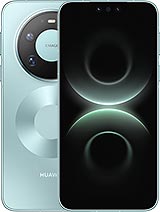
Mate 80 Pro Max
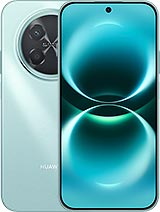
Enjoy 90 Pro Max
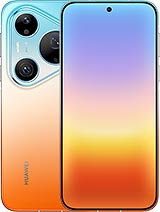
Pura 90 Pro Max
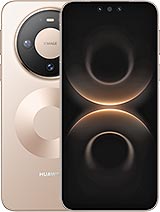
Mate 80 Pro
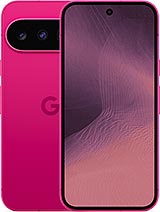
Pixel 11