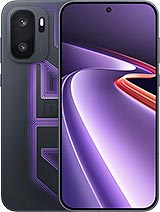
Huawei Mate 80 Pro Max review
This phone suits users in Huawei-strong markets who prioritize a large, bright, durable screen and can embrace HarmonyOS fully. Outside those regions, the hardware is excellent but the software isolation makes it a niche choice at a flagship price.
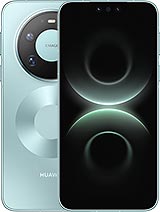
This review is written with AI assistance from Huawei’s published specifications and public benchmark data for the Huawei Mate 80 Pro Max, and the rating is spec-based. GoSolo does not physically test devices; where we estimate real-world behaviour such as battery life or charge time, we say so. How we rate phones.
Overview
The Mate 80 Pro Max is a sprawling flagship built for brightness, battery endurance, and speed in regions where Huawei apps and services are mature. It is genuinely well-rounded for its tier and price, though the enormous screen and weight demand commitment, and the reliance on HarmonyOS limits its reach.
Design & build
The Mate 80 Pro Max is unmistakably flagship in feel: aluminum frame, glass back, and a sturdy weight of 239 grams anchor it to a desk rather than a pocket. At 164.4 mm tall and just 8.3 mm thick, it is a large phone that never lets you forget it is there. The IP68/IP69 rating and Kunlun Glass Gen.2 protection mean it survives fresh water submersion to 6 meters, high-pressure jets, and day-to-day knocks without flinching. Dual nano-SIM slots cover connectivity for work and travel. For users comfortable with size, the build quality is reassuring; for anyone who values portability or one-handed reach, this phone demands trade-offs.
Display
The 6.9-inch LTPO OLED screen is the device's calling card. A peak brightness of 8000 nits keeps text and images readable in direct sunlight without adjusting angle or shielding, which is a genuine advantage in bright climates. The 1320 x 2848 resolution yields 455 ppi density—sharp enough for text and photos at normal viewing distance. The 120 Hz refresh rate smooths scrolling and animations across HarmonyOS, and the 1440 Hz PWM dimming reduces flicker at lower brightness levels. HDR Vivid color grading leans toward saturation, which some will find vibrant and others overwrought. For a 2025 flagship, this is accomplished work: brightness and refresh are where they should be, and the tall 19.5:9 aspect ratio makes the screen feel even more expansive.
Performance
The Kirin 9030 Pro is Huawei's current-generation flagship chipset and it executes without visible lag. The 6 nm process, 9-core CPU (peaking at 2.75 GHz), and Maleoon 935 GPU handle demanding apps, multitasking, and gaming at high settings. Real-world performance depends heavily on HarmonyOS app maturity; in regions where Huawei's app ecosystem is well-developed, the phone feels responsive and fluid. Outside those markets, missing versions of critical apps (banking, payments, some messaging) can make the phone feel less capable than its raw specs suggest. In isolation, this is a fast, modern chipset that competes with flagship rivals elsewhere.
Software
HarmonyOS 6.0 is Huawei's proprietary alternative to Android, and it is the phone's most significant lever. Within China and countries with strong Huawei presence, the ecosystem is mature: app availability is broad, service integrations are deep, and the experience is fluid. Outside those regions, the story shifts. Google Play Services is absent, and while Huawei's app store has grown, critical services (banking apps, mainstream messaging, payment systems) may be missing or available only through workarounds. For a GoSolo reader in Asia, Africa, or the Middle East where Huawei has strong presence, HarmonyOS is stable and feature-rich. Elsewhere, it is a deliberate choice that narrows convenience.
Camera
The main 50 MP wide lens with variable aperture (f/1.4–f/4.0) and OIS handles daylight and night scenes competently. The dual periscope telephoto setup—50 MP at 91 mm (4x) and 50 MP at 140 mm (6.2x)—is the standout. Both carry OIS and PDAF, meaning zoomed shots retain clarity and steadiness far better than hybrid zoom rivals. The 40 MP ultrawide at f/3.2 with 120 degrees coverage is practical but dimmer than f/2.0–f/2.2 peers; in low light, edge sharpness rolls off. The laser autofocus and color spectrum sensor add refinement for exposure metering. Video capture goes to 4K with OIS and HDR Vivid; the 960 fps slow-motion at 1080p is novelty more than daily driver. Overall, this is a confident camera system with genuine zoom prowess and decent low-light capability, though the ultrawide is the modest link.
Battery & charging
The 6000 mAh battery sustains the Mate 80 Pro Max for roughly a full day to a day and a half with mixed use (messaging, social media, video, navigation). Light users may push closer to two days. The 100 W wired SuperCharge refills the battery in approximately 15–25 minutes from empty, which is genuinely fast; the 80 W wireless charging is slower but handy if you have the pad at home or office. For a phone of this footprint and brightness, endurance is solid.
Value & verdict-context
At around 980 EUR, the Mate 80 Pro Max arrives in flagship pricing alongside other large 2025 devices. For buyers in regions where HarmonyOS is the standard and Huawei's app ecosystem is mature, the value proposition is clear: you get a large, durable, bright screen; a capable chipset; fast charging; and zoom lenses that outreach many rivals. For buyers outside those regions—Europe, North America, parts of Africa and Southeast Asia without Huawei presence—the app and service ecosystem creates friction that no amount of hardware excellence fully resolves. The question is not whether this is a good phone; it is whether you can live comfortably with its software foundation.
Verdict
This phone suits users in Huawei-strong markets who prioritize a large, bright, durable screen and can embrace HarmonyOS fully. Outside those regions, the hardware is excellent but the software isolation makes it a niche choice at a flagship price.
- 6.9-inch display with 8000 nits peak brightness and 120 Hz refresh makes outdoor visibility and scrolling effortless in direct sunlight
- Dual periscope telephoto lenses (4x and 6.2x) with OIS deliver more zoom reach than most rivals without the image quality penalty of hybrid crops
- 6000 mAh battery and 100 W wired charging combine to deliver roughly a full day on a single charge and top up in under 20 minutes
- IP68 and IP69 rating with Kunlun Glass Gen.2 protection covers daily dust, splashes, and submerged drops without extra cases
- At 239g and 6.47 inches tall, it borders on unwieldy for one-handed use and is noticeably heavier than most 6.7-inch peers
- HarmonyOS limits app availability in much of the world; outside China and a few allied markets, critical apps and services may not integrate fully
- The 50 MP ultrawide at f/3.2 falls behind rivals in low-light performance and edge sharpness compared to f/2.0-f/2.2 peers
Huawei Mate 80 Pro Max Key Specifications
The essentials at a glance. See the full spec sheet.
| Released | 2025, November 25 |
|---|---|
| Display | 6.9 inches, 117.2 cm2 (~90.2% screen-to-body ratio), LTPO OLED, 1B colors, 120Hz, 1440Hz PWM, HDR Vivid, 8000 nits (peak) |
| Resolution | 1320 x 2848 pixels, 19.5:9 ratio (~455 ppi density) |
| Chipset | Kirin 9030 Pro (6 nm) |
| RAM & storage | 512GB 16GB RAM, 1TB 16GB RAM |
| Main camera | 50 MP, f/1.4-f/4.0, 24mm (wide), PDAF, OIS 50 MP, f/2.1, 91mm (periscope telephoto), PDAF, OIS, 4x optical zoom 50 MP, f/3.2, 140mm (periscope telephoto), PDAF, OIS, 6.2x optical zoom 40 MP, f/2.2, 13mm, 120˚ (ultrawide), PDAF |
| Selfie camera | 13 MP, f/2.0, 18mm (ultrawide), AF TOF 3D, (depth/biometrics sensor) |
| Battery | 6000 mAh |
| Charging | SuperCharge up to 100 W, Wireless: Charger power 80 W |
| Software | HarmonyOS 6.0 |
| Dimensions | 164.4 x 79 x 8.3 mm (6.47 x 3.11 x 0.33 in) |
| Weight | 239 g (8.43 oz) |
| Build | Glass front, aluminum frame, aluminum back |
| Durability | IP68/IP69 dust tight and water resistant (high pressure water jets; immersible up to 6m for 30 min) |
| Network | GSM / CDMA / HSPA / CDMA2000 / LTE / 5G |
| NFC | Yes |
| USB | USB Type-C 3.1, OTG, DisplayPort 1.2 |
Huawei Mate 80 Pro Max FAQ
Common questions, answered from the spec sheet.
Does the Mate 80 Pro Max support 5G?
Yes. The Mate 80 Pro Max supports 5G networks.
What chipset does the Mate 80 Pro Max use?
The Mate 80 Pro Max runs on the Kirin 9030 Pro (6 nm).
What display does the Mate 80 Pro Max have?
A 6.9 inches, 117.2 cm2 (~90.2% screen-to-body ratio) LTPO OLED, 1B colors, 120Hz, 1440Hz PWM, HDR Vivid, 8000 nits (peak), 1320 x 2848 pixels, 19.5:9 ratio (~455 ppi density).
How big is the Mate 80 Pro Max battery?
The Mate 80 Pro Max has a 6000 mAh battery. Charging is rated at SuperCharge up to 100 W, Wireless: Charger power 80 W.
Does the Mate 80 Pro Max have NFC?
Yes, the Mate 80 Pro Max has NFC.
Is the Mate 80 Pro Max water resistant?
The Mate 80 Pro Max carries a IP68/IP69 dust tight and water resistant (high pressure water jets; immersible up to 6m for 30 min) rating.
Does the Mate 80 Pro Max support a microSD card?
No, the Mate 80 Pro Max does not support expandable storage.
Alternatives to consider
If the Mate 80 Pro Max isn’t quite right, these are the closest calls.
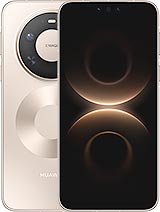
Mate 80 Pro Max Wind
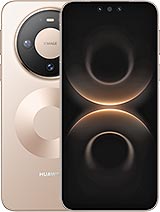
Mate 80 Pro
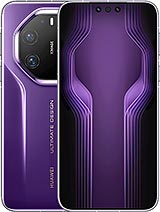
Mate 80 RS
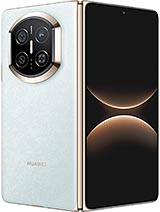
Mate X7
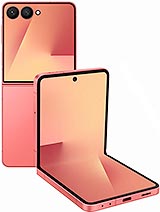
Galaxy Z Flip7