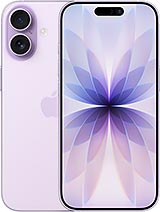
Huawei Mate 70 Air review
The Mate 70 Air is for people who actually want a tablet-sized phone for work or reading and are committed to the Huawei ecosystem or do not rely on Google services. Anyone expecting a standard phone with exceptional cameras or needing seamless access to the broader Android app world should look at traditional flagship phones instead.
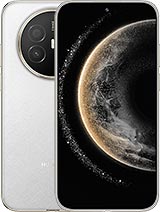
This review is written with AI assistance from Huawei’s published specifications and public benchmark data for the Huawei Mate 70 Air, and the rating is spec-based. GoSolo does not physically test devices; where we estimate real-world behaviour such as battery life or charge time, we say so. How we rate phones.
Overview
The Mate 70 Air is a tablet-sized phone built around a 7-inch OLED screen and all-day battery, favoring usability and durability over camera ambition. It is a solid choice if your daily work and reading fit a large display, though HarmonyOS ecosystem gaps and middling zoom camera remain real friction points.
Design & Build
The Mate 70 Air is deliberately tablet-like: 165mm tall, 208g, and just 6.6mm thick. The weight is substantial but balanced across the frame, so it sits heavy in the hand rather than feeling cheap or plasticky. Kunlun Glass front and rear, combined with the IP68 and IP69 rating (immersible to 2m for 30 minutes, plus high-pressure jet resistance), gives this phone real durability credentials that justify the heft. The slim profile despite the large screen shows thoughtful industrial design, though one-handed use remains a stretch for average hands. Stylus support is listed but Huawei does not bundle a pen, so that is a separate purchase and not a core part of the experience here.
Display
At 7 inches with a 19:9 aspect ratio, this OLED panel stretches across 91.5 percent of the body and delivers 1320 x 2760 pixels at 437 ppi. The 4000-nit peak brightness and 120Hz refresh make scrolling smooth and text legible even under direct sunlight, a real strength at this screen size where larger bezels and lower refresh would feel outdated. LTPO adaptivity keeps power consumption reasonable when scrolling slower content, and the 2160Hz PWM dimming is fine for sensitive eyes. The color performance leans toward vibrant, typical of OLED, and HDR content on streaming apps pops. For productivity and reading, the real estate alone justifies the size; for photography or gaming, the real-estate advantage is secondary to content itself.
Performance
The Kirin 9020A (with 12GB RAM) or 9020B (16GB) is a capable chip at the high end for its generation, though not quite flagship-tier by late-2025 standards. It pairs with the Maleoon 920 GPU and handles demanding games and multitasking without notable lag, and 3D rendering and app switching feel fluid. Real-world performance hinges on whether HarmonyOS 5.1 has optimized its app library for your needs; if your essential apps run well, you will not feel held back. For typical productivity tasks, video calls, and social media, the hardware poses no bottleneck. Do not expect revolutionary frame rates in demanding games or next-level photo processing speeds, but the chip is more than adequate for everyday heavy use.
Software
HarmonyOS 5.1 remains the core friction point. Huawei has made strides in app availability and integration, but the ecosystem is still narrower than Google Play or Apple's App Store. Banking apps, streaming services, and workplace tools often lag or require workarounds, and if your daily essentials depend on Google Play integration, this phone will frustrate you. On the positive side, HarmonyOS feels responsive and offers thoughtful features like file-syncing across Huawei devices and a strong file manager. The tablet mode that unlocks on a 7-inch screen is genuinely useful, reordering the UI for larger displays and making split-screen work feel natural. If you are comfortable in the Huawei ecosystem or your work centers on productivity and communication with standard apps, HarmonyOS gets out of the way; otherwise, expect friction.
Camera
The rear setup is competent but uninspired. The 50MP f/1.8 wide with a 1/1.3-inch sensor and optical image stabilization captures clean detail and handles low light reasonably well, and the color spectrum sensor is a nice touch for accurate white balance. The 12MP telephoto at 3x optical zoom is where the system falters; rivals at this price have moved to 5x or hybrid periscope systems, and this telephoto delivers noticeably softer crops compared to those alternatives. The 8MP ultrawide is serviceable but not wide enough to stand out. Video maxes at 4K with gyro EIS and OIS, which is solid if unremarkable. The front 10.7MP camera is fine for video calls and selfies. If photography is a secondary concern, the rear camera will suffice; if you rely on versatile zoom or stunning wide-angle shots, look elsewhere.
Battery & Charging
The 6500 mAh battery comfortably clears a full day with mixed use (about 8 to 10 hours screen-on time), and with lighter workloads stretches toward 36 hours. For a 7-inch display, that is solid endurance, and the large screen also means you are less likely to feel the need to pocket and unplocket the phone as often. The 66W SuperCharge refuels from zero to full in roughly 30 to 45 minutes, enough for a meaningful top-up while you grab breakfast or a quick meeting. For a phone at this price and size, this is a practical pairing and removes the anxiety of hunting for power during the day.
Value & Verdict
At approximately 510 EUR, the Mate 70 Air occupies a curious middle ground: too large and expensive to compete with standard flagship phones, yet smaller and cheaper than dedicated tablets. The value proposition hinges entirely on whether you actually want a 7-inch phone. If productivity on a large screen appeals to you, durability matters, and you are at peace with HarmonyOS's app limitations, the Mate 70 Air delivers solid battery life, charging speed, and build quality. The camera is capable but not exceptional, and the weight and form factor will not suit everyone. For global buyers, the lack of Google services is a significant caveat; for those in Huawei's core markets or comfortable sideloading, the friction is lower. Compare it to last year's Tab series or a compact tablet rather than a flagship phone if you are genuinely considering this form factor.
Verdict
The Mate 70 Air is for people who actually want a tablet-sized phone for work or reading and are committed to the Huawei ecosystem or do not rely on Google services. Anyone expecting a standard phone with exceptional cameras or needing seamless access to the broader Android app world should look at traditional flagship phones instead.
- 7-inch OLED with 4000-nit peak brightness and 120Hz remains usable in direct sunlight and delivers enough screen real estate for productivity without a separate tablet
- 6500 mAh battery clears a full day of mixed use and pairs with 66W charging for a practical 30- to 45-minute top-up, avoiding the need to hunt for a plug mid-day
- IP68 and IP69 rating plus Kunlun Glass makes this phone genuinely rugged, handling accidental dunks, high-pressure spray, and drops better than most rivals at this price
- Kirin 9020 handles demanding apps and games without stutter, though real-world fluidity depends on HarmonyOS app optimization
- HarmonyOS 5.1 still lacks broad third-party app parity with Android and iOS, a real friction point if your bank, work tools, or streaming services rely on Google Play integration
- The 12MP telephoto with 3x zoom is functional but uninspired; rivals at this price now lean on 5x or hybrid approaches, making distant subjects noticeably softer
- At 208g and 6.6mm thick, it is heavy and slim for a 7-inch phone, which some will appreciate for grip but others will find unwieldy and tiring to hold one-handed
Huawei Mate 70 Air Key Specifications
The essentials at a glance. See the full spec sheet.
| Released | 2025, November 06 |
|---|---|
| Display | 7.0 inches, 123.0 cm2 (~91.5% screen-to-body ratio), LTPO OLED, 1B colors, 120Hz, 2160Hz PWM, HDR Vivid, 4000 nits (peak) |
| Resolution | 1320 x 2760 pixels, 19:9 ratio (~437 ppi density) |
| Chipset | Kirin 9020A (7 nm) - 12GB RAMKirin 9020B (7 nm) - 16GB RAM |
| RAM & storage | 256GB 12GB RAM, 256GB 16GB RAM, 512GB 12GB RAM, 512GB 16GB RAM |
| Main camera | 50 MP, f/1.8, 24mm (wide), 1/1.3", PDAF, OIS 12 MP, f/2.4, 69mm (telephoto), PDAF, OIS, 3x optical zoom 8 MP, f/2.2, 16mm (ultrawide) |
| Selfie camera | 10.7 MP, f/2.2, (wide) |
| Battery | 6500 mAh |
| Charging | SuperCharge up to 66 W |
| Software | HarmonyOS 5.1 |
| Dimensions | 165 x 81.5 x 6.6 mm (6.50 x 3.21 x 0.26 in) |
| Weight | 208 g (7.34 oz) |
| Durability | IP68/IP69 dust tight and water resistant (high pressure water jets; immersible up to 2m for 30 min) Stylus support |
| Network | GSM / CDMA / HSPA / CDMA2000 / LTE / 5G |
| NFC | Yes |
| USB | USB Type-C 2.0, OTG |
Huawei Mate 70 Air FAQ
Common questions, answered from the spec sheet.
Does the Mate 70 Air support 5G?
Yes. The Mate 70 Air supports 5G networks.
What chipset does the Mate 70 Air use?
The Mate 70 Air runs on the Kirin 9020A (7 nm) - 12GB RAMKirin 9020B (7 nm) - 16GB RAM.
What display does the Mate 70 Air have?
A 7.0 inches, 123.0 cm2 (~91.5% screen-to-body ratio) LTPO OLED, 1B colors, 120Hz, 2160Hz PWM, HDR Vivid, 4000 nits (peak), 1320 x 2760 pixels, 19:9 ratio (~437 ppi density).
How big is the Mate 70 Air battery?
The Mate 70 Air has a 6500 mAh battery. Charging is rated at SuperCharge up to 66 W.
Does the Mate 70 Air have NFC?
Yes, the Mate 70 Air has NFC.
Is the Mate 70 Air water resistant?
The Mate 70 Air carries a IP68/IP69 dust tight and water resistant (high pressure water jets; immersible up to 2m for 30 min) Stylus support rating.
Does the Mate 70 Air support a microSD card?
No, the Mate 70 Air does not support expandable storage.
Alternatives to consider
If the Mate 70 Air isn’t quite right, these are the closest calls.
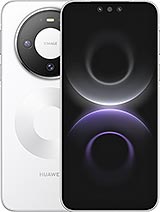
Mate 80
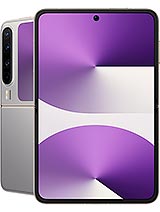
Pura X
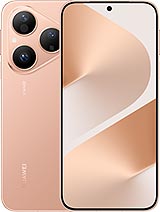
Pura 80
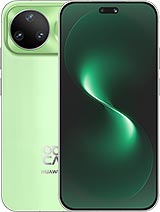
Nova 15 Pro
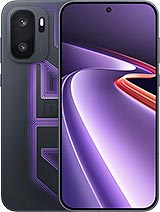
Ace 5 Ultra