HTC Wildfire E5 review
If you're in a price-sensitive market and value dual SIM, a headphone jack, and day-long battery for casual use, the Wildfire E5 is a practical choice. Anyone expecting smooth gaming, snappy performance, or a sharp display should look elsewhere—rivals at this price now offer better performance or charging, and spending €150–200 more opens up mid-range phones with much faster processors and better cameras."
This review is written with AI assistance from HTC’s published specifications and public benchmark data for the HTC Wildfire E5, and the rating is spec-based. GoSolo does not physically test devices; where we estimate real-world behaviour such as battery life or charge time, we say so. How we rate phones.
Overview
The HTC Wildfire E5 is a budget large-screen phone that delivers practicality over performance: dual SIM, a 5000 mAh battery, a headphone jack, and a 90Hz display at under €80 make it honest value for cost-conscious users in emerging markets. The trade-off is real: a weak entry-level chipset, blocky 720p resolution on a 6.75-inch screen, and slow 10W charging mean this phone works best for messaging, browsing, and social media—not heavy use.
Design & Build
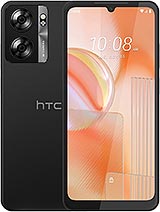
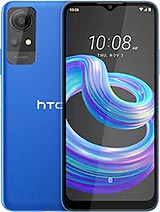
The spec sheet lists glass front, plastic back, and plastic frame but omits weight and exact dimensions—a red flag for a device positioned as large and portable. The 6.75-inch footprint is genuinely big and will feel unwieldy in one hand; for context, many flagships have shrunk closer to 6.3–6.5 inches. The plastic chassis and lack of detail on durability suggest this is a no-frills device built to cost, not comfort. The upside is dual Nano-SIM support and a headphone jack, both rarities now, which add real utility for users who need two phone lines or refuse to buy Bluetooth earphones. For a phone at this price targeting emerging markets, the build speaks to practicality over feel.
Display
The 6.75-inch IPS LCD panel runs at 720 × 1600 resolution, which works out to roughly 260 pixels per inch—noticeably below the 300+ ppi standard of mid-range phones. Text and icons will look blocky in comparison, a real distraction if you're used to sharper screens or if you do a lot of reading. The 90Hz refresh rate is a genuine bright spot, however; scrolling through social feeds and web pages feels smoother and more fluid than a 60Hz panel, which is the norm at this price tier. For casual browsing, social media, and messaging, the 90Hz makes up somewhat for the low pixel density. IPS LCD colors are reliable if not vibrant, and brightness is likely adequate for indoor use—though outdoor clarity is harder to judge without the full spec.
Performance
The Unisoc SC9863A paired with 4 GB RAM is entry-level processing designed for light workloads. You'll be fine opening email, social apps, web browsers, and messaging platforms; expect acceptable speed for casual daily tasks. Heavy multitasking, gaming, and demanding apps like video editing or high-end navigation will stutter or struggle. This chipset is old by flagship standards but reasonable for a 2025 budget phone in emerging markets where processing power is secondary to price and battery life. If your use case is browsing, chat, and media consumption on WiFi or 4G, it will serve. If you're installing dozens of apps, running multiple instances, or playing anything beyond casual mobile games, you'll hit a wall quickly.
Software
Android 14 is current and welcome on a budget device; most phones at this price still ship with Android 13 or even 12. The skin and bloat level are unclear from the specs, but HTC's software historically has been relatively light. Updates are the real wildcard: budget brands often abandon devices quickly, so don't expect years of OS upgrades or security patches. For users in price-sensitive markets, the fact that it launches with a current OS is a win, but longevity is uncertain.
Camera
The 16 MP rear sensor captures acceptable photos in daylight and records 1080p video at 30 fps, which is fine for social media clips and basic documentation. Don't expect detail, dynamic range, or low-light performance comparable to any mainstream mid-range phone. The 5 MP selfie camera is weak; selfies will be soft and lack fine detail, a noticeable step down even compared to other budget phones. There's no ultra-wide or macro, so you're limited to straightforward snapshots. For someone who uses their phone casually for WhatsApp, messaging, and occasional social sharing, the rear camera does the job. If photography matters at all, this phone will disappoint.
Battery & Charging
The 5000 mAh battery is large and should deliver roughly 1 to 1.5 days of mixed use—messaging, browsing, social media, with moderate screen time. For users who are diligent about closing apps and don't leave the screen on continuously, full-day battery is realistic. The downside is charging: 10W is painfully slow by 2025 standards, taking about 2 to 2.5 hours to reach full from empty. Rivals at the same price point now offer 30W, 65W, or faster, which means this phone loses a real convenience advantage. If you have time to charge overnight, it's not a deal-breaker; if you need a quick top-up, you'll be frustrated.
Connectivity & Value
LTE, GPS, Bluetooth, WiFi, and USB Type-C 2.0 cover the basics; no 5G or NFC, which is expected at this price. The dual Nano-SIM support and 3.5mm headphone jack are genuinely valuable for users in markets where two phone numbers are common and where Bluetooth headphones are an added expense. MicroSD expansion up to the card's limit is helpful given the tight 64 GB internal storage. At around €80, the Wildfire E5 is honest value if you prioritize battery life, dual SIM, and headphone jack over performance and display sharpness. It's a phone for browsing, messaging, and media consumption on a tight budget—not for heavy gaming, creative work, or photography. For users in emerging markets who need a large, long-lasting phone with familiar features and don't need speed, it fits a real niche.
Verdict
If you're in a price-sensitive market and value dual SIM, a headphone jack, and day-long battery for casual use, the Wildfire E5 is a practical choice. Anyone expecting smooth gaming, snappy performance, or a sharp display should look elsewhere—rivals at this price now offer better performance or charging, and spending €150–200 more opens up mid-range phones with much faster processors and better cameras."
- 5000 mAh battery and 10W charging together deliver about 1–1.5 days of mixed use, enough to survive a full day for light-to-moderate users without carrying a power bank.
- Dual Nano-SIM slot plus a 3.5mm headphone jack are increasingly rare on any modern phone, let alone at this price, making it valuable for people who need two phone lines or refuse Bluetooth earphones.
- 90Hz refresh on the display makes scrolling and swiping smoother than a typical 60Hz budget phone, a noticeable quality-of-life improvement for casual daily use.
- Runs Android 14 out of the box and costs only about €80, putting it within reach for users in price-sensitive markets where €200+ flagships are unrealistic.
- The Unisoc SC9863A is entry-level even for 2025; expect stuttering in demanding apps, heavy multitasking, and gaming—stick to light daily use only.
- 720p resolution on a 6.75-inch screen yields just 260 ppi, making text and UI elements noticeably coarse compared to mainstream 1080p phones at similar sizes.
- 10W charging is glacially slow by today's standards, taking roughly 2–2.5 hours to fill from empty, and rivals at the same price now routinely offer 30W or faster.
HTC Wildfire E5 Key Specifications
The essentials at a glance. See the full spec sheet.
| Released | 2025, June 18 |
|---|---|
| Display | 6.75 inches, 110.0 cm2, IPS LCD, 90Hz |
| Resolution | 720 x 1600 pixels, 20:9 ratio (~260 ppi density) |
| Chipset | Unisoc SC9863A (28 nm) |
| RAM & storage | 64GB 4GB RAM |
| Main camera | 16 MP, (wide) VGA |
| Selfie camera | 5 MP, (wide) |
| Battery | 5000 mAh |
| Charging | 10W wired |
| Software | Android 14 |
| Build | Glass front, plastic back, plastic frame |
| Network | GSM / HSPA / LTE |
| NFC | No |
| USB | USB Type-C 2.0 |
HTC Wildfire E5 FAQ
Common questions, answered from the spec sheet.
Does the Wildfire E5 support 5G?
No. The Wildfire E5 tops out at GSM / HSPA / LTE, without 5G.
What chipset does the Wildfire E5 use?
The Wildfire E5 runs on the Unisoc SC9863A (28 nm).
What display does the Wildfire E5 have?
A 6.75 inches, 110.0 cm2 IPS LCD, 90Hz, 720 x 1600 pixels, 20:9 ratio (~260 ppi density).
How big is the Wildfire E5 battery?
The Wildfire E5 has a 5000 mAh battery. Charging is rated at 10W wired.
Does the Wildfire E5 have NFC?
No, the Wildfire E5 does not list NFC support.
Does the Wildfire E5 support a microSD card?
Yes, the Wildfire E5 supports expandable storage (microSDXC).
Does the Wildfire E5 have a headphone jack?
Yes, the Wildfire E5 has a 3.5mm headphone jack.
Alternatives to consider
If the Wildfire E5 isn’t quite right, these are the closest calls.
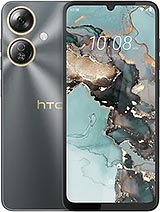
Wildfire E5 Plus
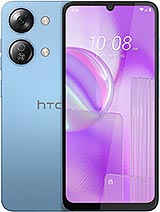
Wildfire E4 Plus
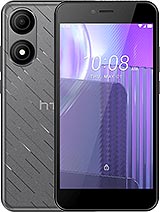
Wildfire E5 Life
Wildfire E3 lite

Play20A