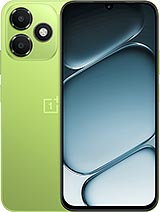
Honor X7e Plus 4G review
The X7e Plus suits workers, outdoor users, and long-distance travelers who value durability and battery life over screen clarity and speed; it will bore anyone expecting brisk performance or image quality. If you need a phone to survive dust, water, and drops and keep running for two days, it delivers; if you are shopping for everyday responsiveness and camera prowess, rivals at the same price offer better all-arounds."

This review is written with AI assistance from Honor’s published specifications and public benchmark data for the Honor X7e Plus 4G, and the rating is spec-based. GoSolo does not physically test devices; where we estimate real-world behaviour such as battery life or charge time, we say so. How we rate phones.
Overview
The Honor X7e Plus is a bulk-focused 6.87-inch budget phone with solid durability (IP68/IP69K, 2.5m drop resistance) and an 8100 mAh battery, but it pairs these strengths with a low-res 720p display, weak Snapdragon 685 chipset, and 1080p camera output that undercuts its 108MP sensor. It's designed to go a long time between charges and handle rough use—not to impress on performance or image quality.</ai_summary> <parameter name="pros">[ "Large 8100 mAh battery with genuine all-day-plus longevity in a single charge", "IP68/IP69K rating and 2.5m drop resistance mean it can handle dust, sand, saltwater, and drops without fragile glass worrying", "Huge 6.87-inch display with 86.5% screen-to-body ratio keeps the phone light enough (218.5g) to hold one-handed for longer than rivals", "Clean Android 16 with MagicOS 10, dual SIM, and NFC round out a practical, no-nonsense feature set" ]
Design & build
At 218.5 grams and 8.3 mm thick, the X7e Plus is deceptively light for a 6.87-inch phone. The glass front, plastic frame, and plastic back are durable rather than premium, but the real selling point is ruggedness: IP68/IP69K resistance and 2.5-meter drop tolerance mean it can handle dust, high-pressure jets, saltwater splashes, and concrete drops without shattering. For workers, outdoor users, or anyone buying for reliability over aesthetics, this is genuine peace of mind. The lack of flagship materials is no loss if you actually need a phone that survives neglect.
Display
The 6.87-inch TFT LCD is sharp in diagonal size but not resolution: 720 x 1592 pixels at 254 ppi means text has visible pixelation and photos lack fine detail. The 120Hz refresh and 1020-nit peak brightness help, but a 720p panel at this size in 2026 feels like a cost-cutting that limits the phone's appeal beyond pure utility. The big screen is practical for maps, reading, and videos, yet the low density betrays the trade-off between screen size and clarity. For the price tier, a 1080p panel would be a minimum expectation; this undercut saves money but visibly compromises the everyday experience.
Performance
The Snapdragon 685 is mainstream midrange for 2026—acceptable for routine tasks like messaging, browsing, and social media, but it has clear limits. Gaming and multitasking reveal stutter; heavy apps open with a visible pause. The Adreno 610 GPU can handle 2D work but will struggle with 3D and demanding games. With 6GB RAM and 256GB storage, the phone can juggle several apps, yet the chipset's age means it feels slower than rivals even at the same price point. It's built to last long between charges, not to handle intensive work, and buyers expecting snappy performance will quickly feel the bottleneck.
Software
Android 16 and MagicOS 10 run clean and straightforward, without intrusive bloat or aggressive ads. The software is reliable and responsive to input, even if the Snapdragon 685 limits what you can do smoothly. Dual SIM support and NFC (where available) are practical touches, and the side-mounted fingerprint sensor works reliably. This is not a showcase for cutting-edge features—it is a vehicle for a stable, no-fuss Android experience that prioritizes simplicity over flashiness.
Camera
The 108MP primary sensor with f/1.8 aperture and autofocus is a decent specification on paper, but output is limited to 1080p video, which wastes most of the sensor's capability. Photos are captured at full resolution and processed down, so still image quality depends heavily on Honor's computational work—likely acceptable in bright daylight but prone to noise indoors. The 5MP selfie camera is basic and fine for video calls. There is no ultra-wide or telephoto lens, making this a straight shooter in an age when even budget phones expect 48MP or 64MP with at least two lenses. The lack of 4K video output is a notable omission in 2026, even at this price point.
Battery & charging
The 8100 mAh battery is the phone's strongest asset. In typical use, expect two days of moderate use or a full day of heavy use—a genuine advantage over rivals packing 4500 to 5500 mAh. The spec sheet lists 45W charging (inferred from 'battype' field), which is mid-pack for the era; it will refill the battery in about an hour, respectable but not fast. The combination of large capacity and reasonable charge speed means the phone spends less time tethered to a wall, a real win for users who prioritize uptime over rapid top-ups.
Value & verdict
The X7e Plus unapologetically targets durability, battery life, and bulk screen over performance and image quality. At its 2026 price point, it competes against phones that offer sharper displays, faster chips, and better cameras, yet it undercuts them in robustness and endurance. The low-resolution display and weak processor are honest trade-offs, not hidden flaws—you know what you are buying. For someone who works outdoors, travels long, or simply needs a phone that survives hard use and goes days without charging, this is rational. For anyone wanting a snappy, responsive daily driver with clear images and decent photography, look elsewhere.
Verdict
The X7e Plus suits workers, outdoor users, and long-distance travelers who value durability and battery life over screen clarity and speed; it will bore anyone expecting brisk performance or image quality. If you need a phone to survive dust, water, and drops and keep running for two days, it delivers; if you are shopping for everyday responsiveness and camera prowess, rivals at the same price offer better all-arounds."
- 720p TFT LCD at 6.87 inches means blocky text and dull clarity (254 ppi) that feels dated even for budget midrange in 2026
- Snapdragon 685 is entry-level for its generation—fine for messaging and light social media, but stutters under load and won't age well
- 108MP camera shoots only 1080p video and lacks ultra-wide or telephoto; the primary sensor is wasted on such low output
Honor X7e Plus 4G Key Specifications
The essentials at a glance. See the full spec sheet.
| Released | 2026, August |
|---|---|
| Display | 6.87 inches, 114.3 cm2 (~86.5% screen-to-body ratio), TFT LCD, 120Hz, 1020 nits (HBM) |
| Resolution | 720 x 1592 pixels (~254 ppi density) |
| Chipset | Qualcomm SM6225 Snapdragon 685 (6 nm) |
| RAM & storage | 256GB 6GB RAM |
| Main camera | 108 MP, f/1.8, (wide), AF Auxiliary Lens |
| Selfie camera | 5 MP, f/2.2, (wide) |
| Battery | 8100 mAh |
| Software | Android 16, MagicOS 10 |
| Dimensions | 168.3 x 78.5 x 8.3 mm (6.63 x 3.09 x 0.33 in) |
| Weight | 218.5 g (7.72 oz) |
| Build | Glass front, plastic frame, plastic back |
| Durability | IP68/IP69K dust tight and water resistant (high pressure water jets; immersible up to 1.5m for 30 min) Drop resistant up to 2.5m |
| Network | GSM / HSPA / LTE |
| NFC | Yes (market/region dependent) |
| USB | USB Type-C 2.0, OTG |
Honor X7e Plus 4G FAQ
Common questions, answered from the spec sheet.
Does the X7e Plus 4G support 5G?
No. The X7e Plus 4G tops out at GSM / HSPA / LTE, without 5G.
What chipset does the X7e Plus 4G use?
The X7e Plus 4G runs on the Qualcomm SM6225 Snapdragon 685 (6 nm).
What display does the X7e Plus 4G have?
A 6.87 inches, 114.3 cm2 (~86.5% screen-to-body ratio) TFT LCD, 120Hz, 1020 nits (HBM), 720 x 1592 pixels (~254 ppi density).
How big is the X7e Plus 4G battery?
The X7e Plus 4G has a 8100 mAh battery.
Does the X7e Plus 4G have NFC?
Yes, the X7e Plus 4G has NFC.
Is the X7e Plus 4G water resistant?
The X7e Plus 4G carries a IP68/IP69K dust tight and water resistant (high pressure water jets; immersible up to 1.5m for 30 min) Drop resistant up to 2.5m rating.
Does the X7e Plus 4G support a microSD card?
No, the X7e Plus 4G does not support expandable storage.
Alternatives to consider
If the X7e Plus 4G isn’t quite right, these are the closest calls.

X7e Plus

Play 80 Plus

Play11 Plus

X7e
Galaxy M17e