Honor Magic8 RSR Porsche Design review
This phone suits anyone tired of bloated flagship slabs and willing to pay for thinness and refinement without sacrificing speed or screen quality. It is less essential for someone whose priority is fastest charging or zoom range—those exist elsewhere—but as a slim, light flagship that actually performs, it is rare in its class.
This review is written with AI assistance from Honor’s published specifications and public benchmark data for the Honor Magic8 RSR Porsche Design, and the rating is spec-based. GoSolo does not physically test devices; where we estimate real-world behaviour such as battery life or charge time, we say so. How we rate phones.
Overview
The Honor Magic8 RSR Porsche Design is a flagship that trades raw power for a more refined take on big-phone design: slimmer, lighter, and with a display so sharp most eyes won't see the pixels. It's not the fastest phone Honor makes, but for someone tired of slabs over 250g, the balance is worth the price.
Design & Build
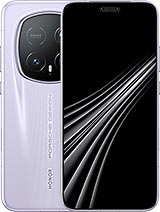
This is where the Porsche Design moniker earns its space. At 239g and 8.5mm thin, it is genuinely lighter and slimmer than the flagship pack it now sits in—most rivals hover around 250g and 9mm. The aluminum frame and glass front are standard flagship fare, but the weight discipline matters in daily hand and pocket feel. IP68/IP69K rating means full dust tightness and water resistance to 1.5m for half an hour, which is solid. The trade-off is whether that thinness comes at any cost to durability or thermal headroom during sustained gaming, though the spec sheet does not hint at either problem.
Display
The 6.71-inch LTPO OLED display is where the engineering focus shows. Resolution lands at 458 ppi, which is high enough that the pixel grid is effectively invisible at normal viewing distance; by 2026 standards for a flagship, this is table-stakes rather than exceptional, but the panel executes it well. LTPO adaptive refresh down to whatever the content allows is standard now, and 120Hz is the baseline for this tier. What sets it apart is the brightness: 1800 nits in high brightness mode and 6000 nits peak is genuinely bright for outdoor use and HDR content. Dolby Vision support and the Honor Jurh Glass protection round out a display that looks sharp and punchy without being loud.
Performance
The Snapdragon 8 Elite Gen 5 with Adreno 840 is the current flagship silicon, built on a 3nm process with two high-performance Oryon V3 Phoenix L cores at 4.6GHz and six efficiency cores at 3.62GHz. This is the same chip that powers the fastest Android phones right now; there is no compromise to performance from the slim chassis. Real-world app launch, gaming, and multitasking will feel instantaneous. The 16GB or 24GB RAM options ensure no bottlenecks there. Whether the thinness required different thermal tuning to keep thermals in check is not clear from the spec sheet, but a phone this light running top-tier silicon without documented thermal issues is already a win in engineering terms.
Software
Android 16 with MagicOS 10 is the software layer. MagicOS is Huawei-Honor's skin, and it tends toward polish and feature-density rather than stock Android's minimalism. What it does well or poorly in practice depends heavily on region and local tuning, and a single spec sheet does not reveal whether you get bloatware, ads, or a tight experience. The Android 16 base is current as of early 2026, so security and feature parity with the broader ecosystem should be solid.
Camera
The rear triple is 50MP main at f/1.6 with a 1/1.3" sensor, 200MP periscope at f/2.6 with 3.7x optical zoom, and 50MP ultrawide at f/2.0 with a 122-degree field of view. The main sensor's large 1.2µm pixels and f/1.6 aperture are strong for low light and detail retention. The periscope's 3.7x zoom is a reasonable sweet spot between reach and optical quality; the 0.56µm pixels on that 200MP sensor are small enough that it relies on computational stacking for real detail, which is typical for the class. The ultrawide is standard issue. Features like laser autofocus, a color spectrum sensor, and 10-bit 4K video up to 120fps hint at computational sophistication, though without shooting examples it is hard to judge how Honor's tuning stacks up. The 50MP selfie with TOF 3D depth is solid for portraits.
Battery & Charging
The 7200 mAh battery is generous by current flagship standards, and paired with the slim frame and efficient chipset, it should deliver a full day of heavy use without strain. However, the spec sheet does not list charging wattage—whether it is 100W, 120W, or something else entirely. That is a notable omission for a phone at this price; if it charges slower than rivals, that would be a tangible disadvantage, and buyers deserve clarity. Fast charging speed has become a key differentiator in this tier, and Honor keeping it off the sheet raises questions.
Value & Verdict Context
At about 1000 EUR, this is flagship territory, putting it squarely against the Samsung Galaxy S25 Ultra, OnePlus 13 Pro, and other current-gen powerhouses in most markets. The selling point is not raw speed—rivals are equally fast—but physical refinement: the slim, light design is genuine differentiation. The display is excellent, the camera system is complete, and the Snapdragon 8 Elite Gen 5 ensures no performance regrets. The Porsche Design positioning, rightly or wrongly, leans on aesthetic and industrial heritage rather than functional uniqueness. If you value a phone that does not feel like a brick and want current flagship silicon in a narrower frame, this is a coherent argument. If you prioritize the fastest charging or the most aggressive camera zoom, you may find a rival more tailored to your needs.
Verdict
This phone suits anyone tired of bloated flagship slabs and willing to pay for thinness and refinement without sacrificing speed or screen quality. It is less essential for someone whose priority is fastest charging or zoom range—those exist elsewhere—but as a slim, light flagship that actually performs, it is rare in its class.
- Slim and light for a modern flagship—239g and 8.5mm thick, genuinely noticeable against rivals that push 250g+
- Exceptionally sharp display at 458 ppi with 6000 nits peak brightness, LTPO 120Hz, and Dolby Vision
- Periscope zoom at 3.7x optical keeps detail without the cropping penalty of larger jumps
- Latest Snapdragon 8 Elite Gen 5 with Adreno 840, no performance compromise despite the thinner chassis
- No charging wattage listed in the spec sheet, making it unclear how it compares to rivals now routinely exceeding 100W
- 200MP telephoto sensor sees smaller individual pixels (0.56µm) than the main sensor, a common trade-off for zoom reach that rarely translates to visibly sharper shots in real light
Honor Magic8 RSR Porsche Design Key Specifications
The essentials at a glance. See the full spec sheet.
| Released | 2026, January 19 |
|---|---|
| Display | 6.71 inches, 108.3 cm2 (~89.6% screen-to-body ratio), LTPO OLED, 1B colors, 120Hz, 4320Hz PWM, Dolby Vision, HDR Vivid, 1800 nits (HBM), 6000 nits (peak) |
| Resolution | 1256 x 2808 pixels, 20:9 ratio (~458 ppi density) |
| Chipset | Qualcomm SM8850-AC Snapdragon 8 Elite Gen 5 (3 nm) |
| RAM & storage | 512GB 16GB RAM, 1TB 24GB RAM |
| Main camera | 50 MP, f/1.6, 23mm (wide), 1/1.3", 1.2µm, multi-directional PDAF, OIS 200 MP, f/2.6, 85mm (periscope telephoto), 1/1.4", 0.56µm, multi-directional PDAF, OIS, 3.7x optical zoom 50 MP, f/2.0, 12mm, 122˚ (ultrawide), 1/2.88", 0.61µm, dual pixel PDAF |
| Selfie camera | 50 MP, f/2.0, 22mm (wide), 1/2.93", 0.6µm, AF TOF 3D, (depth/biometrics sensor) |
| Battery | 7200 mAh |
| Software | Android 16, MagicOS 10 |
| Dimensions | 161.2 x 75 x 8.5 mm (6.35 x 2.95 x 0.33 in) |
| Weight | 239 g (8.43 oz) |
| Build | Glass front, aluminum frame |
| Durability | IP68/IP69K dust tight and water resistant (high pressure water jets; immersible up to 1.5m for 30 min) |
| Network | GSM / CDMA / HSPA / CDMA2000 / LTE / 5G |
| NFC | Yes |
| USB | USB Type-C 3.2, DisplayPort 1.2, OTG |
Honor Magic8 RSR Porsche Design FAQ
Common questions, answered from the spec sheet.
Does the Magic8 RSR Porsche Design support 5G?
Yes. The Magic8 RSR Porsche Design supports 5G networks.
What chipset does the Magic8 RSR Porsche Design use?
The Magic8 RSR Porsche Design runs on the Qualcomm SM8850-AC Snapdragon 8 Elite Gen 5 (3 nm).
What display does the Magic8 RSR Porsche Design have?
A 6.71 inches, 108.3 cm2 (~89.6% screen-to-body ratio) LTPO OLED, 1B colors, 120Hz, 4320Hz PWM, Dolby Vision, HDR Vivid, 1800 nits (HBM), 6000 nits (peak), 1256 x 2808 pixels, 20:9 ratio (~458 ppi density).
How big is the Magic8 RSR Porsche Design battery?
The Magic8 RSR Porsche Design has a 7200 mAh battery.
Does the Magic8 RSR Porsche Design have NFC?
Yes, the Magic8 RSR Porsche Design has NFC.
Is the Magic8 RSR Porsche Design water resistant?
The Magic8 RSR Porsche Design carries a IP68/IP69K dust tight and water resistant (high pressure water jets; immersible up to 1.5m for 30 min) rating.
Does the Magic8 RSR Porsche Design support a microSD card?
No, the Magic8 RSR Porsche Design does not support expandable storage.
Alternatives to consider
If the Magic8 RSR Porsche Design isn’t quite right, these are the closest calls.
Magic8 RSR
Magic7 RSR Porsche Design
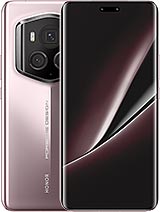
Magic6 RSR Porsche Design
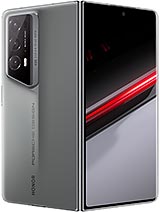
Magic V2 RSR Porsche Design
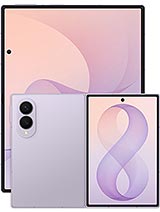
Galaxy Z Fold8