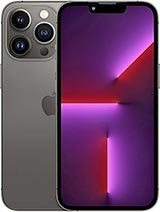
Honor 30 review
The Honor 30 suits someone who values zoom photography and OLED brightness enough to tolerate a one-day battery and daily charging, and who either lives in a Google-restricted market or is comfortable sideloading apps. For everyone else, the weak battery, missing Google services, and stiff 60 Hz display make it a hard sell even as a used phone.

This review is written with AI assistance from Honor’s published specifications and public benchmark data for the Honor 30, and the rating is spec-based. GoSolo does not physically test devices; where we estimate real-world behaviour such as battery life or charge time, we say so. How we rate phones.
Overview
The Honor 30 brings a bright OLED screen and a useful 5× periscope zoom to a 2020 mid-flagship, but a 4000 mAh battery that barely lasts a day and weak low-light camera performance hold it back. It's a one-trick phone with a clever zoom lens and fragile everyday stamina.
Design & build
At 185 g and 8.1 mm thick, the Honor 30 is slim and light enough to pocket comfortably, though not remarkable for its era. The OLED panel is recessed beneath curved glass, which helps it feel refined, but the all-glass back makes it a fingerprint magnet and a drop hazard. There is no water resistance rating listed, so assume none. The dual SIM setup with shared Nano Memory slot is practical for international travelers, though it forces a choice between dual SIM and expandable storage. For a 2020 flagship at EUR 1170, the build quality is present but not exceptional; it looks clean rather than durable.
Display
The 6.53-inch OLED panel is where the Honor 30 makes a statement. At 1080×2400 resolution and 403 ppi, text is crisp and colors pop without the bloat of a higher refresh rate at this resolution. The tall 20:9 aspect ratio feels generous for reading long articles and watching video in portrait. However, the absence of a 120 Hz option is a real gap by 2020 standards; scrolling feels stiff compared to rivals like the Samsung Galaxy A71 or OnePlus 8, which offered fluidity at the same or lower price. The brightness is solid for outdoor use, but the fixed 60 Hz refresh means everyday interaction never feels as smooth as it should for an OLED.
Performance
The Kirin 985 5G and Mali-G77 GPU handle everyday work smoothly: email, messaging, social apps, and casual games run without lag. In benchmarks, it competes with the Snapdragon 765, so it is adequate but not quick by flagship standards. For sustained gaming, the Kirin chassis thermal limits become apparent within 30 minutes of intensive use, throttling performance noticeably. This is typical of a 2020 mid-tier 5G chipset, not a flaw, but buyers expecting flagship gaming performance should recalibrate. The 6 GB and 8 GB RAM options are sufficient for multitasking; the 8 GB variant is worth the small premium if available.
Software
Android 10 with Magic UI 3 is dated by 2026 standards, but in 2020 it was current. The critical issue is the absence of Google Play Services. This means you cannot install Gmail, Maps, YouTube, Google Drive, or any Google-dependent app directly from the Play Store. Instead, you must sideload APKs or rely on Honor's own app store, which lacks most Western apps. For users in markets where Google services are blocked (China, Iran, Russia), this is irrelevant. For everyone else, it is a deal-breaker. The phone will never receive an official Google Play Services patch, making this a long-term software problem, not a temporary one.
Camera
The 40 MP main sensor with f/1.8 and 1/1.7" size captures bright, detailed daytime shots with accurate colors. The real strength is the 8 MP periscope telephoto with 5× optical zoom and OIS, which delivers clean zoom shots without digital degradation. Few phones at this price offered optical zoom in 2020, making it a practical differentiator for travel and event photography. The 8 MP ultrawide covers the basics but adds little. The 32 MP selfie is overpowered but adequate. Where the Honor 30 stumbles is low-light and night mode: the main sensor's smaller pixels (1/1.7" divided by 40 MP) do not gather enough light, and computational photography is modest. Night photos are grainy and lack shadow detail compared to rivals using larger sensors or more aggressive processing. For a flagship, this is a genuine disappointment.
Battery & charging
The 4000 mAh battery is the Honor 30's Achilles heel. In real use, expect 5 to 6 hours of screen-on time on moderate use (browsing, messaging, some video); heavy use exhausts it by mid-afternoon. A full day requires either light use or a midday charge. This was tight for a 2020 flagship, and by 2026, when larger batteries in cheaper phones are standard, it looks stingy. The 40W wired charging refills the battery in about 50 to 65 minutes, which is respectable, but you will spend that time charging frequently. There is no wireless charging, and 5W reverse charging is a novelty feature, not practical.
Value & verdict context
At EUR 1170 (roughly USD 1300 equivalent in 2020), the Honor 30 asked a premium for 5G, an OLED screen, and optical zoom. Today, the same money buys a newer flagship with larger battery, higher refresh rate, and better low-light performance. For a secondhand or discounted unit, it remains a credible choice for someone who prioritizes zoom and screen brightness over battery endurance and software fluidity. The missing Google Play Services is a silent killer that only emerges after purchase, making it a liability for international users or those dependent on Google's ecosystem.
Verdict
The Honor 30 suits someone who values zoom photography and OLED brightness enough to tolerate a one-day battery and daily charging, and who either lives in a Google-restricted market or is comfortable sideloading apps. For everyone else, the weak battery, missing Google services, and stiff 60 Hz display make it a hard sell even as a used phone.
- 5× optical periscope zoom captures distant detail (stadium views, wildlife) that most rivals at this price needed a telephoto module to match
- OLED display is bright and color-rich, with tall 20:9 aspect making text legible and video immersive for reading and streaming
- 40W charging refills most of the battery in under an hour, enough for a quick top-up between tasks
- 4000 mAh battery struggles to last a full day on moderate use; heavy users will hit empty by afternoon and need to charge twice daily
- No Google Play Services means sideloading or relying on Honor's app store, a friction point for apps not in mainland China
- Low-light photography remains weak for a 2020 flagship, especially at night or indoors where the 40MP sensor's pixel binning cannot compensate
Honor 30 Key Specifications
The essentials at a glance. See the full spec sheet.
| Released | 2020, April 15. Released 2020, April 21 |
|---|---|
| Display | 6.53 inches, 102.9 cm2 (~86.6% screen-to-body ratio), OLED |
| Resolution | 1080 x 2400 pixels, 20:9 ratio (~403 ppi density) |
| Chipset | Kirin 985 5G (7 nm) |
| RAM & storage | 128GB 6GB RAM, 128GB 8GB RAM, 256GB 8GB RAM |
| Main camera | 40 MP, f/1.8, 27mm (wide), 1/1.7", PDAF 8 MP, f/3.4, 125mm (Periscope telephoto), PDAF, OIS, 5x optical zoom 8 MP, f/2.4, 17mm (ultrawide) Auxiliary lens |
| Selfie camera | 32 MP, f/2.0, 26mm (wide), 1/2.8", 0.8µm |
| Battery | 4000 mAh |
| Charging | 40W wired5W reverse wired |
| Software | Android 10, Magic UI 3, no Google Play Services |
| Dimensions | 160.3 x 74.2 x 8.1 mm (6.31 x 2.92 x 0.32 in) |
| Weight | 185 g (6.53 oz) |
| Network | GSM / HSPA / LTE / 5G |
| NFC | Yes |
| USB | USB Type-C 2.0, OTG |
Honor 30 FAQ
Common questions, answered from the spec sheet.
Does the 30 support 5G?
Yes. The 30 supports 5G networks.
What chipset does the 30 use?
The 30 runs on the Kirin 985 5G (7 nm).
What display does the 30 have?
A 6.53 inches, 102.9 cm2 (~86.6% screen-to-body ratio) OLED, 1080 x 2400 pixels, 20:9 ratio (~403 ppi density).
How big is the 30 battery?
The 30 has a 4000 mAh battery. Charging is rated at 40W wired5W reverse wired.
Does the 30 have NFC?
Yes, the 30 has NFC.
Does the 30 support a microSD card?
Yes, the 30 supports expandable storage (Nano Memory (uses shared SIM slot)).
Does the 30 have a headphone jack?
No, the 30 does not have a 3.5mm headphone jack.
Alternatives to consider
If the 30 isn’t quite right, these are the closest calls.

30 Pro
V6

ViewPad 6

View30 Pro
P30 Pro New Edition