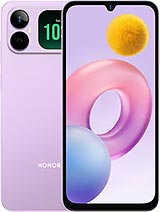
HMD Luma review
The Luma suits people in markets with spotty power access or those who keep phones for extended cycles and prioritize endurance over performance. Anyone expecting a modern phone experience—even at budget level—should look elsewhere; the T615 chip and 720p screen are genuine step-downs from rivals in the same bracket."
This review is written with AI assistance from HMD’s published specifications and public benchmark data for the HMD Luma, and the rating is spec-based. GoSolo does not physically test devices; where we estimate real-world behaviour such as battery life or charge time, we say so. How we rate phones.
Overview
The HMD Luma is a budget Android phone built to last with a 5000mAh battery and a practical 120Hz display, but the entry-level Unisoc T615 chip and 720p resolution mean it's a compromise device: solid battery life and size appeal to people who need a workhorse, but don't expect snappy performance or crisp visuals.
Design & build
The Luma is a phone that prioritizes use over aesthetics. At 198g and just 8.7mm thick, it sits firmly in the lightweight camp—lighter and slimmer than most mid-range devices. The mixed build (glass front, plastic frame and back) is typical for this price tier and means it will pick up scratches, but the side-mounted fingerprint sensor suggests HMD has thought about practical durability. There is no fancy coating or material story here; this is a device designed to slip into a pocket and not demand attention. For a global-south audience where phones are often the primary device and kept for years, that lean, unobtrusive form factor is genuinely appealing.
Display
A 6.67 inch IPS LCD with 120Hz refresh is a mixed proposition. The 120Hz rate, paired with 500 nits peak brightness, smooths everyday scrolling and keeps the display usable in daylight. But the 720p resolution on a screen this size is a real limitation. At 264 pixels per inch, text appears noticeably soft and images lack the clarity you would expect from a modern 6.6 inch phone. Any reading-heavy task—web browsing, documents, social media—will feel a step behind devices with 1080p panels. The IPS type means color accuracy is decent, but viewing angles suffer compared to AMOLED. For watching videos or casual use, it gets by; for anything demanding clarity, it falters.
Performance
The Unisoc T615 is a 12nm entry-level chip, and it performs accordingly. Apps launch, basic tasks run, but don't expect fluidity or speed. Gaming is off the table—even casual titles will stutter. Multitasking beyond three or four open apps triggers noticeable lag. The Mali-G57 MP1 GPU is especially weak by modern standards. For a person using this phone as a calling, messaging, and social media device with light browsing, it suffices. Anyone expecting snappier performance will be frustrated within weeks. This is the sort of hardware that reminds you why budget Android phones need large batteries to survive the day—the software works harder because the silicon is constrained.
Software
Android 15 ships here with a blank slate: no word on promised updates or security patch cycles. For a device launching in early 2026, that lack of communication is a red flag. HMD's historical track record with software support has been spotty, and there is no reason to assume this changes. The Luma will likely receive security patches for a year or two, then be left behind. That matters especially in global-south markets where devices are resold and reused for longer cycles. On the plus side, 4GB RAM is the bare minimum to keep Android 15 stable; more would help, but HMD has sized it sensibly.
Camera
The 50MP main sensor is a marketing spec that does not translate to real-world sharpness, especially paired with 1080p video output. The camera will capture recognizable photos in daylight, with warm tones and reasonable exposure, but fine detail is lost in compression. Switching to the 8MP selfie for video calls works, but do not expect studio quality. There is no ultrawide, telephoto, or depth sensor—just a single wide module and a flash. For a budget phone in 2026, this is expected. It is adequate for social media and documentation, not for anything aspirational. The 1080p video limit is particularly limiting; rivals increasingly offer 2K or 4K on budget models, making this feel dated.
Battery & charging
The 5000mAh battery is the Luma's genuine strength. On the Unisoc T615, you can realistically expect two days of moderate use, perhaps 32 to 36 hours of mixed calling, messaging, browsing, and video. That matters in regions where power access is intermittent or where users prefer buying a phone once and relying on it. The trade-off: 18W charging is slow. At that rate, you are looking at 90 minutes to two hours for a full charge. By 2026 standards, this lags. Budget phones now commonly ship with 33W, 65W, or higher, making the Luma feel slow to refill. For someone who charges overnight, it is fine; for road travel or quick top-ups, it becomes annoying.
Value & verdict-context
The Luma is aimed at buyers who need a reliable, long-lasting phone for essential tasks and do not care about speed or display quality. It is not positioned as a performance device or a media machine. At its price point—likely under $200 in most markets—it offers good battery endurance and a practical form factor. The chip is weak, the screen resolution is dated, and charging is slow. But if you weigh durability, size, and battery life heavily, the package makes sense. This is not a phone for aspiring to something more; it is the phone you buy because you want something that works without drama and lasts when your next purchase is two or three years away.
Verdict
The Luma suits people in markets with spotty power access or those who keep phones for extended cycles and prioritize endurance over performance. Anyone expecting a modern phone experience—even at budget level—should look elsewhere; the T615 chip and 720p screen are genuine step-downs from rivals in the same bracket."
- 5000mAh battery should deliver real two-day endurance for typical use
- Slim 8.7mm profile and 198g weight make it genuinely comfortable for long periods
- Dual SIM with expandable storage gives flexibility in markets with multiple carriers or data plans
- 120Hz display lifts responsiveness compared to 60Hz rivals at this price
- Unisoc T615 is very entry-level—expect sluggish app switching and slow gaming even by budget standards
- 720p resolution on a 6.67 inch screen yields grainy text and images (264 ppi is well below clarity threshold)
- 18W charging is slow by 2026 standards; rivals in this bracket now start at 33W or higher
HMD Luma Key Specifications
The essentials at a glance. See the full spec sheet.
| Released | 2026, February 27 |
|---|---|
| Display | 6.67 inches, 107.2 cm2 (~84.6% screen-to-body ratio), IPS LCD, 120Hz, 500 nits (peak) |
| Resolution | 720 x 1604 pixels, 20:9 ratio (~264 ppi density) |
| Chipset | Unisoc T615 (12 nm) |
| RAM & storage | 128GB 4GB RAM, 256GB 4GB RAM |
| Main camera | 50 MP, (wide) |
| Selfie camera | 8 MP |
| Battery | 5000 mAh |
| Software | Android 15 |
| Dimensions | 165.7 x 76.5 x 8.7 mm (6.52 x 3.01 x 0.34 in) |
| Weight | 198 g (6.98 oz) |
| Build | Glass front, plastic frame, plastic back |
| Network | GSM / HSPA / LTE |
| NFC | No |
| USB | USB Type-C 2.0 |
HMD Luma FAQ
Common questions, answered from the spec sheet.
Does the Luma support 5G?
No. The Luma tops out at GSM / HSPA / LTE, without 5G.
What chipset does the Luma use?
The Luma runs on the Unisoc T615 (12 nm).
What display does the Luma have?
A 6.67 inches, 107.2 cm2 (~84.6% screen-to-body ratio) IPS LCD, 120Hz, 500 nits (peak), 720 x 1604 pixels, 20:9 ratio (~264 ppi density).
How big is the Luma battery?
The Luma has a 5000 mAh battery.
Does the Luma have NFC?
No, the Luma does not list NFC support.
Does the Luma support a microSD card?
Yes, the Luma supports expandable storage (microSDXC (dedicated slot)).
Alternatives to consider
If the Luma isn’t quite right, these are the closest calls.
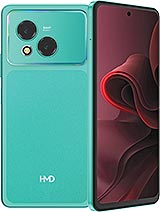
Vibe2 Pro
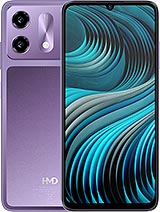
Vibe2
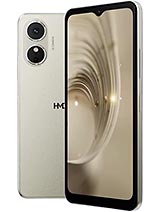
Arc 2
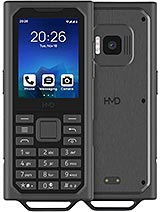
Terra M
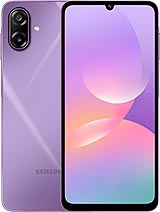
Galaxy M17e