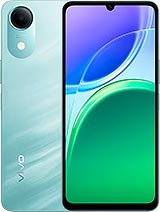
HMD Arc 2 review
The Arc 2 suits people who want a phone that lasts days, survives drops, and does not drain the budget or invite theft; skip it if you care about visual clarity, responsive performance, or photos.
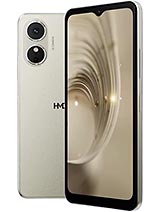
This review is written with AI assistance from HMD’s published specifications and public benchmark data for the HMD Arc 2, and the rating is spec-based. GoSolo does not physically test devices; where we estimate real-world behaviour such as battery life or charge time, we say so. How we rate phones.
Overview
The HMD Arc 2 is a bare-bones budget phone running Android 14 Go with a weak Unisoc chipset and a low-res 215 ppi screen, designed entirely around the €80 price and long battery life. It delivers what you pay for: calls, texts, light web browsing, and nothing more, which is exactly the point.
Design & build
Dimensions and weight aren't listed, but the 9mm thickness is unremarkable for a budget phone in 2026. The IP54 rating—dust protected and water splash resistant—stands out in this tier; most rivals at €80 skip certification entirely and just hope you don't spill anything. The side-mounted fingerprint sensor is practical. Two colours (Dark Blue and Golden Beige) offer minimal choice but are inoffensive. This is a phone built to function, not impress, and the durability nod makes it slightly more trustworthy than the competition.
Display
A 6.52-inch IPS LCD with 460 nits peak brightness is acceptable for outdoors, but the 576×1280 resolution and 215 ppi density read as genuinely low-res in 2026. Text edges are visibly pixellated, and any vector graphics or app interface scaling looks coarse. For comparison, even midrange phones today run 1080p or better on a similarly sized screen. The 80.2 per cent screen-to-body ratio is respectable for the form factor, but the display itself feels more like something from 2021. It works for reading messages and basic browsing—the intended use case—but you will notice the shortfall if you spend time on any visual content.
Performance
The Unisoc T603 with 4 GB of RAM is entry-level, even for budget phones, and it shows. Apps launch, but with a noticeable delay. Switching between tasks feels sluggish, and opening links in Chrome or loading social feeds will test your patience. Gaming, video editing, or any sustained multitasking is off-limits. For this phone's actual audience—people making calls, texting, listening to FM radio, and reading news—the chip is adequate, if not inspiring. You are not paying for speed; you are paying for battery life and robustness, and the processor's weakness is the trade-off that made that possible.
Software
Android 14 Go edition is stripped-down by design, with a smaller app install footprint and reduced RAM overhead. The upside is fluidity relative to the weak chipset; the downside is that some Google services run in stripped-form, and you cannot install as many large apps before running out of space on the 64 GB base model. The 128 GB variant offers breathing room, especially with microSDXC expansion, but neither option is luxurious. Go edition suits this hardware, but it also underscores that this is a phone for people who do not expect the full modern Android experience.
Camera
A 13 MP main sensor with autofocus and LED flash is the bare minimum for 2026. Expect soft, murky shots in poor light, sluggish autofocus lag, and noise above ISO 400. The 5 MP selfie camera is functional for video calls only. There is no ultrawide, no macro, no portrait mode. Video recording tops out at 1080p, which is fine for clips, but bitrate and stabilization are not specified and probably minimal. Do not buy this phone hoping for acceptable photos; if photos matter at all, look elsewhere.
Battery & charging
The 5000 mAh battery is the real star. In a sub-9mm phone, this capacity is generous, and with the efficient Unisoc chip and Go OS, expect two to three full days of mixed use without pushing it. Charging at 10W is painfully slow; a full drain to full will take well over an hour. That is a meaningful inconvenience if you are the type to kill the battery in a day, but for a phone built around multiday endurance, 10W is almost a deliberate choice to avoid forcing users into a charging habit.
Value & verdict
At €80, the HMD Arc 2 occupies a specific niche: rugged, minimal, battery-focused, and unambitious. It does not compete with phones at €120 or above because it simply does not try. The display and processor are genuinely weak, and the camera is only a camera in name. But the IP54 durability, microSD expandability, FM radio, and multiday battery life address real needs in markets where phones take a beating and reliability matters more than speed. If you are shopping for a backup phone, a work device you do not want to replace often, or a phone for someone who just needs calls and WhatsApp, this is honest value. If you want a modern phone experience—fast apps, clear visuals, decent photos—you need to spend more.
Verdict
The Arc 2 suits people who want a phone that lasts days, survives drops, and does not drain the budget or invite theft; skip it if you care about visual clarity, responsive performance, or photos.
- 5000 mAh battery in a sub-9mm phone will easily last two to three days of casual use, a genuine advantage in this segment where people still prioritize uptime over refresh rates
- Android 14 Go edition keeps the footprint lean and the phone responsive for basic tasks, music, messaging, and offline functionality without needless bloat
- IP54 dust and water splash resistance at this price is rare; meaningfully better durability than rivals that skimp on certification
- microSD slot and FM radio still present—genuine wins for users in markets where expandable storage and broadcast radio matter
- The Unisoc T603 struggles with anything beyond messaging and basic browsing; switching apps or opening links can feel laboured compared to even other budget chips
- 215 ppi density and 576×1280 resolution make text chunky and scaled graphics look rough, noticeably dated even against phones at its own price
- 10W charging speed means a full refill from empty will take well over an hour, a convenience penalty for a phone that does push all-day battery
HMD Arc 2 Key Specifications
The essentials at a glance. See the full spec sheet.
| Released | 2026, July 09 |
|---|---|
| Display | 6.52 inches, 102.6 cm2 (~80.2% screen-to-body ratio), IPS LCD, 460 nits (peak) |
| Resolution | 576 x 1280 pixels, 20:9 ratio (~215 ppi density) |
| Chipset | Unisoc T603 (22 nm) |
| RAM & storage | 64GB 4GB RAM, 128GB 4GB RAM |
| Main camera | 13 MP, (wide), AF |
| Selfie camera | 5 MP |
| Battery | 5000 mAh |
| Software | Android 14 (Go edition) |
| Durability | IP54 dust protected and water resistant (water splashes) |
| Network | GSM / HSPA / LTE |
| NFC | No |
| USB | USB Type-C |
HMD Arc 2 FAQ
Common questions, answered from the spec sheet.
Does the Arc 2 support 5G?
No. The Arc 2 tops out at GSM / HSPA / LTE, without 5G.
What chipset does the Arc 2 use?
The Arc 2 runs on the Unisoc T603 (22 nm).
What display does the Arc 2 have?
A 6.52 inches, 102.6 cm2 (~80.2% screen-to-body ratio) IPS LCD, 460 nits (peak), 576 x 1280 pixels, 20:9 ratio (~215 ppi density).
How big is the Arc 2 battery?
The Arc 2 has a 5000 mAh battery.
Does the Arc 2 have NFC?
No, the Arc 2 does not list NFC support.
Is the Arc 2 water resistant?
The Arc 2 carries a IP54 dust protected and water resistant (water splashes) rating.
Does the Arc 2 support a microSD card?
Yes, the Arc 2 supports expandable storage (microSDXC).
Alternatives to consider
If the Arc 2 isn’t quite right, these are the closest calls.
Luma
Terra M
Arc
Asha 305 Lite
Play20A