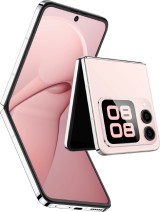
Cubot X100 review
The Cubot X100 suits buyers in emerging markets who want a large screen and dual-SIM flexibility without spending much, as long as they accept soft text and day-long battery life. If sharpness and endurance matter more than screen size, a mainstream alternative at the same price will disappoint less.
This review is written with AI assistance from Cubot’s published specifications and public benchmark data for the Cubot X100, and the rating is spec-based. GoSolo does not physically test devices; where we estimate real-world behaviour such as battery life or charge time, we say so. How we rate phones.
Overview
The Cubot X100 is a large-screened budget Android phone with a smooth 120Hz display let down by 720p sharpness, reasonable performance for scrolling and light gaming, and a secondary back screen that is more novelty than utility. At €200, it offers decent everyday value if you can live with soft text and modest battery life.
Design & Build
The Cubot X100 is a slab: 172mm tall, 78mm wide, and just 8.9mm thin, weighing 207g. That thinness is the selling point, but the plastic back and frame feel cheap next to the glass front, and there is no ip rating for dust or water resistance. The side-mounted fingerprint sensor is convenient, and the dual nano-SIM arrangement gives flexibility for dual phone numbers or a data SIM in regions where that matters. The surprise is the secondary 1.72-inch TFT display on the back, a 320×380 screen that Cubot clearly meant as a differentiator. In practice it is dimly lit, hard to see in sunlight, and mostly useful for glancing at the time or notifications without flipping the phone open—gimmicky rather than essential.
Display
The main event is the 6.88-inch 120Hz IPS LCD, and the refresh rate is genuinely smooth for scrolling feeds, swiping apps, and video playback. That smoothness makes the phone feel more responsive than its midrange chip would suggest. The problem is the resolution: 720 pixels wide on a 6.88-inch screen yields 260 ppi, which is noticeably soft. Text in messaging apps and web browsers has visible pixelation, small UI icons feel fuzzy, and reading-heavy tasks lack the crispness you would get on even budget phones with 1080p at this size. At 83.7% screen-to-body ratio, the bezel is reasonable. The Mohs level 6 scratch resistance is fine for accidental scuffs but not gorilla glass toughness.
Performance
The Mediatek Dimensity 7025 is a mainstream midrange chip—two Cortex-A78 cores at 2.5GHz paired with six A55 cores for efficiency. It handles everyday tasks (messaging, email, web browsing, social media) without lag, and light-to-moderate gaming like Genshin Impact at medium settings or Call of Duty Mobile at high settings runs playable. Sustained heavy workloads (open multiple heavy apps, long gaming sessions, video encoding) will show slowdowns, and this chip was never designed for competing with last year's flagships. For a €200 phone in 2025, this is the expected tier: competent for the price, not aspirational.
Software
Android 15 ships clean with no sign of heavy bloatware, a rarity for budget Chinese brands. The side-mounted fingerprint sensor unlocks reliably. Cubot has kept the software light, which helps the Dimensity 7025 stay responsive. Updates are the question mark—Cubot's track record on OS patches is inconsistent, and a €200 phone often gets one major update and maybe two years of security patches. For users in markets where Cubot has distribution, this is an acceptable risk; for others, support could dry up faster than you'd like.
Camera
The 64MP main sensor with PDAF is the headline, but 64MP on a midrange phone is usually more megapixels than sensor quality. Photos in good light are passable—decent color, adequate detail, and the autofocus is quick. The 5MP ultrawide is soft and the 2MP macro is barely useful; Cubot padded the spec sheet more than the feature set. LED flash helps in dim scenes but can't rescue shadow detail. The 16MP selfie camera is fine for video calls and casual selfies, though skin tones can look oversaturated. Video maxes out at 1080p@30fps, which is fine for social media and chat but behind phones with 4K or 60fps. Overall, the camera system is ordinary for €200—good enough for casual photos, unremarkable in detail and dynamic range.
Battery & Charging
The 5100mAh battery pushes about 1.5 days on light use (messaging, browsing, 1–2 hours of screen time daily) and closer to a full day on moderate use (social media, gaming, video). Heavy use dips below one day, which is disappointing given the large screen; the low-res display uses less power, but the 120Hz refresh rate and large size add up. The 33W USB Power Delivery charger fills the battery in roughly 50–60 minutes, most of the gain in the first 30 minutes. That is not fast by today's flagship standard—100W+ is now common in this price tier—but for a budget phone it is acceptable. The charger is not in the box, an increasingly standard cost-cut in 2025.
Value & Verdict
At €200, the Cubot X100 occupies a crowded and competitive space. You get a large screen with smooth scrolling, dual SIM and 5G connectivity, and competent processor that handles daily tasks without strain. The trade-offs are real: 720p on a 6.88-inch screen is noticeable, battery life is modest on real-world use, the camera system is middle-of-the-road, and the back display is a gimmick that adds little value. This is a phone for buyers who prioritize screen real estate and everyday performance over sharp displays and long battery life. In markets where Cubot has reliable distribution and where you need dual-SIM or 5G support on a budget, it is defensible. Elsewhere, spending a bit more on a phone with 1080p resolution or longer battery life would probably leave you less frustrated.
Verdict
The Cubot X100 suits buyers in emerging markets who want a large screen and dual-SIM flexibility without spending much, as long as they accept soft text and day-long battery life. If sharpness and endurance matter more than screen size, a mainstream alternative at the same price will disappoint less.
- 6.88-inch 120Hz IPS LCD is smooth for scrolling and video despite the low resolution
- Dimensity 7025 handles everyday apps, messaging, and light gaming (Genshin Impact medium, COD Mobile high) without stalling
- 5100mAh battery stretches to 1.5 days on light use with 33W charging topping it up in under an hour
- Dual SIM and 5G connectivity on a €200 phone gives flexibility in some markets
- 720p on a 6.88-inch screen results in noticeable softness in text and small UI elements—readable but not sharp
- Modest battery life on moderate-to-heavy use (roughly one day) makes the large screen feel like it drains faster than it should
- 64MP camera is middle-of-the-road for the price; the 5MP ultrawide and 2MP macro are mostly padding, and video maxes out at 1080p@30fps
Cubot X100 Key Specifications
The essentials at a glance. See the full spec sheet.
| Released | 2025, August |
|---|---|
| Display | 6.88 inches, 112.4 cm2 (~83.7% screen-to-body ratio), IPS LCD, 120Hz |
| Resolution | 720 x 1640 pixels (~260 ppi density) |
| Chipset | Mediatek Dimensity 7025 (6 nm) |
| RAM & storage | 256GB 8GB RAM, 256GB 12GB RAM |
| Main camera | 64 MP, (wide), PDAF 5 MP, (ultrawide) 2 MP (macro) |
| Selfie camera | 16 MP |
| Battery | 5100 mAh |
| Charging | USB Power Delivery up to 33 W |
| Software | Android 15 |
| Dimensions | 171.9 x 78.1 x 8.9 mm (6.77 x 3.07 x 0.35 in) |
| Weight | 207 g (7.30 oz) |
| Build | Glass front, plastic frame, plastic back |
| Network | GSM / HSPA / LTE / 5G |
| NFC | Yes |
| USB | USB Type-C, OTG |
Cubot X100 FAQ
Common questions, answered from the spec sheet.
Does the X100 support 5G?
Yes. The X100 supports 5G networks.
What chipset does the X100 use?
The X100 runs on the Mediatek Dimensity 7025 (6 nm).
What display does the X100 have?
A 6.88 inches, 112.4 cm2 (~83.7% screen-to-body ratio) IPS LCD, 120Hz, 720 x 1640 pixels (~260 ppi density).
How big is the X100 battery?
The X100 has a 5100 mAh battery. Charging is rated at USB Power Delivery up to 33 W.
Does the X100 have NFC?
Yes, the X100 has NFC.
Does the X100 support a microSD card?
No, the X100 does not support expandable storage.
Alternatives to consider
If the X100 isn’t quite right, these are the closest calls.
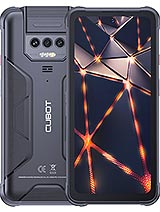
KingKong Power 5
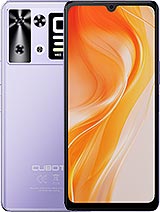
P90
KingKong ES5
KingKong Dura
Galaxy F17 5G