Celkon C333 review
This phone made sense for cost-conscious users in 2011 who carried a smartphone elsewhere and wanted backup dual-SIM calls without paying for data plans or a second premium handset. Today it is discarded, and rightly so—even basic Android phones cost less and do vastly more. It is worth examining only as a museum piece of 2011 budget design philosophy.
This review is written with AI assistance from Celkon’s published specifications and public benchmark data for the Celkon C333, and the rating is spec-based. GoSolo does not physically test devices; where we estimate real-world behaviour such as battery life or charge time, we say so. How we rate phones.
Overview
This is a 2011 GSM feature phone with a 1.8-inch screen, dual SIM, and removable battery—built for markets where low cost and long standby time matter more than a touchscreen or internet. It's honest to its era and price, with no pretense about what it does.
Design & build
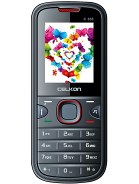
At 88 grams and 16 mm thick, the C333 is compact and light—deliberate choices for something aimed at two-phone users in cost-conscious markets. Dual Mini-SIM lets you ring two numbers without buying a second device. The removable battery was standard practice in 2011 but already becoming rare on more ambitious phones, and here it reflects Celkon's target: users who value replaceability and straightforward repair over sealed-in features. A flashlight is a useful practical addition for markets where carrying a separate torch is still common.
Display
The 1.8-inch TFT screen at 176x220 pixels is legitimately difficult to use. At under 160 ppi, text is low-resolution enough to hurt readability, and navigating a menu-driven interface without a stylus becomes tedious. By 2011, even ultra-cheap phones were experimenting with larger screens; this one leans hard into compactness at the cost of usability. It's a conscious trade-off for pocket comfort, not a technical limitation, but users accustomed to any phone released after 2009 will find it frustrating.
Connectivity & features
GSM-only with no GPRS or EDGE support means zero internet—not even basic text-based email or weather. That was already a limitation in 2011, when even entry phones offered GPRS. The tradeoff is genuine: no internet also means no data drain, no roaming surprises, and predictable battery life measured in weeks of standby. Bluetooth 2.0 is present but old; FM radio and an audio/video player let you consume media if you sideload files to the microSD card. The absence of a file manager in the specs is telling: the expansion slot is there for emergencies and media, not as a creative storage system.
Camera
A 0.3-megapixel camera and basic video recording are present but not useful by any modern standard—or even by 2011's. The resolution is so low that photos are essentially proof-of-capture, not keepsakes. This is clearly not a phone for anyone with photo ambitions; it is a phone for people who need proof they were there, or who value having a camera at all over having one that works well.
Battery & standby
The 1200 mAh battery with up to 850 hours of standby is the headline. That 35-day claim assumes minimal use and is inflated by the absence of data or wireless radios burning power. Real-world talk time of 5 hours is short, but standby defines the C333: it is a phone you charge once a week and leave in a drawer as backup. For a dual-SIM device in a market where you might switch networks by country or to save on roaming, that durability between charges is the entire premise.
Value & verdict
At about 20 EUR in 2011, the C333 was not cheap by the standards of its time—low-end Nokias and Samsungs cost less. What you paid for was the dual SIM, the removable battery, and the understanding that this was disposable backup or a second line, not your main device. Today it is a curiosity: a relic of when Celkon competed in the bottom tier of feature phones for emerging-market users who needed redundancy and durability, not features. The spec sheet is honest about that positioning. Whether such a device makes sense now depends on whether you are archiving a period piece or evaluating it as a buy, which it no longer is.
Verdict
This phone made sense for cost-conscious users in 2011 who carried a smartphone elsewhere and wanted backup dual-SIM calls without paying for data plans or a second premium handset. Today it is discarded, and rightly so—even basic Android phones cost less and do vastly more. It is worth examining only as a museum piece of 2011 budget design philosophy.
- Removable battery and expandable storage via microSDHC, a practical combo at this price point in 2011
- Dual SIM support without data confusion—useful for cost arbitrage in emerging markets with multiple local carriers
- Standby time rated at 850 hours (35 days) with a 1200 mAh battery, a figure that speaks to efficient GSM-only design
- FM radio and audio/video player cover basic media needs without requiring a data plan
- 176x220 pixel display on a 1.8-inch screen makes text and icons tiny, straining eyes for daily use
- Zero internal storage and no GPRS or EDGE—you cannot actually use the microSD slot to store apps or media without an actual file manager, so it's mostly decorative for this device class
- 1200 mAh battery and GSM-only connectivity mean no internet whatsoever; this is a calls-and-SMS device in an era when feature phones were already adding basic data
Celkon C333 Key Specifications
The essentials at a glance. See the full spec sheet.
| Released | 2011 |
|---|---|
| Display | 1.8 inches, 10.2 cm2 (~19.9% screen-to-body ratio), TFT |
| Resolution | 176 x 220 pixels (~157 ppi density) |
| RAM & storage | 0 MB |
| Main camera | Yes |
| Selfie camera | No |
| Battery | 1200 mAh |
| Software | Android |
| Dimensions | 110 x 46.5 x 16 mm (4.33 x 1.83 x 0.63 in) |
| Weight | 88 g (3.10 oz) |
| Durability | Flashlight |
| Network | GSM |
| USB | microUSB |
Celkon C333 FAQ
Common questions, answered from the spec sheet.
Does the C333 support 5G?
No. The C333 tops out at GSM, without 5G.
What display does the C333 have?
A 1.8 inches, 10.2 cm2 (~19.9% screen-to-body ratio) TFT, 176 x 220 pixels (~157 ppi density).
How big is the C333 battery?
The C333 has a 1200 mAh battery.
Is the C333 water resistant?
The C333 carries a Flashlight rating.
Does the C333 support a microSD card?
Yes, the C333 supports expandable storage (microSDHC (dedicated slot)).