Celkon C1 review
The Celkon C1 is a dead phone today. Unless you live in one of the very few countries where GSM-only networks still operate and you specifically want an offline-capable, dual-SIM device without internet, there is no reason to seek this out. It is a relic, useful only to collectors or as a historical reference for how far phone technology has advanced in a decade.
This review is written with AI assistance from Celkon’s published specifications and public benchmark data for the Celkon C1, and the rating is spec-based. GoSolo does not physically test devices; where we estimate real-world behaviour such as battery life or charge time, we say so. How we rate phones.
Overview
The Celkon C1 is a 2011 feature phone with a 2-inch display, 1.3MP camera, and 1000mAh battery—a relic of the pre-smartphone era that offers dual SIM and FM radio but nothing that would appeal to anyone with modern connectivity needs. It's a museum piece, not a functional choice for 2024 or beyond.
What This Phone Is
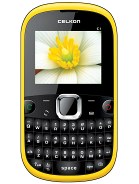
The Celkon C1 is a 2011 GSM-only feature phone aimed at emerging markets where dual-SIM budget phones were still a novelty. It arrived in an era when 3G was spreading in developed countries but not yet standard globally. By today's measure, it is not a phone for communication in any modern sense—it is a historical artifact. The device measures 105 × 55 × 9mm and weighs 82g, fitting easily into a pocket, and it shipped in Black/Yellow and Black/Red color variants. The specifications are so dated that comparing them to current devices is almost pointless, but for context: even low-cost phones of 2015 would outpace it in every meaningful way.
Display & Interface
The 2-inch TFT screen runs at 176 × 220 pixels (141 ppi), a resolution so low that text is blocky and images are barely recognizable. This was typical for feature phones of the 2010s, when screen real estate was a luxury and battery life dictated ultra-low-power displays. The 21.8% screen-to-body ratio reflects the bevels and physical buttons that dominated the era. There is no touch input; navigation is purely mechanical, via physical keys. For someone accustomed to even a basic smartphone, this interface would feel ancient and cumbersome.
Connectivity
The C1 supports only GSM 900/1800 MHz networks—the 2G standard that most carriers worldwide have already shut down or are phasing out. There is no 3G, 4G, or 5G support. WiFi does not exist on this device. Bluetooth 2.0 is present but rarely useful without modern paired devices. Many countries have decommissioned 2G networks entirely, making this phone a paperweight in those regions. In parts of the global south where 2G still limps along, the device might technically make calls, but even then, it cannot access the internet, receive email, or use any modern communication app. For practical purposes, it is a dead phone in 2024.
Camera
The 1.3MP rear camera is capable of recording video but produces images so soft and pixelated they are barely usable. Even for a 2011 phone, 1.3MP was on the low end; mainstream phones that year offered 5MP or higher. There is no front-facing camera. The sensor and lens were budget-tier even in their time, and by modern standards the images are essentially unusable for any purpose beyond a novelty.
Battery & Charging
The 1000mAh removable Li-Ion battery is the standout oddity here—removable batteries are now extinct, making this a curiosity to enthusiasts. Claimed standby time reaches 400 hours, but real-world talk time is rated at just 5 hours, which aligns with the small capacity and the phone's thirst despite its low-power hardware. Charging time is not specified in the available data, but expect it to be quick given the tiny battery. The removability is a genuine plus for someone in an off-grid scenario, but the overall capacity is barely functional by any standard.
Storage & Extras
The C1 has 0MB of internal storage but includes a dedicated microSDHC slot for expansion. This was a practical solution in 2011 when phones shipped with minimal memory. The device includes a stereo FM radio and an audio/video player, features that mattered in the pre-smartphone era. For someone in a region without reliable internet, FM radio still has value; the media player can store music or video files on the microSD card. Both are now considered anachronisms, but they hint at the phone's intended use case: a simple, offline-capable device for voice and basic media.
Value & Verdict Context
The Celkon C1 is not a current product; it was discontinued over a decade ago and would be near-impossible to purchase new. If encountered as a used device, it has no practical modern value unless you are collecting phones from the 2G era or live in a place where 2G networks are still operational and you specifically need a ruggedized dual-SIM phone without connectivity demands. For the vast majority of the global south where this brand once competed, the march toward 4G and 5G has rendered it obsolete. Used as a second SIM device for off-grid situations, the removable battery and FM radio offer some appeal, but the lack of 3G or better means it cannot access the internet even in areas where the signal exists. By 2011 standards it was a functional, no-frills dual-SIM phone; by 2024 it is a non-functional curiosity.
Verdict
The Celkon C1 is a dead phone today. Unless you live in one of the very few countries where GSM-only networks still operate and you specifically want an offline-capable, dual-SIM device without internet, there is no reason to seek this out. It is a relic, useful only to collectors or as a historical reference for how far phone technology has advanced in a decade.
- Dual SIM support on a tiny, pocketable form factor (82g, 9mm thin)
- Removable battery, rare on any phone today
- Dedicated microSD slot for expandable storage
- FM radio and basic media playback, useful in areas without internet
- 1000mAh battery is barely adequate even by 2011 standards; 400 hours standby claims are often inflated and real talk time is 5 hours
- GSM-only with no 3G, 4G, or WiFi—wholly incompatible with modern networks in most countries
- 1.3MP camera and 176×220 display are well below even budget phone standards of the early 2010s
Celkon C1 Key Specifications
The essentials at a glance. See the full spec sheet.
| Released | 2011 |
|---|---|
| Display | 2.0 inches, 12.6 cm2 (~21.8% screen-to-body ratio), TFT |
| Resolution | 176 x 220 pixels (~141 ppi density) |
| RAM & storage | 0 MB |
| Main camera | 1.3 MP |
| Selfie camera | No |
| Battery | 1000 mAh |
| Software | Android |
| Dimensions | 105 x 55 x 9 mm (4.13 x 2.17 x 0.35 in) |
| Weight | 82 g (2.89 oz) |
| Network | GSM |
| USB | microUSB |
Celkon C1 FAQ
Common questions, answered from the spec sheet.
Does the C1 support 5G?
No. The C1 tops out at GSM, without 5G.
What display does the C1 have?
A 2.0 inches, 12.6 cm2 (~21.8% screen-to-body ratio) TFT, 176 x 220 pixels (~141 ppi density).
How big is the C1 battery?
The C1 has a 1000 mAh battery.
Does the C1 support a microSD card?
Yes, the C1 supports expandable storage (microSDHC (dedicated slot)).