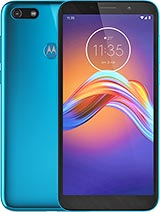
BLU Vivo X5 review
The BLU Vivo X5 makes sense only for users who value removable batteries and repairability over performance and screen quality, or who are stuck in a market with limited alternatives. Anyone shopping for a budget phone today should look at current models instead—this one aged poorly, and you will feel it every day.
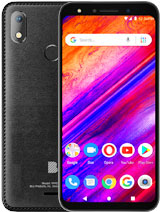
This review is written with AI assistance from BLU’s published specifications and public benchmark data for the BLU Vivo X5, and the rating is spec-based. GoSolo does not physically test devices; where we estimate real-world behaviour such as battery life or charge time, we say so. How we rate phones.
Overview
The BLU Vivo X5 is a 2019 budget phone with a tall 5.7-inch display and removable battery—useful if you value repairability and swappable power, but saddled with weak specs that make daily use frustrating. It is not worth buying now unless you specifically need the removable battery or live in a market where newer budget phones do not reach.
Design & build
At 160g and 9.1mm thick, the Vivo X5 is slim and light—a rarity for a 5.7-inch phone, and it does feel comfortable to hold. Dual SIM and a microSD slot are both present, neither demanding any tray-juggling. The removable battery is genuinely useful for users in markets where phone servicing is expensive or unreliable; you can swap in a fresh cell without visiting a shop. That said, the build itself is plastic throughout, and there is no mention of durability ratings or any protective glass, so it will feel cheap in hand and scratch easily.
Display
The 5.7-inch 720p LCD is a sore point. At 282 ppi, it is noticeably pixelated when reading text or browsing photos, and the low brightness leaves it difficult to use outdoors in sunlight. IPS color reproduction is flat and washed out; there is no depth or contrast to speak of. By 2019, even budget phones were moving to 1080p or higher, so this screen feels like a compromise that was already behind the curve when the phone launched. It is a trade-off for keeping the phone light, but a poor one.
Performance
The 1.6 GHz octa-core A55 is a low-power chip, and pairing it with 3GB of RAM creates lag that is tangible in daily use. Switching between apps, loading web pages, and even typing feels sluggish. Games are out of the question. This was entry-level even in 2019; rivals at the same price already had faster Snapdragon or MediaTek chips with more RAM. Battery life might stretch further due to the weak silicon, but you gain nothing in usability.
Software
Android 9.0 Pie was current at launch but is now six major versions behind. Security patches will be scarce or nonexistent. There is no indication of a custom skin, so you are likely getting stock Android, which is clean at least—but the old OS and underpowered hardware together mean the phone will feel progressively slower as apps and services demand more resources.
Camera
The 13MP rear and 8MP front are competent for 2019, but the real limitation is the weak processor. Photos are serviceable in good light, but autofocus is slow and the phone struggles in lower brightness or when switching between shots. Video is capped at 1080p 30fps, which is fine for clips and calls but not for anything more ambitious. There is no ultra-wide, macro, or any zoom camera to fall back on, so you are entirely dependent on that single 13MP sensor.
Battery & charging
The removable 2800 mAh battery is small for a 5.7-inch phone and will not see a full day of moderate use without a charge. The trade-off is that you can swap in a fresh one, which is valuable if you have a spare, but you will need to own a second battery to genuinely extend a day's use. There is no mention of fast charging in the spec sheet, so expect standard 5V micro-USB charging, which takes hours. Standby life on 2G reaches 550 hours, but that is a legacy spec; real use drains far faster.
Value & verdict-context
The Vivo X5 was a budget phone in 2019 and is now firmly obsolete. It launched into a crowded market of Android phones with better displays, faster chips, and larger batteries. Today, it is a curiosity—useful only if you are in a market where older stock lingers and newer budget options are unavailable, or if you specifically prioritize the removable battery and microSD slot over speed and screen quality. For almost everyone else, a modern budget phone from any mainstream brand will be faster, have a sharper display, and last longer on a charge.
Verdict
The BLU Vivo X5 makes sense only for users who value removable batteries and repairability over performance and screen quality, or who are stuck in a market with limited alternatives. Anyone shopping for a budget phone today should look at current models instead—this one aged poorly, and you will feel it every day.
- Removable battery and microSD slot—genuinely rare now, handy for repairability and storage expansion.
- Tall 18:9 display in a 160g body keeps the phone light and pocketable despite the large screen.
- Dual SIM support for region-hopping or dual-network users.
- 1.6 GHz octa-core A55 with just 3GB RAM feels sluggish by 2019 standards; even opening apps and switching between them lags noticeably.
- 2800 mAh battery is undersized for a 5.7-inch phone and will not last a full working day under real use.
- 720p IPS LCD at 282 ppi is dim and dated; text and images lack sharpness, and colors are washed out compared to even mid-range rivals from the same year.
BLU Vivo X5 Key Specifications
The essentials at a glance. See the full spec sheet.
| Released | 2019, September. Released 2019, September |
|---|---|
| Display | 5.7 inches, 83.8 cm2 (~74.7% screen-to-body ratio), IPS LCD |
| Resolution | 720 x 1440 pixels, 18:9 ratio (~282 ppi density) |
| Chipset | Processor clock: 1.60 GHz |
| RAM & storage | 64GB 3GB RAM |
| Main camera | 13 MP, AF |
| Selfie camera | 8 MP |
| Battery | 2800 mAh |
| Software | Android 9.0 (Pie) |
| Dimensions | 153 x 73.4 x 9.1 mm (6.02 x 2.89 x 0.36 in) |
| Weight | 160 g (5.64 oz) |
| Network | GSM / HSPA / LTE |
| NFC | No |
| USB | microUSB 2.0 |
BLU Vivo X5 FAQ
Common questions, answered from the spec sheet.
Does the Vivo X5 support 5G?
No. The Vivo X5 tops out at GSM / HSPA / LTE, without 5G.
What chipset does the Vivo X5 use?
The Vivo X5 runs on the Processor clock: 1.60 GHz.
What display does the Vivo X5 have?
A 5.7 inches, 83.8 cm2 (~74.7% screen-to-body ratio) IPS LCD, 720 x 1440 pixels, 18:9 ratio (~282 ppi density).
How big is the Vivo X5 battery?
The Vivo X5 has a 2800 mAh battery.
Does the Vivo X5 have NFC?
No, the Vivo X5 does not list NFC support.
Does the Vivo X5 support a microSD card?
Yes, the Vivo X5 supports expandable storage (microSDXC).
Alternatives to consider
If the Vivo X5 isn’t quite right, these are the closest calls.
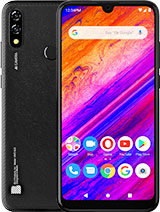
Vivo XL5
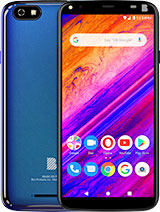
G5 Plus
Studio Mini
Studio Mega 2019
J2