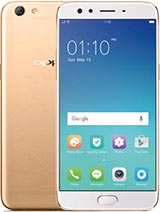
BLU Studio G2 review
The BLU Studio G2 is a relic of 2016 budget markets and has no reason to exist as a new purchase today. If you already own one and need it only for calls, texts, and FM radio in a region with poor power infrastructure, the removable battery gives it some practical mileage. Everyone else should look at even a mid-range phone from the last two years, which will outpace this on every front—speed, connectivity, display, camera, and security—for a similar or lower cost."
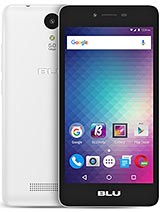
This review is written with AI assistance from BLU’s published specifications and public benchmark data for the BLU Studio G2, and the rating is spec-based. GoSolo does not physically test devices; where we estimate real-world behaviour such as battery life or charge time, we say so. How we rate phones.
Overview
The BLU Studio G2 is a 2016 budget phone that competes on price and removable battery, but the hardware—512 MB RAM, HSPA-only connectivity, and a low-resolution 480×854 display—was already underpowered for its era. For anyone still using one or shopping secondhand, it works for calls and texts; everyone else has moved on to far better options.
Design & build
At 145 g and 9.4 mm thick, the Studio G2 is genuinely compact and light, easy to slip into a pocket or hold for extended calls. The 5-inch IPS LCD screen is modest by today's measures but fits the frame without the bloat of modern flagship bezels. Dual Micro-SIM slots offer flexibility for regional users or those juggling two numbers. The removable Li-Po battery was a practical touch in 2016, and it remains one of the phone's selling points for anyone in an area where wall sockets are sparse or unreliable. Build quality details are sparse in the spec sheet, but the aluminum and plastic approach typical of the era suggests it would feel ordinary to middling in hand.
Display
The 5.0-inch IPS LCD runs at 480 x 854 pixels—a resolution that was already dated in 2016. At 196 ppi, text and images look soft and pixelated compared to even budget phones of that year with 720p or 1080p screens. Reading long messages or browsing is a squint-worthy experience, and the 66% screen-to-body ratio means thick bezels by today's standards. IPS chemistry does offer decent color and viewing angles, but the low pixel density is the real limiter here.
Performance
The Mediatek MT6580 quad-core at 1.3 GHz with Mali-400MP2 GPU is entry-level for 2016 and feels it. Worse is the 512 MB RAM, which was marginal even then. Android 6.0 Marshmallow shipped on this hardware, but with only half a gigabyte of memory, the OS itself consumes most of the available RAM, leaving almost nothing for apps. Switching between even light tasks causes slowdowns and app reloads. Anything demanding—newer social media apps, modern games, or heavy browsing—will stutter and crash. By 2017–2018 standards, this was already struggling; today it is unusable for anything beyond basic calls and texts.
Connectivity
This is the phone's biggest constraint. It has no 4G LTE bands at all, relying entirely on HSPA 3G with a theoretical max of 21.1 Mbps down and 5.76 Mbps up. In 2016, when LTE was becoming standard, shipping a phone with 3G-only was a cost-cutting move that aged terribly. Today, many carriers have shut down or degraded their 3G networks, so coverage and speed are likely poor to nonexistent depending on your region. Wi-Fi 802.11 b/g/n is present but slow by modern standards. Bluetooth 4.0 is functional but not cutting-edge. GPS, FM radio, and a headphone jack round out the feature set, but they cannot compensate for the lack of LTE.
Camera
Both front and rear cameras are 5 MP, modest even for 2016. The main camera has autofocus and an LED flash, which is standard, and it shoots 720p video. In daylight, a 5 MP camera with AF can deliver acceptable snapshots, but low light, detail, and color accuracy were never strong suits at this megapixel count. By today's standards, or even by 2018–2019 phones, this is purely functional—good enough for a quick document scan or a well-lit casual photo, nothing more. Video recording at 720p is watchable but not sharp.
Battery & charging
The 2200 mAh removable battery is the standout feature here. Capacity is small by modern standards (today's budget phones hit 5000+ mAh), but removability is rare and practical in regions with unreliable power grids. Carrying a spare battery means you can swap on the fly instead of hunting for a charger. No charging wattage is listed—the phone likely shipped with a basic microUSB charger, slow by today's 30–65 W norms. Real-world battery life from 2200 mAh would be a day or less of light use, or a few hours of heavier activity, but the ability to carry and swap a second battery changes the equation if power outlets are scarce.
Software & updates
The phone launched with Android 6.0 Marshmallow in August 2016. It is discontinued, meaning no official updates are coming. Marshmallow is now eight years old, and Android 6 lacks years of security patches and performance improvements. Running this OS in 2024 or later exposes the device to known vulnerabilities, and most modern apps either will not install or will refuse to run on it. If you own one, you are locked into a snapshot of the Android ecosystem from 2016, which is a serious liability for anything beyond offline use.
Verdict
The BLU Studio G2 is a relic of 2016 budget markets and has no reason to exist as a new purchase today. If you already own one and need it only for calls, texts, and FM radio in a region with poor power infrastructure, the removable battery gives it some practical mileage. Everyone else should look at even a mid-range phone from the last two years, which will outpace this on every front—speed, connectivity, display, camera, and security—for a similar or lower cost."
- Removable 2200 mAh battery, unusual for even budget phones in 2016 and a practical plus for users in regions with limited charging infrastructure
- Dual SIM dual standby, useful for work-and-personal separation or carrier switching in markets where that matters
- Compact 5-inch form factor and light at 145 g, manageable to hold and pocket
- FM radio and headphone jack, both present
- 512 MB RAM is crippling; even budget Android 6.0 phones struggled with this, and any modern app or update will choke
- No 4G LTE at all—only HSPA 3G with ~21 Mbps max speed, a deal-breaker for practical mobile internet in 2016 and beyond
- 480×854 resolution at 196 ppi is blurry and cramped by modern standards, making text and graphics look grainy
BLU Studio G2 Key Specifications
The essentials at a glance. See the full spec sheet.
| Released | 2016, August. Released 2016, August |
|---|---|
| Display | 5.0 inches, 68.9 cm2 (~66.0% screen-to-body ratio), IPS LCD |
| Resolution | 480 x 854 pixels, 16:9 ratio (~196 ppi density) |
| Chipset | Mediatek MT6580 (28 nm) |
| RAM & storage | 8GB 512MB RAM |
| Main camera | 5 MP, AF |
| Selfie camera | 5 MP |
| Battery | 2200 mAh |
| Software | Android 6.0 (Marshmallow) |
| Dimensions | 145 x 72 x 9.4 mm (5.71 x 2.83 x 0.37 in) |
| Weight | 145 g (5.11 oz) |
| Network | GSM / HSPA |
| NFC | No |
| USB | microUSB 2.0, OTG |
BLU Studio G2 FAQ
Common questions, answered from the spec sheet.
Does the Studio G2 support 5G?
No. The Studio G2 tops out at GSM / HSPA, without 5G.
What chipset does the Studio G2 use?
The Studio G2 runs on the Mediatek MT6580 (28 nm).
What display does the Studio G2 have?
A 5.0 inches, 68.9 cm2 (~66.0% screen-to-body ratio) IPS LCD, 480 x 854 pixels, 16:9 ratio (~196 ppi density).
How big is the Studio G2 battery?
The Studio G2 has a 2200 mAh battery.
Does the Studio G2 have NFC?
No, the Studio G2 does not list NFC support.
Does the Studio G2 support a microSD card?
Yes, the Studio G2 supports expandable storage (microSDXC).
Does the Studio G2 have a headphone jack?
Yes, the Studio G2 has a 3.5mm headphone jack.
Alternatives to consider
If the Studio G2 isn’t quite right, these are the closest calls.
Studio G HD LTE
Studio C 8+8
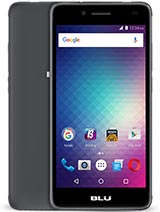
Studio C 8+8 LTE
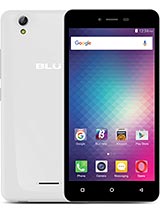
Studio M LTE
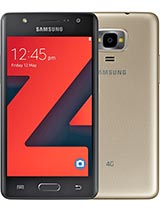
Z4