BLU Studio 7.0 review
This phone only makes sense as a nostalgic artifact or for someone with a very specific need (FM radio, removable battery, dual SIM for a specific use case in a country without modern networks). For anyone else, even a budget conscious buyer, a used phone from just three years later will do far more with far less frustration.
This review is written with AI assistance from BLU’s published specifications and public benchmark data for the BLU Studio 7.0, and the rating is spec-based. GoSolo does not physically test devices; where we estimate real-world behaviour such as battery life or charge time, we say so. How we rate phones.
Overview
This is a 2015 budget phone with a weak processor and aging Android 5.0, now a relic. The only reason to consider it is the removable battery and dual SIM—features that have nearly vanished—but even those cannot offset hardware that is fundamentally slow for its era.
Design & Build
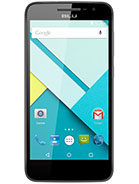
The BLU Studio 7.0 is pocket-friendly: 144 × 72.4 × 9.4 mm, 172g. For 2015, this was a sensible mid-sized phone that does not feel cheap to hold. The removable battery was standard then but has since become nearly extinct, making this an artifact of a time when repairability mattered more in the budget segment. Dual Mini-SIM support lets you run two numbers or switch carriers without a SIM tray—practical for someone moving between regions or balancing work and personal lines. The five color options (grey, white, pink, green, orange) added some personality to an otherwise plain plastic body.
Display
The 5.0-inch IPS LCD panel runs 720 × 1280 pixels at roughly 294 ppi, a resolution that was adequate in 2015 but looks grainy now. The 66% screen-to-body ratio reflects the bezel standards of that era; modern phones manage 80–90% easily. Colors are stable thanks to the IPS tech, and viewing angles remain decent, but by current expectations this display is dim and flat. No one picks this phone for the screen.
Performance
Here is where the aging becomes painfully obvious. The MediaTek MT6582 clocked at 1.3 GHz, paired with just 1GB of RAM, was never fast even in 2015—it was a budget compromise then, and it is a bottleneck now. The Mali-400MP2 GPU cannot handle modern games or video smoothly. Android 5.0 Lollipop runs, but the OS has drifted so far ahead that many apps no longer install or function. Security patches stopped long ago. Basic tasks like messaging and calls work, but lag creeps in with multiple apps open, and the 8GB of usable storage (less after system files) fills up rapidly. This phone feels slow by any measure.
Camera
The 8MP rear camera with autofocus and LED flash captures 1080p video, a respectable spec on paper. In daylight, photos are acceptable for a basic device—decent sharpness and natural color. Indoors and low-light, noise dominates and detail crumbles. HDR exists but produces flat, unconvincing results. The 2MP front-facer is barely functional even by 2015 standards. Comparison with even a modern midrange phone shows how far imaging has advanced; this camera is slow to focus and struggles with contrast.
Battery & Charging
The 3000 mAh removable battery provided real value in 2015: if the charge drained, you could swap in a spare and keep going. The spec sheet claims up to 40 hours of talk time on 2G and 24 hours on 3G, depending on actual network and usage. In practice, expect a full day of light to moderate use; heavy usage burns it faster. The removable nature meant users could buy cheap third-party batteries and replace them without opening the phone—a lifeline for a budget device. Today, when removable batteries have vanished, this is one of the phone's strongest selling points, even if 3000 mAh is considered small now.
Software & Connectivity
Android 5.0 Lollipop is nine years out of date and an outright liability. Google stopped supporting it long ago; apps that require Android 6 or newer will simply refuse to install. The security risk is significant if you use this for anything sensitive. Connectivity is limited to GSM/HSPA 3G (HSDPA bands); there is no 4G LTE, so data speeds max out at HSPA's 21 Mbps—painfully slow by current standards. Wi-Fi b/g/n provides some relief on networks, Bluetooth 4.0 connects headsets and speakers, and the inclusion of GPS and FM radio adds utility. For a phone aimed at light users in emerging markets, the lack of LTE is a critical shortcoming even in 2015, and it compounds the obsolescence now.
Value & Verdict Context
This phone is a museum piece. It was inexpensive when launched, but the hardware was already dated for its time, and the software story has only gotten worse. The removable battery and dual SIM are genuine nods to user choice, but they cannot justify buying a phone that will not receive security updates, struggle to run basic apps, and feel sluggish during routine tasks. If you need a device purely for calls and texts, and you are offline or using only legacy apps, it might scrape by. But anyone shopping today—even in a market where budgets are tight—will find newer used phones from 2017–2018 at similar or lower cost, with 4G, more RAM, and a marginally supported OS. The BLU Studio 7.0 is not worth hunting for.
Verdict
This phone only makes sense as a nostalgic artifact or for someone with a very specific need (FM radio, removable battery, dual SIM for a specific use case in a country without modern networks). For anyone else, even a budget conscious buyer, a used phone from just three years later will do far more with far less frustration.
- Removable battery, a feature that has become rare since 2015
- Dual SIM support for work/personal or regional switching
- Compact at 5.0 inches and light at 172g, comfortable to hold
- Stereo FM radio included, useful in areas without mobile data
- Stuck on Android 5.0 Lollipop, no security updates and missing modern APIs
- 1.3 GHz quad-core processor with Mali-400 GPU is underpowered even for 2015 standards
- Only 1GB RAM and 8GB storage leaves almost no room after the OS
BLU Studio 7.0 Key Specifications
The essentials at a glance. See the full spec sheet.
| Released | 2015, May. Released 2015, May |
|---|---|
| Display | 5.0 inches, 68.9 cm2 (~66.1% screen-to-body ratio), IPS LCD |
| Resolution | 720 x 1280 pixels, 16:9 ratio (~294 ppi density) |
| Chipset | Mediatek MT6582 (28 nm) |
| RAM & storage | 8GB 1GB RAM |
| Main camera | 8 MP, AF |
| Selfie camera | 2 MP |
| Battery | 3000 mAh |
| Software | Android 5.0 (Lollipop) |
| Dimensions | 144 x 72.4 x 9.4 mm (5.67 x 2.85 x 0.37 in) |
| Weight | 172 g (6.07 oz) |
| Network | GSM / HSPA |
| NFC | No |
| USB | microUSB 2.0 |
BLU Studio 7.0 FAQ
Common questions, answered from the spec sheet.
Does the Studio 7.0 support 5G?
No. The Studio 7.0 tops out at GSM / HSPA, without 5G.
What chipset does the Studio 7.0 use?
The Studio 7.0 runs on the Mediatek MT6582 (28 nm).
What display does the Studio 7.0 have?
A 5.0 inches, 68.9 cm2 (~66.1% screen-to-body ratio) IPS LCD, 720 x 1280 pixels, 16:9 ratio (~294 ppi density).
How big is the Studio 7.0 battery?
The Studio 7.0 has a 3000 mAh battery.
Does the Studio 7.0 have NFC?
No, the Studio 7.0 does not list NFC support.
Does the Studio 7.0 support a microSD card?
Yes, the Studio 7.0 supports expandable storage (microSDXC).