BLU Samba review
This is a museum piece. If you want indestructible calling simplicity, look at modern dumb phones; if you want a retro conversation starter, the Samba is lightweight and colorful, but do not expect it to work reliably on today's networks or feel responsive in any way."
This review is written with AI assistance from BLU’s published specifications and public benchmark data for the BLU Samba, and the rating is spec-based. GoSolo does not physically test devices; where we estimate real-world behaviour such as battery life or charge time, we say so. How we rate phones.
Overview
The BLU Samba is a 2010 feature phone that belongs in a museum, not in anyone's pocket today—even as a retro novelty, its 1.8-inch TFT screen and 16MB storage make it painfully limited. If you want a durable brick that calls and texts, there are modern alternatives that do the same job without feeling like a relic.
Design & build
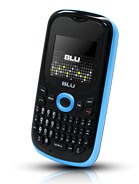
At 96 grams and 14mm thick, the Samba is pocket-sized by modern standards, though its dimensions feel narrow and cramped compared to how we hold phones now. The removable battery was a genuine practical feature in 2010—you could carry a spare and swap it in seconds—but that entire logic has been obsolete for years. Dual SIM in a device this cheap was noteworthy in 2010; today it is expected everywhere. Build materials are unstated in the spec sheet, but the device was made to survive drops better than modern glass slabs simply because there was nothing expensive to break.
Display
A 1.8-inch TFT screen with 160x128 pixels is the kind of display you squint at. For context, a modern entry-level phone's screen is roughly four times larger. Reading text, navigating menus, or viewing anything beyond simple icons is an exercise in frustration. The 65K color palette was adequate for 2010 but feels more like a novelty now—monochrome would honestly be clearer at this resolution.
Performance & software
There is no meaningful performance to discuss; this is a feature phone running a proprietary OS designed solely for calls, texts, and basic games. GSM connectivity only means 2G networks, which are being switched off globally. The 16MB of storage is a joke: after the OS and preloaded apps, you have room for a handful of contacts and maybe one or two MP3 files. The microSD slot is a lifeline, but only for music; it does not help with the core software limitation.
Camera
The CIF sensor captures 0.1 megapixel images, which in practical terms means blocky, featureless thumbnails. There is no front-facing camera and no video recording. If you need to take a photo, a 2010 basic camera phone was already a compromise; by 2024 standards, it is a non-feature.
Battery & connectivity
A removable 750mAh Li-Ion battery delivers around 6 hours of talk time and 450 hours of standby, numbers that reflected decent battery life for a 2010 phone. Bluetooth 1.2 is ancient; proprietary USB charging means you cannot use a standard cable. FM radio without internet is a real value-add for regions with patchy data coverage, but the GSM-only connectivity is a fatal limitation as 2G networks shut down globally.
Value & verdict
At roughly 30 EUR new, the Samba was an affordable entry point to mobile phones in 2010. As a device today, it is a discontinued product with no software updates, no 3G/4G/5G support, and no future beyond novelty collecting. Modern budget phones offer 100 times the screen real estate, cameras that actually work, and standards-based connectivity for not much more money. The Samba has charm as a relic, but zero practical reason to buy it if you actually need to make calls and send messages in 2024.
Who it is for
The Samba interests only collectors, tech historians, and people nostalgic for the simplicity of the pre-smartphone era. If you actually want a no-nonsense calling device, even a used basic phone from the last five years outperforms this in every measurable way.
Verdict
This is a museum piece. If you want indestructible calling simplicity, look at modern dumb phones; if you want a retro conversation starter, the Samba is lightweight and colorful, but do not expect it to work reliably on today's networks or feel responsive in any way."
- Featherweight at 96g and truly pocketable
- Removable battery, a practical feature that modern phones abandoned
- Dual SIM support and FM radio for global and offline audio reach
- Built to last with no glass to shatter
- 160x128 pixel screen is impossibly small and dim by any standard
- 16MB storage leaves almost no room after the OS; a microSD slot helps but does not fix the core limitation
- CIF camera sensor captures only blurry, featureless images
BLU Samba Key Specifications
The essentials at a glance. See the full spec sheet.
| Released | 2010, June. Released 2010, June |
|---|---|
| Display | 1.8 inches, TFT, 65K colors |
| Resolution | 160 x 128 pixels |
| RAM & storage | 16MB |
| Main camera | CIF |
| Selfie camera | No |
| Battery | 750 mAh |
| Software | Android |
| Dimensions | 111 x 56 x 14 mm (4.37 x 2.20 x 0.55 in) |
| Weight | 96 g (3.39 oz) |
| Network | GSM |
| USB | Proprietary |
BLU Samba FAQ
Common questions, answered from the spec sheet.
Does the Samba support 5G?
No. The Samba tops out at GSM, without 5G.
What display does the Samba have?
A 1.8 inches TFT, 65K colors, 160 x 128 pixels.
How big is the Samba battery?
The Samba has a 750 mAh battery.
Does the Samba support a microSD card?
Yes, the Samba supports expandable storage (microSD (dedicated slot)).