BLU Life Pure review
This phone has no modern use case. A 2013 mid-ranger without LTE, with minimal RAM and storage, is a museum piece. Anyone researching the Life Pure is either a retro tech enthusiast or stumbled into a listing by accident—move on to anything younger.
This review is written with AI assistance from BLU’s published specifications and public benchmark data for the BLU Life Pure, and the rating is spec-based. GoSolo does not physically test devices; where we estimate real-world behaviour such as battery life or charge time, we say so. How we rate phones.
Overview
The BLU Life Pure is a 2013 mid-range Android phone that was already outdated by launch—it paired a 5-inch 1080p IPS display with HSPA-only connectivity and a year-old Mediatek chipset in an era when LTE flagships were standard. It has no place in a modern buyer's consideration and should only appear in a retro tech collection.
Design & build
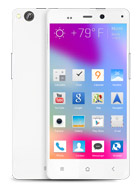
At 128g and 7.7mm thick, the Life Pure was slim for its time and pleasant in the hand. The compact 5-inch body made it genuinely pocketable in an era when phones were creeping larger. The phone feels light and unobtrusive—one of the few things BLU got right here. Build quality materials are not specified, but typical of the budget segment of that year, it likely felt plastic-heavy. The micro-SIM slot and microUSB 2.0 port were standard in 2013, though USB 2.0 data speeds were already outdated.
Display
The 5-inch IPS LCD with 1080x1920 resolution delivers 441 pixels per inch, which was respectable in late 2013. IPS panels offered decent viewing angles and color representation compared to cheaper TN panels at the time. The 69.9% screen-to-body ratio reflects the bezels typical of that generation. For the year, this was a genuine strength—a 1080p display at this size and price was not universal. In 2013 context, it competes with what you'd find on phones costing 50% more.
Performance
The Mediatek MT6589T quad-core processor at 1.5 GHz was already middle-of-the-road by December 2013. Qualcomm Snapdragon 600 and 800 chips had been out for months, and even MediaTek's own newer designs offered better performance. The PowerVR SGX544MP2 GPU was aging. Paired with only 2GB of RAM, the Life Pure would handle light Android tasks and basic apps, but gaming, multitasking, and heavy social media use would feel sluggish. No LTE is the real handicap: HSPA maxes out at 42.2 Mbps, while LTE networks of the time routinely delivered 20–50 Mbps sustained and were becoming expected at this price.
Software
Android 4.2 Jelly Bean was current at launch but dated quickly. Unlike modern Android, Jelly Bean offered fewer system optimizations and security patches. A 2013 budget phone shipping on this OS would receive, at best, a point update or two before dropping out of support entirely. BLU's own update track record was spotty even in 2013. The inclusion of air gestures and motion controls sounds gimmicky on paper and was typical of budget brands trying to add perceived value; in practice, these features rarely worked reliably or proved useful.
Camera
The 13MP main camera with autofocus, LED flash, panorama, and 1080p video was reasonable for a mid-range 2013 phone. Autofocus at this tier was competitive. Image quality would be decent in daylight and the panorama mode added a small edge for creative shots. The 5MP front camera was adequate for video calls. However, low-light performance would be poor—a small sensor and no optical image stabilization meant handheld night shots would be noisy and blurry. By comparison, even budget flagships with smaller sensors but better software processing outshined the Life Pure in real-world use.
Battery & charging
A 2020 mAh battery was already tight for a 5-inch smartphone in 2013, even with the modest processor. Spec claims of 24 hours of talk time on 2G and 12 hours on 3G hint at mixed real-world battery life of 12 to 15 hours under moderate use. Modern standby claims of up to 750 hours on 2G are academic; nobody was buying a smartphone to camp on 2G. No fast charging is mentioned, and microUSB 2.0 charging was glacially slow by today's standards—expect 2–3 hours to full from dead. Battery life was a daily compromise.
Value & verdict-context
At 240 EUR in late 2013, the Life Pure sat in a crowded middle ground. It undercut true flagship pricing but carried compromises that cheaper rivals (Motorola Moto G, Nokia Lumia 520, Samsung Galaxy Core) avoided or handled better. No LTE support was a fatal flaw for a phone at this price and year; it meant connectivity would frustrate within months as networks evolved. The 32GB fixed storage with no expansion was miserly. The 2GB RAM meant multitasking and app storage were perennial bottlenecks. Today, in 2024 or later, the Life Pure is a discontinued curiosity. It was not a standout value even in its own time, and it has aged into total irrelevance as a practical device.
Verdict
This phone has no modern use case. A 2013 mid-ranger without LTE, with minimal RAM and storage, is a museum piece. Anyone researching the Life Pure is either a retro tech enthusiast or stumbled into a listing by accident—move on to anything younger.
- Solid 5-inch 1080p IPS display with good pixel density (441 ppi) and decent color accuracy for the era.
- Slim at 7.7mm and light at 128g, making it comfortable to hold and carry compared to many phones of that time.
- Respectable 13MP main camera with autofocus, LED flash, panorama, and HDR for 2013 standards.
- No LTE support in 2013 when LTE was becoming standard; stuck on HSPA (42.2 Mbps down) makes it painfully slow for data.
- Only 2GB RAM and 32GB fixed storage with no microSD slot; even by 2013 standards, this was tight for a phone at this price point.
- 2020 mAh battery is small and likely yields 12 hours or less of mixed use; talk time on 3G was rated at only 12 hours.
BLU Life Pure Key Specifications
The essentials at a glance. See the full spec sheet.
| Released | 2013, December. Released 2013, December |
|---|---|
| Display | 5.0 inches, 68.9 cm2 (~69.9% screen-to-body ratio), IPS LCD |
| Resolution | 1080 x 1920 pixels, 16:9 ratio (~441 ppi density) |
| Chipset | Mediatek MT6589T (28 nm) |
| RAM & storage | 32GB 2GB RAM |
| Main camera | 13 MP, AF |
| Selfie camera | 5 MP |
| Battery | 2020 mAh |
| Software | Android 4.2 (Jelly Bean) |
| Dimensions | 142 x 69.4 x 7.7 mm (5.59 x 2.73 x 0.30 in) |
| Weight | 128 g (4.52 oz) |
| Network | GSM / HSPA |
| NFC | No |
| USB | microUSB 2.0 |
BLU Life Pure FAQ
Common questions, answered from the spec sheet.
Does the Life Pure support 5G?
No. The Life Pure tops out at GSM / HSPA, without 5G.
What chipset does the Life Pure use?
The Life Pure runs on the Mediatek MT6589T (28 nm).
What display does the Life Pure have?
A 5.0 inches, 68.9 cm2 (~69.9% screen-to-body ratio) IPS LCD, 1080 x 1920 pixels, 16:9 ratio (~441 ppi density).
How big is the Life Pure battery?
The Life Pure has a 2020 mAh battery.
Does the Life Pure have NFC?
No, the Life Pure does not list NFC support.
Does the Life Pure support a microSD card?
No, the Life Pure does not support expandable storage.