BLU Life One review
The BLU Life One was a defensible budget choice in early 2013, offering practical features (dual SIM, microSD, 13MP camera, reasonable screen) at a mid-tier price. Today it is completely obsolete—its 1 GB RAM, HSPA connectivity, 2000 mAh battery, and ancient Android version make it unusable on any modern network or app ecosystem. Do not pursue this device unless you are hunting nostalgia or writing a history of budget Android.
This review is written with AI assistance from BLU’s published specifications and public benchmark data for the BLU Life One, and the rating is spec-based. GoSolo does not physically test devices; where we estimate real-world behaviour such as battery life or charge time, we say so. How we rate phones.
Overview
The BLU Life One is a 2013 budget Android phone that offered decent value then—a 5-inch 720p screen, 13MP camera, and expandable storage at €230—but it is now a decade-old curiosity with aged hardware, a tiny battery, and HSPA speeds that feel museum-piece slow. It has no modern reason to exist except as a period piece.
Design & Build
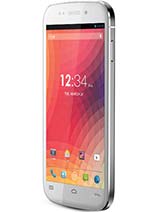
At 145 grams and 8.9mm thick, the Life One sits squarely in the mainstream mid-2010s form factor. The 5-inch screen on a body with 65.6% screen-to-body ratio reflects the era when bezels were not yet shameful; by today it looks blocky and dated, but for 2013 it was competent. Gorilla Glass 2 was protective enough then, though it was already being superseded by Glass 3 in flagship devices. The phone feels dense and plasticky in hand—no premium materials here—but solid enough that it would survive pocket drops. It is heavier and thicker than modern flagships, though lighter than many rivals of the time.
Display
The 5.0-inch IPS LCD with 720 x 1280 resolution yields 294 ppi, which was acceptable sharpness in 2013 without reaching retina-clarity. The LED backlight and wide viewing angles of IPS were genuine strengths then, sparing you the color shift of cheaper TN panels. Brightness and contrast were decent for outdoor use in its era. By modern standards the pixel density is plainly soft—a current budget phone's 1080p density makes this look grainy—and the bezels eat into actual usable space. For its time and price, though, this was a competent panel.
Performance
A quad-core Cortex-A7 clocked at 1.2 GHz paired with only 1 GB of RAM was the crux of the problem then and remains so now. The Mediatek MT6589 was a capable enough chip for light tasks and gaming at low settings, but 1 GB RAM meant the OS and apps fought constantly for memory. Multitasking was brutal—switch between two apps and you might watch one reload. By 2013 standards this was a budget-level pairing; flagships and mid-range rivals had moved to 2 GB. The PowerVR SGX544 GPU was adequate for casual gaming but nothing more. This device was never fast; it was functional and slow.
Software
Android 4.2 Jelly Bean was current and reasonably polished at launch. BLU's software skin was light—the company was not known for heavy customization—so you got close to stock Google experience. By 2013 standards this was modern and functional, with Google Now, Play Store integration, and Bluetooth 4.0 support. The larger 5-inch screen made the interface more readable than compact phones, and the on-screen buttons left space for content. No one was asking for material design yet; Jelly Bean's Holo design felt contemporary. The tragedy is update support: BLU had virtually none, so your phone was obsolete the moment a newer Android shipped.
Camera
The 13MP rear sensor with autofocus and LED flash was a legitimate selling point for a budget phone in 2013. It captured decent daytime detail and the autofocus helped with twitchy hands. HDR mode gave a fighting chance in contrasty scenes. 1080p video at 30fps was standard for the class and sufficient for family moments. The 5MP selfie was adequate for video calls but weak for front-facing photos. In real use, the sensor struggled indoors and in low light—a limitation of the optics and the year—but outdoors on a bright day it delivered acceptable snapshots. For a phone at this price tier, it was competitive.
Battery & Charging
The 2000 mAh battery was the Life One's Achilles heel. Even in 2013, when 2000-2500 mAh was common for 5-inch phones, this capacity was on the lean side. With the 1.2 GHz quad-core and IPS screen, the phone would eke out a full day if you were gentle—mostly standby, light web use, email. Any meaningful use (gaming, video, heavy browsing) would kill it by evening. The spec sheet claims up to 25 hours of 2G talk time, which is optimistic; real-world endurance was closer to 12-15 hours of mixed use. The non-removable battery meant once capacity degraded after a year or so, you were stuck. Charging speed figures are absent from the spec sheet, but microUSB 2.0 was slow by default—count on 2-3 hours for a full charge.
Value & Verdict Context
At €230 in 2013, the BLU Life One was pitched as affordable decency: a 5-inch screen, decent camera, expandable storage, and dual SIM for global travelers, all without flagship pricing. For its moment, it was a sensible middle ground—cheaper than Samsung Galaxy S3 tier, better built than rock-bottom no-names. The lack of LTE was a significant omission even then, as 4G networks were rolling out; this meant connectivity would age poorly. Today, the phone is a historical artifact. Its internals are hopelessly underpowered; modern apps and Android versions will not run. The battery is almost certainly dead after a decade. No one should buy this phone new in 2024 or beyond. If you find it in a drawer, it is a relic of when budget phones were still a meaningful category between carrier-locked free phones and real flagships. It belongs in a museum, not in a pocket.
Verdict
The BLU Life One was a defensible budget choice in early 2013, offering practical features (dual SIM, microSD, 13MP camera, reasonable screen) at a mid-tier price. Today it is completely obsolete—its 1 GB RAM, HSPA connectivity, 2000 mAh battery, and ancient Android version make it unusable on any modern network or app ecosystem. Do not pursue this device unless you are hunting nostalgia or writing a history of budget Android.
- 5.0-inch display with 720p resolution and IPS panel was reasonable clarity for 2013, and the bezel-heavy design kept the footprint compact
- Dedicated microSD slot and 16GB base storage gave real practical flexibility when cloud was not default
- 13MP rear camera with autofocus and 1080p video capture represented solid specifications for its era and price point
- 2000 mAh battery was already tight by 2013 standards and would not last a full day of real use
- 1 GB of RAM with a mid-range Mediatek chipset left no breathing room for multitasking even then
- No 4G LTE support meant HSPA-only connectivity—a serious gap even in 2013 when LTE was rolling out globally
BLU Life One Key Specifications
The essentials at a glance. See the full spec sheet.
| Released | 2013, March. Released 2013, April |
|---|---|
| Display | 5.0 inches, 68.9 cm2 (~65.6% screen-to-body ratio), LED-backlit IPS LCD |
| Resolution | 720 x 1280 pixels, 16:9 ratio (~294 ppi density) |
| Chipset | Mediatek MT6589 (28 nm) |
| RAM & storage | 16GB 1GB RAM |
| Main camera | 13 MP, AF |
| Selfie camera | 5 MP |
| Battery | 2000 mAh |
| Software | Android 4.2 (Jelly Bean) |
| Dimensions | 144 x 73 x 8.9 mm (5.67 x 2.87 x 0.35 in) |
| Weight | 145 g (5.11 oz) |
| Network | GSM / HSPA |
| NFC | No |
| USB | microUSB 2.0 |
BLU Life One FAQ
Common questions, answered from the spec sheet.
Does the Life One support 5G?
No. The Life One tops out at GSM / HSPA, without 5G.
What chipset does the Life One use?
The Life One runs on the Mediatek MT6589 (28 nm).
What display does the Life One have?
A 5.0 inches, 68.9 cm2 (~65.6% screen-to-body ratio) LED-backlit IPS LCD, 720 x 1280 pixels, 16:9 ratio (~294 ppi density).
How big is the Life One battery?
The Life One has a 2000 mAh battery.
Does the Life One have NFC?
No, the Life One does not list NFC support.
Does the Life One support a microSD card?
Yes, the Life One supports expandable storage (microSDHC (dedicated slot)).