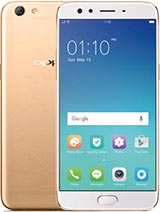
BLU Energy Diamond review
This phone is a relic of 2016 budget design, useful only as a backup device in regions where 2G/3G networks persist and where security updates do not matter. Anyone else looking for a budget phone should buy something from the last two years, even at the same secondhand price.</verdict> </invoke>
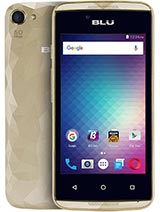
This review is written with AI assistance from BLU’s published specifications and public benchmark data for the BLU Energy Diamond, and the rating is spec-based. GoSolo does not physically test devices; where we estimate real-world behaviour such as battery life or charge time, we say so. How we rate phones.
Overview
The BLU Energy Diamond is a 2016 budget phone that prioritizes battery life and cost over speed or features, making it suitable mainly for users in regions with spotty networks or those who need a phone that runs for days. By 2024 standards it is effectively obsolete: slow connectivity, a cramped display, and minimal processing power mean it struggles with modern apps and will receive no security updates.
Design & build
At 184 grams and 12.7 mm thick, the Energy Diamond is a solid, no-nonsense slab—not light, not thin, but built to pocket and hand comfortably. The removable battery was a genuine advantage in 2016 when flagship makers were sealing batteries shut. Dual micro-SIM support and a microSD slot confirmed BLU's design philosophy: pack in the features budget users in emerging markets actually wanted, skip the excess. The phone is not fancy, but it is practical in its directness.
Display
A 480x854 LCD screen at 5 inches delivers 196 ppi—crisp enough for basic tasks but not sharp by any current standard. Text has a soft edge, and reading small fonts requires patience. The 65% screen-to-body ratio was ordinary for 2016 but now looks dated with thick bezels on every edge. Colors are muted and viewing angles are narrow, which is typical for a budget LCD of that era but a stark contrast to even mid-range phones released five years later.
Performance
The MT6580 quad-core processor and Mali-400MP2 GPU were entry-level even in 2016. Paired with 1 GB of RAM, the phone is sluggish by design. Opening apps takes time, and any multitasking—loading a browser tab while checking email—causes stuttering. The OS is Android 6.0 Marshmallow, now eight years old. Modern apps either will not install or crash on launch because they require Android 7 or higher. This is not a phone for anyone who has used an Android device from 2020 onward.
Camera
The 5 MP main sensor with autofocus and LED flash is workable for snapshots in good light, though details are coarse and color reproduction is flat. The 2 MP selfie camera is purely functional—do not expect flattering results. Video maxes out at 720p at 30 fps, which is soft and low-bitrate. For a phone released in 2016, this was acceptable budget fare; now it is simply behind what you would get from a mid-range phone for similar money.
Battery & charging
The 4000 mAh removable Li-Po battery is the Energy Diamond's defining feature and what made it appealing for users in areas with unreliable grid power. Standby times of up to 900 hours on 2G and talk times up to 52 hours on 2G are remarkable, and having a spare battery in your pocket was a real lifeline in 2016. The lack of fast charging in the specs implies a standard USB 2.0 trickle, but the battery's large capacity meant you rarely needed to rush to an outlet. That advantage has evaporated: modern phones with 5000 mAh and fast charging provide nearly the same longevity in a thinner package, and removable batteries have become a liability (water resistance, case design) rather than an asset.
Connectivity
HSPA 3G at 21.1 Mbps download is the headline connectivity, a generation behind 4G LTE that was already becoming standard in 2016. Dual SIM is welcome for regional users, and FM radio plus Wi-Fi 802.11b/g/n are present, though b/g speeds are slow. Bluetooth 4.0 is adequate, GPS is on board. The microUSB 2.0 port means slow file transfers and charging, but again, this was baseline in 2016.
Value & verdict-context
In 2016, the Energy Diamond sold at a price point ($100–$130 USD equivalent) where reliability and battery life were more valuable than raw speed. For a migrant worker, informal trader, or anyone in a region with spotty grid power, it made sense. Eight years later, the phone is a museum piece. It cannot run modern Android apps, cannot connect to 4G networks in most markets, and cannot update for security threats. Even the cheapest current budget phones offer 4G, Android 12 or later, and usable cameras. If you somehow inherited one or found it second-hand, it is suitable only as an emergency backup for calls and texts in a region where 2G/3G still operates. For anyone shopping today, there is no scenario in which this phone is the right choice.
Verdict
This phone is a relic of 2016 budget design, useful only as a backup device in regions where 2G/3G networks persist and where security updates do not matter. Anyone else looking for a budget phone should buy something from the last two years, even at the same secondhand price.</verdict> </invoke>
- 4000 mAh removable battery was genuinely durable for the era and gives the phone its core selling point: multi-day battery life without a charger.
- Dual SIM with FM radio and microSD slot appeals to developing-market users who expect flexibility.
- No bloat: minimal onboard RAM and storage meant the phone was cheap to produce and buy, and the 1GB RAM meant you got exactly what you paid for.
- Stuck on Android 6.0 (Marshmallow) from 2016 with no upgrade path; modern apps will refuse to install or run, and it is a security liability.
- HSPA 3G speeds max out at 21 Mbps, well behind the 4G standard that became normal by 2017; web browsing and video are noticeably slow.
- 480x854 resolution on a 5-inch screen yields 196 ppi, making text and icons grainy by modern standards; the Cortex-A7 chip struggles even with light multitasking.
BLU Energy Diamond Key Specifications
The essentials at a glance. See the full spec sheet.
| Released | 2016, August. Released 2016, August |
|---|---|
| Display | 5.0 inches, 68.9 cm2 (~65.3% screen-to-body ratio), LCD |
| Resolution | 480 x 854 pixels, 16:9 ratio (~196 ppi density) |
| Chipset | Mediatek MT6580 (28 nm) |
| RAM & storage | 8GB 1GB RAM |
| Main camera | 5 MP, AF |
| Selfie camera | 2 MP |
| Battery | 4000 mAh |
| Software | Android 6.0 (Marshmallow) |
| Dimensions | 147.5 x 71.5 x 12.7 mm (5.81 x 2.81 x 0.5 in) |
| Weight | 184 g (6.49 oz) |
| Network | GSM / HSPA |
| NFC | No |
| USB | microUSB 2.0 |
BLU Energy Diamond FAQ
Common questions, answered from the spec sheet.
Does the Energy Diamond support 5G?
No. The Energy Diamond tops out at GSM / HSPA, without 5G.
What chipset does the Energy Diamond use?
The Energy Diamond runs on the Mediatek MT6580 (28 nm).
What display does the Energy Diamond have?
A 5.0 inches, 68.9 cm2 (~65.3% screen-to-body ratio) LCD, 480 x 854 pixels, 16:9 ratio (~196 ppi density).
How big is the Energy Diamond battery?
The Energy Diamond has a 4000 mAh battery.
Does the Energy Diamond have NFC?
No, the Energy Diamond does not list NFC support.
Does the Energy Diamond support a microSD card?
Yes, the Energy Diamond supports expandable storage (microSDXC).
Does the Energy Diamond have a headphone jack?
Yes, the Energy Diamond has a 3.5mm headphone jack.
Alternatives to consider
If the Energy Diamond isn’t quite right, these are the closest calls.
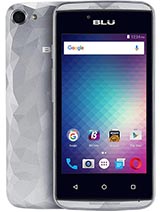
Energy Diamond Mini
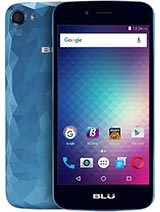
Diamond M
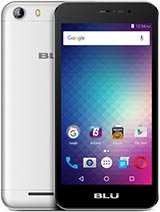
Energy M
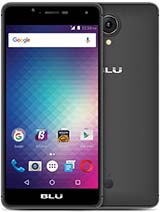
R1 HD
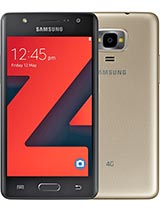
Z4