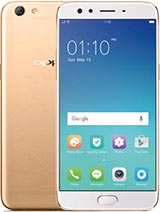
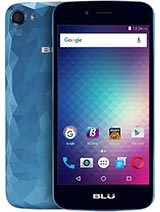
BLU Diamond M review
This phone is only suitable for someone in an extremely low-coverage area who needs a voice-only device with a long standby time and has no access to faster alternatives—and even then, an older 3G-only phone with more RAM would be preferable. Anyone else should look at used mid-range phones from 2018 onwards, which cost little more and run circles around the Diamond M in practice.
This review is written with AI assistance from BLU’s published specifications and public benchmark data for the BLU Diamond M, and the rating is spec-based. GoSolo does not physically test devices; where we estimate real-world behaviour such as battery life or charge time, we say so. How we rate phones.
Overview
The BLU Diamond M is a bare-minimum budget phone from 2016 that struggles even by its own era's standards—Android 6.0 on a 1.3 GHz quad-core, 196 ppi screen, and a 5MP camera that would have been mediocre a decade earlier. Only the microSDXC slot and removable battery offer any practical advantage today, but the processor and RAM are simply too weak for any real-world use.
Design & build
At 162 grams and 12 mm thick, the Diamond M is compact and pocket-friendly, striking a balance between old-school sturdiness and minimal heft. The dual micro-SIM slot means it can juggle two networks simultaneously, an asset for travellers or those bridging multiple regions. The presence of a 3.5mm headphone jack and FM radio are relics that still matter in markets where Bluetooth accessories are expensive and radio is a primary news source. However, the lack of any detail on build materials suggests a basic plastic chassis with no durability claims; for this price in 2016, that was expected but does not inspire confidence in longevity.
Display
The 5-inch 480x854 LCD screen outputs 196 ppi, which is low even for 2016. Viewing text and icons requires closer attention, and the pixel density is noticeably grainy compared to anything above 250 ppi. The 68.7% screen-to-body ratio is ordinary for its time, but the resolution trades sharpness for compatibility with the weak chipset. This is not a phone for reading ebooks or fine photography; it is a tool for calls, texts, and very basic apps.
Performance
The MediaTek MT6580 running at 1.3 GHz with a quad-core Cortex-A7 and Mali-400MP2 GPU was already a compromise processor in 2016. Paired with only 512 MB of RAM, this combination will choke under almost any real-world task: opening Gmail takes seconds, switching between apps causes reloads, and anything from the Play Store that relies on modern libraries will crash or hang. Multitasking is not an option. For comparison, budget flagships from 2016 offered 2 GB of RAM and faster processors; this phone sits below that tier and feels it immediately.
Software
Android 6.0 (Marshmallow) in 2016 was already two major versions behind the current release. An update to Android 7 or higher seems unlikely given the processor and RAM constraints, meaning the phone will rapidly lose compatibility with new apps and security patches. The OS is bloat-free out of necessity—there is no room for anything else—but a phone that cannot receive updates is a liability in a world where malware and exploits accumulate quickly.
Camera
A 5 MP main camera was underwhelming even in 2016, and output reflects it: expect soft, low-detail shots with weak colour reproduction, especially indoors or in dim light. The LED flash offers some help but cannot compensate for the sensor's limitations. The 2 MP front camera is purely functional for video calls on sluggish connections. 720p video at 30 fps is the bare minimum; there is no electronic stabilisation, so handheld footage is noticeably shaky.
Battery & charging
The 2200 mAh removable battery is the phone's only real lifeline. Specs claim up to 26 hours of talk time on 2G, but real-world usage on 3G—if available—will drop that to a single day at best, especially if the weak processor is tasked with any internet. The ability to swap batteries is valuable in regions where charging infrastructure is unreliable, and the removable design outlives many modern phones in practical terms. Charging speed is not listed, but given the small capacity and microUSB 2.0, expect 1 to 2 hours for a full charge.
Value & verdict
By 2016, this phone was positioned as a disposable entry-level device for basic 2G calling and SMS in emerging markets. Eight years later, it is obsolete. The 512 MB RAM and 1.3 GHz processor cannot handle a modern Android app ecosystem; even budget phones from 2020 onwards offer triple the performance. If you are shopping for a used phone at rock-bottom prices, this is a cautionary example: the removable battery and microSD slot are genuine conveniences, but they do not excuse the fundamental underpowered hardware. A used phone from 2018 or 2019 with 2 GB of RAM and a faster quad-core will feel like a computer in comparison and will actually receive security updates.
Verdict
This phone is only suitable for someone in an extremely low-coverage area who needs a voice-only device with a long standby time and has no access to faster alternatives—and even then, an older 3G-only phone with more RAM would be preferable. Anyone else should look at used mid-range phones from 2018 onwards, which cost little more and run circles around the Diamond M in practice.
- Removable 2200 mAh battery and microSDXC expansion, allowing users to bypass storage and power constraints without buying a new device
- Dual SIM support with micro-slots makes it suitable for use across multiple networks or regions
- Compact at 162g and 12mm thick, fitting easily into a pocket
- 3.5mm headphone jack and FM radio still present, which some users in emerging markets still value
- Processor and RAM are severely underpowered: a 1.3 GHz Cortex-A7 with 512 MB RAM will struggle to open email or handle basic apps even by 2016 standards
- 480x854 resolution at 196 ppi is noticeably grainy and strains the eyes on a 5-inch screen
- No 4G or 5G; HSPA 3G maxes out at 21 Mbps, making web browsing and video streaming painfully slow in 2016 or later
BLU Diamond M Key Specifications
The essentials at a glance. See the full spec sheet.
| Released | 2016, August. Released 2016, August |
|---|---|
| Display | 5.0 inches, 68.9 cm2 (~66.7% screen-to-body ratio), LCD |
| Resolution | 480 x 854 pixels, 16:9 ratio (~196 ppi density) |
| Chipset | Mediatek MT6580 (28 nm) |
| RAM & storage | 4GB 512MB RAM |
| Main camera | 5 MP |
| Selfie camera | 2 MP |
| Battery | 2200 mAh |
| Software | Android 6.0 (Marshmallow) |
| Dimensions | 144.5 x 71.5 x 12 mm (5.69 x 2.81 x 0.47 in) |
| Weight | 162 g (5.71 oz) |
| Network | GSM / HSPA |
| NFC | No |
| USB | microUSB 2.0 |
BLU Diamond M FAQ
Common questions, answered from the spec sheet.
Does the Diamond M support 5G?
No. The Diamond M tops out at GSM / HSPA, without 5G.
What chipset does the Diamond M use?
The Diamond M runs on the Mediatek MT6580 (28 nm).
What display does the Diamond M have?
A 5.0 inches, 68.9 cm2 (~66.7% screen-to-body ratio) LCD, 480 x 854 pixels, 16:9 ratio (~196 ppi density).
How big is the Diamond M battery?
The Diamond M has a 2200 mAh battery.
Does the Diamond M have NFC?
No, the Diamond M does not list NFC support.
Does the Diamond M support a microSD card?
Yes, the Diamond M supports expandable storage (microSDXC).
Does the Diamond M have a headphone jack?
Yes, the Diamond M has a 3.5mm headphone jack.
Alternatives to consider
If the Diamond M isn’t quite right, these are the closest calls.
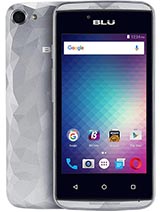
Energy Diamond Mini
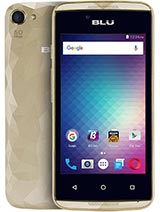
Energy Diamond
R1 HD
Studio G HD LTE
Z4