BLU Dash review
The BLU Dash was a phone for people in 2012 who needed minimal functionality at minimal cost. Even then, it felt underbaked: the RAM and storage were too tight, the screen too small, and the OS too old. It is now a relic; anyone who kept one probably ditched it within a year.
This review is written with AI assistance from BLU’s published specifications and public benchmark data for the BLU Dash, and the rating is spec-based. GoSolo does not physically test devices; where we estimate real-world behaviour such as battery life or charge time, we say so. How we rate phones.
Overview
The BLU Dash is a 2012 budget entry-level phone that was obsolete before it shipped. Even for its era and €70 price, it cuts corners that mattered: 256MB RAM and 512MB storage choke basic tasks, the 2.8-inch 240×320 display is cramped and dim, and Android 2.3 from 2010 meant no access to modern apps or security updates—not a phone to keep long.
Design & Build
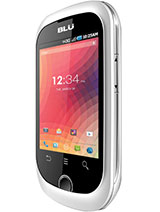
At 96g and 12mm thin, the Dash is pocketable and light, which was worth mentioning in 2012. The plastic body and 42% screen-to-body ratio show it is a budget device through and through. Dual Mini-SIM slots and a removable battery were genuine selling points at the time, letting users swap carriers or extend battery life without tools. By today's standards this feels like ancient history, but in 2012 it meant flexibility. The device does not pretend to be anything more than a basic phone, and the no-nonsense industrial design makes sense for the price tier.
Display
A 2.8-inch TFT screen at 240×320 pixels (143 ppi) is cramped and low-contrast by any era. Even in 2012, when 3.5 inches and 480×800 were creeping into entry-level phones, this screen was a compromise too far. The 4:3 ratio and 256K color depth meant poor viewing angles, dull colors, and text that felt small and hard to read. Scrolling web pages or reading mail was a chore. For a phone launched at €70, this was where BLU cut deepest.
Performance
A 650 MHz Cortex-A9 with 256MB RAM and 512MB storage is underpowered even for 2012 entry-level standards. Android 2.3 (Gingerbread) itself was already two years old at launch and known to struggle with multitasking and basic responsiveness. Opening the browser or switching apps was noticeably slow. The MediaTek chipset was reliable but lacked headroom; real-world use meant frequent pauses while the system caught up. For someone who wanted to do more than make calls and send SMS, this phone would frustrate within weeks.
Software
Android 2.3 was Google's software from late 2010, and running it in early 2012 on a budget phone guaranteed it would be outdated and unsupported from day one. No app updates came via Google Play; the phone shipped with what it had. Within a year, most developers had dropped Gingerbread support, and the security vulnerabilities piled up. BLU did not advertise an upgrade path, and the hardware could not handle Android 4.0. The Swype keyboard was a nice touch for the era, but it could not compensate for an OS that was already heading for the landfill.
Camera
A 2MP rear camera was entry-level even in 2012, and the results showed: soft detail, color shifts in poor light, and a general lack of punch. The front camera is listed but specs are sparse, suggesting it was a bare-bones VGA afterthought. There was video recording, but at 2MP and on a 650 MHz processor, the bitrate was low and the framerate uneven. This was not a phone you kept photos on; it was a camera for emergencies only.
Battery & Charging
The 1110 mAh battery was small by 2012 standards. Claimed standby was up to 800 hours on 2G (useful if you rarely used the phone) but talk time was only 20 hours on 2G, 10 on 3G. Real-world usage with Wi-Fi and any data would drain it well before that. The removable battery meant you could swap in a spare without waiting for a charge, which was useful for travelers or people without reliable power, but it also meant you were chained to carrying backups if you wanted an all-day phone. No charging spec is listed, so expect a basic microUSB trickle-charger.
Value & Verdict Context
At €70 in 2012, the Dash undercut rival entry-level phones by a small margin but did so by cutting specs that actually mattered: RAM, storage, screen, and OS recency. For the same price, competitors offered 512MB RAM, larger screens, and Android 4.0. The Dash felt like a time-traveler even at launch. It was aimed at people who needed a phone for calls and texts and absolutely nothing else, in markets where €70 was a significant purchase. Even then, the 256MB RAM made it feel sluggish fast. Today it is a museum piece; in 2012 it was a budget phone with too many honest compromises.
Verdict
The BLU Dash was a phone for people in 2012 who needed minimal functionality at minimal cost. Even then, it felt underbaked: the RAM and storage were too tight, the screen too small, and the OS too old. It is now a relic; anyone who kept one probably ditched it within a year.
- Lightweight (96g) and thin (12mm) for pocketability
- Dual SIM slots and removable battery for flexibility when traveling or without reliable power
- Affordable at launch (€70) for basic voice and text use
- Only 256MB RAM and 512MB storage make multitasking and app switching painfully slow
- 2.8-inch 240×320 screen is cramped and dim, even for 2012
- Android 2.3 from 2010 was already obsolete at launch; no upgrade path and rapid app incompatibility
BLU Dash Key Specifications
The essentials at a glance. See the full spec sheet.
| Released | 2011, December. Released 2012, March |
|---|---|
| Display | 2.8 inches, 24.3 cm2 (~42.1% screen-to-body ratio), TFT, 256K colors |
| Resolution | 240 x 320 pixels, 4:3 ratio (~143 ppi density) |
| Chipset | Mediatek MT6573 (65 nm) |
| RAM & storage | 512MB 256MB RAM |
| Main camera | 2 MP |
| Selfie camera | Yes |
| Battery | 1110 mAh |
| Software | Android 2.3 (Gingerbread) |
| Dimensions | 103 x 56 x 12 mm (4.06 x 2.20 x 0.47 in) |
| Weight | 96 g (3.39 oz) |
| Network | GSM / HSPA |
| USB | microUSB 2.0 |
BLU Dash FAQ
Common questions, answered from the spec sheet.
Does the Dash support 5G?
No. The Dash tops out at GSM / HSPA, without 5G.
What chipset does the Dash use?
The Dash runs on the Mediatek MT6573 (65 nm).
What display does the Dash have?
A 2.8 inches, 24.3 cm2 (~42.1% screen-to-body ratio) TFT, 256K colors, 240 x 320 pixels, 4:3 ratio (~143 ppi density).
How big is the Dash battery?
The Dash has a 1110 mAh battery.
Does the Dash support a microSD card?
Yes, the Dash supports expandable storage (microSDHC (dedicated slot)).