BLU Advance 4.0 review
This phone only suits someone in a region where 3G networks are still reliable and will remain so for several years, who values extreme lightness and a removable battery over speed, and who has no better alternatives. Anyone in markets with active 4G coverage should spend EUR 50 or 60 instead and buy a device that will not become a brick when carriers shut down 3G—which is happening now, not later.
This review is written with AI assistance from BLU’s published specifications and public benchmark data for the BLU Advance 4.0, and the rating is spec-based. GoSolo does not physically test devices; where we estimate real-world behaviour such as battery life or charge time, we say so. How we rate phones.
Overview
The BLU Advance 4.0 is a 2019 budget phone built for basic calls, texts, and light browsing in markets where cheap connectivity matters more than speed. It is exactly what it promises: a no-frills device that works, but the 512MB RAM, 2-core processor, and HSPA-only network feel dated even for its price point, and there are better budget options available today.
Design & build
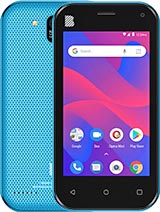
At 104 grams and 10.4mm thin, the Advance 4.0 is a featherweight that fits in any pocket. The 4.0-inch form factor is genuinely small by modern standards—borderline outdated, but genuinely useful if you want something that disappears into a hand or bag. Dual Micro-SIM support means you can run two networks or two carrier plans simultaneously, which matters in regions where signal overlap is poor or where work and personal numbers need separation. There is no material durability information in the specs, so assume it is basic plastic throughout. For a EUR 40 device, that is par.
Display
The 4.0-inch IPS LCD panel delivers 480 x 800 pixels—a resolution that peaked around 2013. At 233 ppi, text is legible but not crisp; colors and viewing angles are decent for an IPS panel, but brightness details are absent. This is not a screen for watching video or reading fine print. It is adequate for reading messages and checking basic web content, which is all the processor can handle anyway. The 56% screen-to-body ratio hints at thick bezels, which adds to the dated feel.
Performance
The MediaTek MT6572 is a dual-core 1.3 GHz chip from 2012, and pairing it with 512MB RAM is a choice that belongs in a $15 device, not a EUR 40 one. Even basic Android apps will stall when you have more than two open. Gaming, video playback, and multitasking are off the table. The Go edition of Android 8.1 is optimized for low RAM, which saves this phone from being completely unusable, but it is still a painful experience if you have used anything else in the past five years. Cold starts are common. By 2019, when this launched, budget phones with 1GB or 2GB RAM and quad-core processors were the norm; this was a step backward even then.
Software
Android 8.1 Oreo (Go edition) is a lightweight fork of Android built for devices under 1GB RAM. It is genuinely functional: you get a simplified Play Store, restricted background processes, and smaller app sizes. Updates: BLU's track record on support is poor, and a 2019 phone is unlikely to see meaningful updates today. Security patches are probably stale. If you need a device that works in a low-connectivity or low-bandwidth environment, the Go edition is sensible. Otherwise, the software is a limitation, not a feature.
Camera
The 5 MP rear camera with LED flash and the 2 MP front camera are film-school jokes. 720p video at 30fps is technically there. In practice, photos are soft, blown-out in sunlight, and only usable if you are desperate. This is not a phone you take photos with; it is a phone you use if you have no choice. The selfie camera is so low-resolution that video calls are basically unrecognizable. If you need to document anything, bring a proper camera.
Battery & charging
The 1300 mAh battery is tiny and the removable design is its only virtue. Charge times and charging speed are unknown from the spec sheet, but given the era and capacity, assume slow proprietary charging via microUSB. BLU claims up to 18 hours talk time on 2G and 13 hours on 3G; take these numbers with a grain of salt, as they depend entirely on signal strength and whether you are on a network that still supports 2G (increasingly rare). Real-world battery life is probably one full day of light use, less if you use the 3G network. The removable battery is genuinely useful for field work or for people who cannot access wall power regularly.
Network & connectivity
This is the core weakness. The Advance 4.0 supports GSM 2G and HSPA 3G only—no 4G LTE at all. HSPA data tops out at 21.1 Mbps downstream, which sounds okay in theory but is inconsistent in practice and obsolete by 2019 standards. Many carriers worldwide have already shut down 2G; a few still run 3G, but the wind-down is global. By 2025, HSPA is nearly extinct in developed markets and fading fast in the Global South. Buying this phone today is a gamble on whether your local carrier still supports 3G. Wi-Fi 802.11b/g/n is old, and Bluetooth 4.1 is functional but dated. microUSB 2.0 is slow for data transfer and charging. GPS is there, FM radio is there (useful when data is down), but NFC is absent.
Value & verdict
At EUR 40, this phone is cheaper than a decent meal, so context matters. It works as a basic call-and-text device in regions where network speed does not matter and where 2G/3G is still alive. For anyone in a market with LTE coverage, this phone is technically useless within a year or two as carriers shut down 3G. Even for emergencies, a basic LTE-capable phone is now cheaper than this. The removable battery and extreme portability are its only genuine strengths. If your local network has announced 3G shutdown dates, do not buy this. If you live in a region where 2G/3G will outlast this device's life, and you just need a thin, light phone for calls and texts, it works. But there are better budget options with 4G for only slightly more money.
Verdict
This phone only suits someone in a region where 3G networks are still reliable and will remain so for several years, who values extreme lightness and a removable battery over speed, and who has no better alternatives. Anyone in markets with active 4G coverage should spend EUR 50 or 60 instead and buy a device that will not become a brick when carriers shut down 3G—which is happening now, not later.
- Removable battery: rare in this era, useful for field work or where charging is limited
- Extremely light at 104g and compact at 4.0 inches, genuinely pocketable
- Dual SIM with dual standby for users managing multiple networks or regions
- Runs Android Go (Oreo), which is stripped down to run on minimal RAM
- 512MB RAM makes even basic multitasking sluggish; this is sub-entry-level even for 2019
- HSPA-only, no 4G LTE means slower data speeds than 3G devices of the same era could manage
- 1300 mAh battery is tiny; claim of 18 hours talk time on 2G is deceptive when most networks worldwide are moving away from 2G
BLU Advance 4.0 Key Specifications
The essentials at a glance. See the full spec sheet.
| Released | 2019, September. Released 2019, September |
|---|---|
| Display | 4.0 inches, 45.5 cm2 (~56.0% screen-to-body ratio), IPS LCD |
| Resolution | 480 x 800 pixels, 5:3 ratio (~233 ppi density) |
| Chipset | MediaTek MT6572Processor clock: 1.30 GHzNumber of cores: 2GPU: ARM Mali-400 MP1 @500 MHz |
| RAM & storage | 16GB 512MB RAM |
| Main camera | 5 MP |
| Selfie camera | 2 MP |
| Battery | 1300 mAh |
| Software | Android 8.1 Oreo (Go edition) |
| Dimensions | 124.8 x 65.2 x 10.4 mm (4.91 x 2.57 x 0.41 in) |
| Weight | 104 g (3.67 oz) |
| Network | GSM / HSPA |
| NFC | No |
| USB | microUSB 2.0 |
BLU Advance 4.0 FAQ
Common questions, answered from the spec sheet.
Does the Advance 4.0 support 5G?
No. The Advance 4.0 tops out at GSM / HSPA, without 5G.
What chipset does the Advance 4.0 use?
The Advance 4.0 runs on the MediaTek MT6572Processor clock: 1.30 GHzNumber of cores: 2GPU: ARM Mali-400 MP1 @500 MHz.
What display does the Advance 4.0 have?
A 4.0 inches, 45.5 cm2 (~56.0% screen-to-body ratio) IPS LCD, 480 x 800 pixels, 5:3 ratio (~233 ppi density).
How big is the Advance 4.0 battery?
The Advance 4.0 has a 1300 mAh battery.
Does the Advance 4.0 have NFC?
No, the Advance 4.0 does not list NFC support.
Does the Advance 4.0 support a microSD card?
Yes, the Advance 4.0 supports expandable storage (microSDXC).